




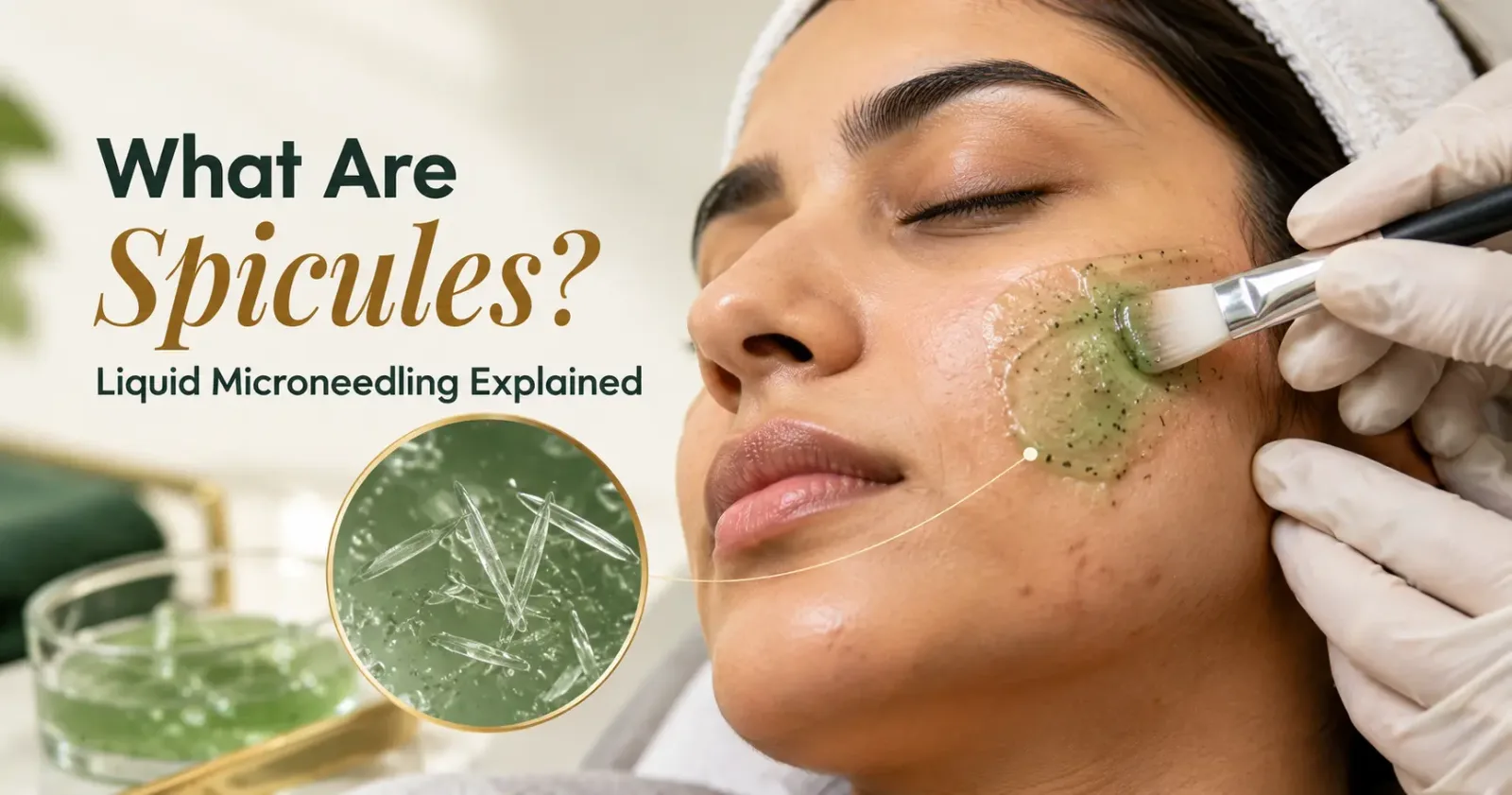
"Liquid microneedling" sounds like a contradiction. How can a cream do what needles do? The answer is spicules, a natural ingredient from the sea that has become one of the most talked-about skin treatments of the last few years. Here is what they are, how they work, and what the science actually says.
What are spicules?
Spicules are microscopic, needle-shaped structures that form the skeleton of sea sponges. In skincare, they come from a freshwater sponge called Spongilla and are sold as "hydrolyzed sponge". Each spicule is far thinner than a hair: a lab study by Thai researchers measured them at roughly 150–300 microns long and 10–20 microns wide, and found they were no longer detectable in the skin after about a week.
How does a spicule peel work?
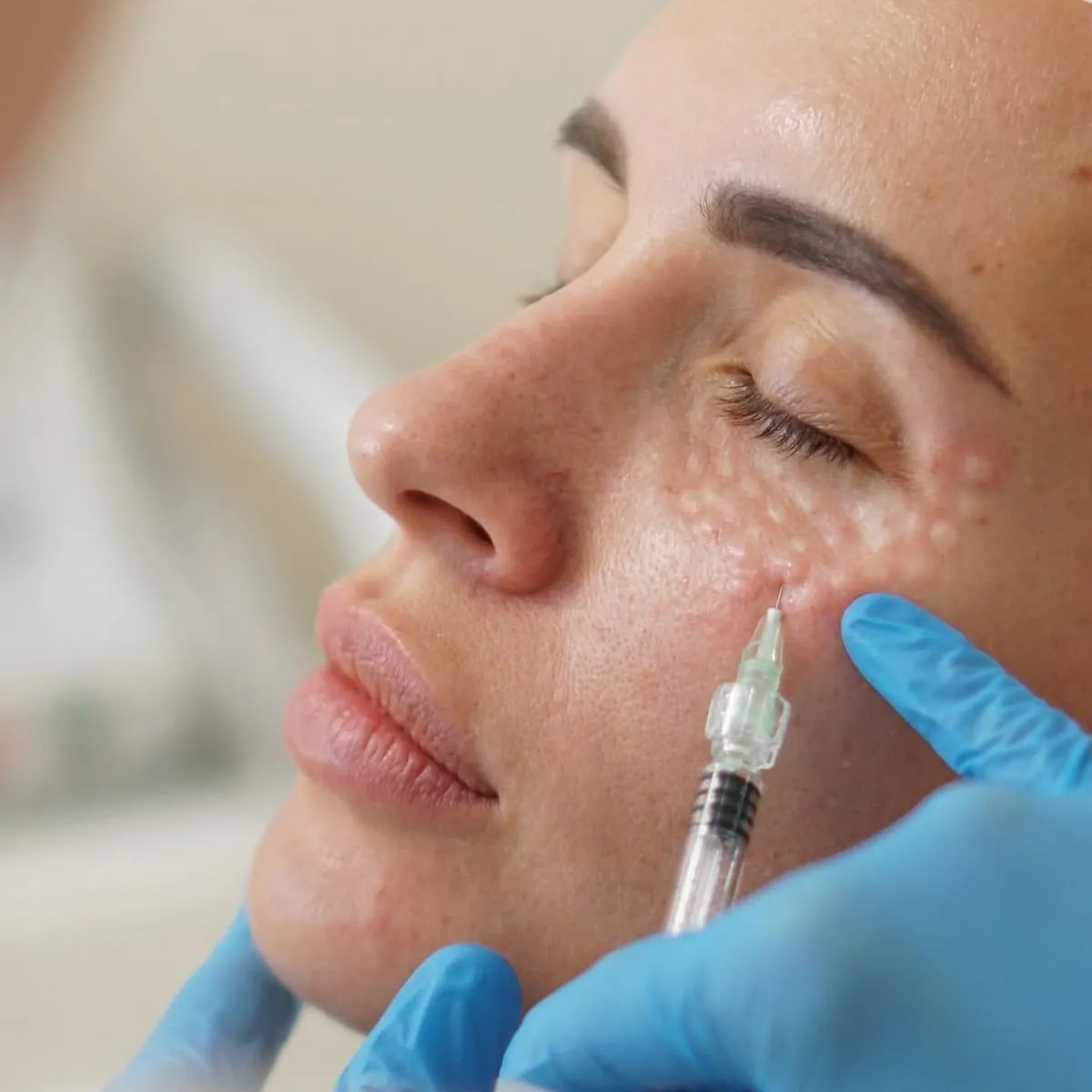
When spicules are massaged into the skin, their sharp ends lodge in the top layer and create thousands of microscopic channels. Three things happen next:
- Renewal: the skin reads the channels as a small, controlled injury and speeds up cell turnover and collagen production.
- Delivery: the channels help serums such as hyaluronic acid and peptides travel into the skin.
- Shedding: as the old surface layer sheds over a few days, fresher skin is revealed.
That is why it is called liquid microneedling: a similar idea to microneedling, but with no needles, no numbing and a topical application.
What does the research say?
The evidence is promising but still early, so it is worth being honest about it.
- A Korean comparative study treated acne-prone women with either spicule peeling or a 40% glycolic acid peel. The spicule group showed significant improvement in blackheads, skin brightness, redness and skin barrier water loss.
- Skin clinicians note that spicules work only very superficially, around 0.1–0.3 mm deep, so they help pigmentation, texture and pores but are not a replacement for treatments that remodel deeper scars or lift sagging skin.
Spicules vs microneedling
| Spicule peel | Microneedling / RF microneedling | |
|---|---|---|
| Tool | Topical sponge spicules | Fine needles, sometimes with radio-frequency |
| Depth | Very superficial | Deeper, adjustable |
| Numbing | Not needed | Usually needed |
| Best for | Marks, pores, texture, dullness | Deeper acne scars, firmness |
| Downtime | Prickling 1–3 days, light flaking | Redness 1–3 days |
Many treatment plans use both: RF microneedling or laser for acne to handle deeper problems, then spicule peels to refine texture and tone.
Who are spicule peels good for?
Spicule peels suit oily and combination skin, enlarged pores, blackheads, post-acne marks, uneven tone and dull, tired skin. They are especially useful for people who react badly to acid peels.
They are not suitable during active inflamed or cystic acne, eczema, rosacea flares, sunburn or soon after laser, peels or microneedling.
Spicule products at home vs in clinic
You will now see spicule serums sold online. Clinic-grade spicule peels are much stronger, and on Indian skin the wrong product or too many actives can cause irritation and dark patches. Professional spicule peels should be done after a doctor has assessed your skin.
Try the Green Sea Peel at Paradise Wellness
Our clinics use the Green Sea Peel, a professional spicule peel that combines marine sponge spicules with algae and a hyaluronic-acid activator. It is available at Vasant Vihar, Gurgaon (Golf Course Road), Pitampura and Civil Lines. Want to know what recovery feels like? Read our day-by-day Green Sea Peel recovery guide, or compare options in Green Sea Peel vs Chemical Peel.
Book your free skin consultation and our doctor will tell you if a spicule peel is right for you. Explore the Green Sea Peel →
Quick FAQs
Do spicules stay in the skin?
They shed out naturally with the outer skin layer within a few days.
Is liquid microneedling painful?
It feels prickly and tingly, not painful. No numbing is needed.
How many sessions?
Usually 2–3 for a visible change; your doctor will plan the course.