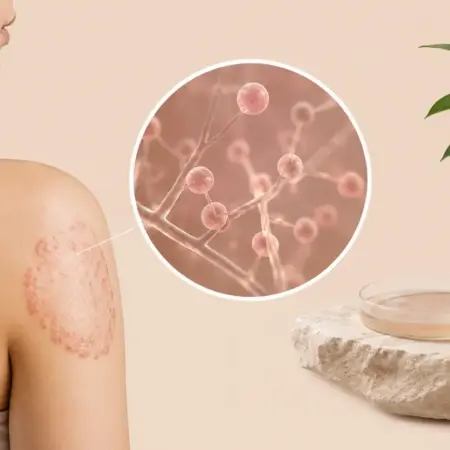




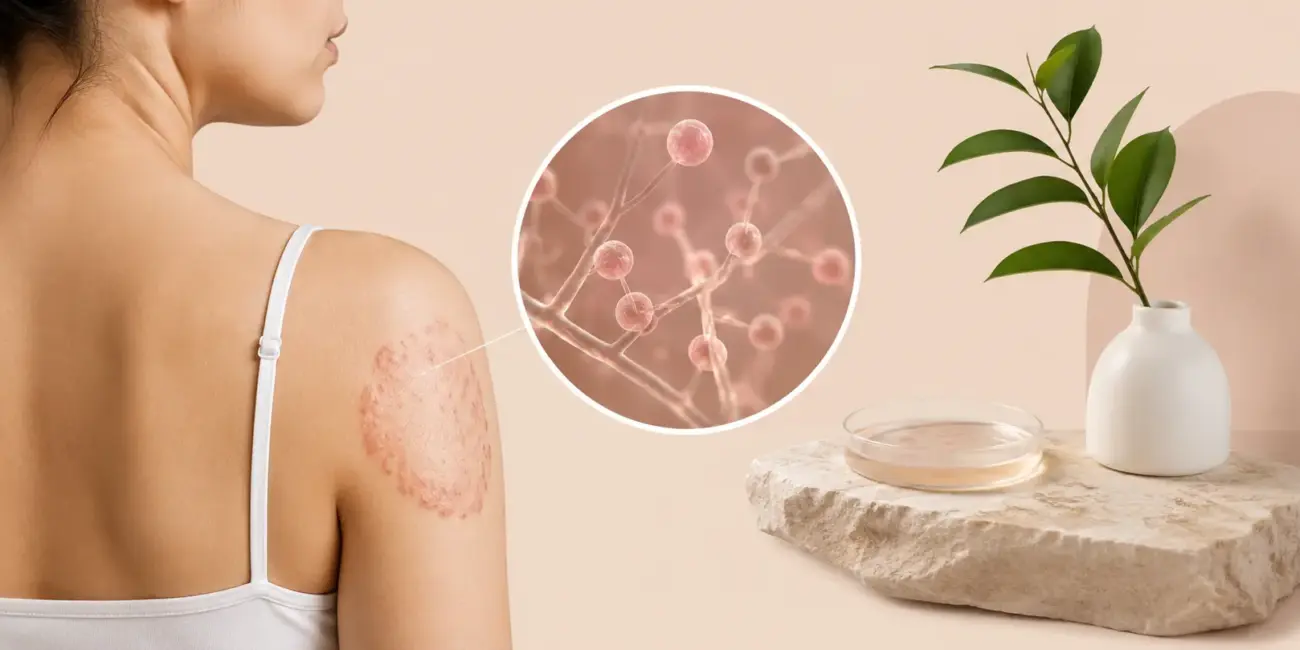
If you’ve ever dealt with an itchy, ring-shaped rash that just won’t go away – or a patch of scaly, burning skin in the folds of your body during a Delhi summer – there’s a good chance you’ve met a fungal skin infection.
They’re one of the most common reasons people visit a skin clinic in India, and for good reason: our warm, humid climate is close to a perfect breeding ground for the fungi that cause them. The good news is that most fungal skin infections are treatable. The important news is that, especially in India today, treating them correctly matters more than ever – because the wrong approach can make them stubborn, recurrent, and much harder to clear.
This guide from the dermatology team at Paradise Wellness explains what fungal skin infections are, how to recognise the common types, why they’ve become so widespread in India, and how they’re properly diagnosed and treated.
What Is a Fungal Skin Infection?
A fungal skin infection – doctors call it a mycosis – is a skin condition caused by a fungus that grows on or in your skin.
Fungi are all around us. They live in soil, on plants, on surfaces in our homes, and even harmlessly on our skin. Most of the time they cause no trouble at all. But when conditions are right – warmth, moisture, sweat, and a bit of trapped humidity – certain fungi can multiply and start to irritate the skin, causing rashes, itching, scaling, or discoloured patches.
How is it different from a bacterial infection? This matters because the treatment is completely different. Bacterial skin infections are treated with antibiotics, which often work quite quickly. Fungal infections need antifungal medicines, and they typically take longer to clear. Using the wrong type of medicine – a very common mistake with over-the-counter creams – can delay healing or mask the problem. This is one of the main reasons a proper diagnosis is worth it.
Why Fungal Skin Infections Are So Common in India
If it feels like almost everyone you know has had “ringworm” or “dhobi itch” at some point, you’re not imagining it. There are a few clear reasons fungal skin infections thrive here.
- The climate. Fungi love warmth and moisture. Delhi’s long, hot summers and humid monsoon months create exactly the sweaty, damp conditions in which they multiply.
- Sweat and clothing. Tight or synthetic clothing that traps sweat – especially around the waist, groin, and feet – gives fungi a warm, moist home. Long commutes, gym sessions, and staying in damp clothes make it worse.
- Close contact and shared items. Many fungal infections spread easily through shared towels, combs, bedsheets, footwear, and clothing, so they often pass between family members.
There is also a bigger, more serious reason worth understanding – one that has changed how dermatologists across the country now treat these infections.
The rise of stubborn, recurring fungal infections
Since around 2015, dermatologists across India have reported an unusual, widespread surge in fungal skin infections that are chronic, recurrent, and much harder to treat than they used to be. Rashes now often appear larger, more inflamed, spread across several parts of the body, and keep coming back even after treatment. This shift has been extensively documented in Indian dermatology literature. [1]
Two factors are driving it:
- Misuse of over-the-counter “combination” creams. Many creams sold freely at pharmacies contain a steroid mixed with an antifungal and sometimes an antibiotic. A steroid can calm the itching and redness quickly, so the cream feels like it’s working – but it actually suppresses the skin’s defences and lets the fungus spread underneath, often changing how the rash looks and making it far harder to diagnose and cure. Dermatology experts have repeatedly flagged these irrational combination creams as a major cause of the problem. [1]
- Antifungal resistance. Partly as a result, some fungi have become resistant to medicines that used to work reliably. Terbinafine – long a first-line antifungal – now has notably reduced cure rates in India, and resistance is a genuine, measurable clinical challenge. [2]
The practical takeaway is simple: in today’s India, a fungal skin infection is not always the quick, self-treatable nuisance it once was. Getting it assessed and treated correctly the first time is the best way to avoid months of frustration.
Common Signs and Symptoms
Symptoms vary depending on the type and location, but a fungal skin infection often causes some combination of:
- Itching, sometimes intense
- Redness or discoloured patches (which can look darker or greyish on brown and deeper skin tones)
- Scaly, flaky, or peeling skin
- A ring-shaped rash with a raised, active border and a clearer centre
- Cracking, especially between the toes or in skin folds
- Burning or stinging
- Occasionally small blisters or oozing
If a rash is spreading, keeps returning, or isn’t improving after a couple of weeks, that’s a sign it’s time to see a dermatologist rather than continuing to experiment with creams.
Common Types of Fungal Skin Infections
Fungal infections can appear almost anywhere on the body. Here are the ones we see most often.
1. Ringworm (Tinea Corporis)
Despite the name, ringworm has nothing to do with worms. It’s a fungal infection named for its classic ring-shaped rash – a red or discoloured circular patch with a raised, scaly border and a comparatively clear centre. Rings can overlap to form larger patches.
Ringworm is contagious. It spreads through skin-to-skin contact with an infected person or animal, and by touching contaminated clothing, bedding, or furniture. Heat and humidity help it along.
2. Athlete’s Foot (Tinea Pedis)
This is a fungal infection of the feet, and it’s extremely common in anyone who wears closed shoes for long hours or uses shared showers, pools, or changing rooms. The fungi flourish in the warm, damp environment inside sweaty shoes and socks.
Signs include itching, burning, peeling, cracking, and scaling, most often between the toes (especially the smaller ones), sometimes spreading to the soles and sides of the feet. In some cases it causes small blisters.
3. Jock Itch (Tinea Cruris)
Known in India as dhobi itch, this affects the warm, moist areas of the groin, inner thighs, and buttocks. It shows up as an itchy, often ring-shaped rash with a red or discoloured raised border, along with possible burning, chafing, flaking, or cracking of the skin. It’s more common in hot, humid weather and in people who sweat heavily. It is mildly contagious and can spread via towels and clothing.
4. Yeast Infections of the Skin (Cutaneous Candidiasis)
These are caused by an overgrowth of a yeast called Candida, which naturally lives on the body. Unlike ringworm, skin yeast infections are not contagious. They tend to appear in warm, moist skin folds – the armpits, groin, under the breasts, and between skin folds – as a red, sometimes oozing rash with itching, burning, and small pimple-like bumps at the edges.
They’re more likely in people with diabetes or obesity, and in anyone who has recently taken antibiotics. Candida can also cause diaper rash in babies, oral thrush (white patches in the mouth), and vaginal yeast infections.
5. Nail Fungus (Onychomycosis)
When a fungus infects the fingernails or, more commonly, the toenails, the nail can become thickened, discoloured (yellow, white, or brown), brittle, or crumbly, and may start to separate from the nail bed. Toenails are affected more often because they grow slowly and spend the day in dark, warm, enclosed footwear. Nail fungus is common in older adults and in people with diabetes or poor circulation, and it is one of the more stubborn infections to treat – often requiring several months of therapy.
What Causes Them and Who’s Most at Risk
Fungal skin infections take hold when fungi meet the warm, moist conditions they need to grow. You’re more likely to develop one if you:
- Come into contact with an infected person or animal
- Share footwear, clothing, towels, or grooming items
- Sweat heavily or spend long hours in tight, non-breathable clothing
- Wear closed, poorly ventilated shoes for long periods
- Walk barefoot in shared showers, gyms, or pool areas
- Have diabetes or are overweight
- Have a weakened immune system
- Take long courses of antibiotics or steroids
- Live in a hot, humid environment (which describes much of India for a large part of the year)
Why You Shouldn’t Rely on Over-the-Counter Steroid Creams
This deserves its own section, because it’s the single most common – and most harmful – mistake people make with fungal infections in India.
When a rash itches, it’s tempting to walk into a pharmacy and pick up a cream that a friend or shopkeeper recommends. Many of these are combination creams containing a steroid. The steroid reduces itching and redness within a day or two, so it feels effective. In reality, it is often quietly making things worse: it weakens the skin’s ability to fight the fungus, allows the infection to spread and change shape, and can turn a simple, curable rash into a chronic, recalcitrant one that’s difficult to diagnose and treat. [1]
If you’ve already been using such a cream and your rash has spread, changed in appearance, or keeps returning, please don’t be discouraged – but do see a dermatologist. These “steroid-modified” infections are very common now, and they are best handled by a specialist rather than another round of guesswork.
How Dermatologists Treat Fungal Skin Infections
Effective treatment starts with an accurate diagnosis – and continues with completing the full course of medicine, even after the skin looks normal.
- Diagnosis. A dermatologist can often recognise a fungal infection from its appearance and location. Where needed, a quick, simple test called a KOH examination – gently scraping a little skin, nail, or hair and viewing it under a microscope – can confirm whether a fungus is present and rule out look-alike conditions such as eczema or psoriasis. This step is especially valuable when a rash is atypical or has been altered by previous creams.
- Topical antifungals. For localised infections, antifungal creams, lotions, or medicated shampoos are usually the first line of treatment. Depending on symptoms, treatment often needs to continue for a couple of weeks after the rash clears to prevent it from returning.
- Oral antifungals. When an infection is extensive, involves the nails or scalp, keeps recurring, or hasn’t responded to topical treatment, a dermatologist may prescribe antifungal tablets. Nail infections in particular can require several months of treatment. Because of the resistance patterns now seen in India, the choice of oral antifungal is increasingly individualised – one more reason this shouldn’t be self-prescribed.
- Finishing the course. The most common reason fungal infections come back is stopping treatment too early – the moment the itch settles. A dermatologist will guide you on exactly how long to continue, which is key to a lasting cure.
- A note on self-medication: This article is for general education. It intentionally does not recommend specific medicines or doses, because the right treatment depends on the type of infection, its extent, your medical history, and – increasingly – local resistance patterns. A short consultation with a dermatologist gets you the correct prescription and saves months of trial and error.
How to Prevent Fungal Skin Infections
A few consistent habits go a long way, especially through the Indian summer and monsoon:
- Keep skin dry. After bathing, dry yourself thoroughly – particularly between the toes and in skin folds where moisture collects.
- Don’t stay in sweaty clothes. Change out of damp workout gear, innerwear, and socks promptly. Shower after heavy sweating.
- Choose breathable fabrics. Loose, cotton clothing lets skin breathe; tight synthetics trap heat and sweat.
- Change and wash daily. Innerwear and socks should be changed every day. Let footwear dry fully – air shoes in the sun and rotate between pairs.
- Use a dusting powder in sweat-prone areas if you perspire heavily or during humid months.
- Protect your feet in shared spaces. Wear slippers in public showers, gym changing rooms, and around pools.
- Don’t share personal items – towels, combs, footwear, and clothing can all pass on infection.
- Treat the whole household together. If one family member has ringworm, others often carry it too. Treating everyone at once (and washing shared bedding and clothes) is one of the best ways to stop the cycle of reinfection.
- Check your pets. Cats and dogs can carry ringworm; if you suspect it, have them seen by a vet.
- Manage diabetes. Keeping blood sugar well controlled lowers the risk of fungal and yeast infections.
- Skip the steroid creams. Avoid over-the-counter combination creams for undiagnosed rashes.
When to See a Dermatologist
It’s time to book a consultation if:
- The rash is spreading or covers a large area, or appears on multiple parts of the body
- It hasn’t improved after about two weeks of an over-the-counter antifungal
- It keeps coming back after seeming to clear
- Your nails or scalp are involved
- You’ve been using a steroid or combination cream and the rash has changed or worsened
- You have diabetes or a weakened immune system
- There’s significant pain, oozing, or signs of a secondary bacterial infection
Early, correct treatment is almost always simpler than treating a long-standing, altered infection.
Expert Fungal Skin Infection Care in Delhi
At Paradise Wellness, our qualified dermatologists diagnose and treat fungal and other skin conditions with an approach built on accurate assessment, evidence-based treatment, and a clear plan to prevent recurrence – rather than a one-size-fits-all cream. If a rash is itching, spreading, or simply won’t clear, a short consultation can give you a proper diagnosis and the right treatment from the start.
We see patients across Delhi NCR at our clinics in Vasant Vihar, Pitampura, Civil Lines, and Gurgaon, open all days from 10 am to 8 pm.
Book a consultation: Request an appointment · Call/WhatsApp: +91 97738 63777
Frequently Asked Questions
Are fungal skin infections contagious?
Many are. Ringworm, athlete’s foot, and jock itch can spread through direct skin contact or shared items like towels, footwear, and clothing. Skin yeast infections (candidiasis), however, are not contagious.
How long does a fungal skin infection take to heal?
With correct treatment, many skin infections improve within a couple of weeks, but treatment usually needs to continue a little longer to prevent recurrence. Nail infections are slower and can take several months. Stopping early is the most common reason they return.
Why does my fungal infection keep coming back?
Common reasons include stopping treatment too soon, reinfection from untreated family members or contaminated clothing, ongoing moisture and sweating, and – very often in India – previous use of steroid combination creams that alter and prolong the infection. A dermatologist can identify the cause and break the cycle.
Can I just use an over-the-counter cream?
For a mild, clearly identifiable infection it may help, but avoid combination creams that contain steroids, and see a dermatologist if the rash spreads, changes, doesn’t clear in about two weeks, or keeps returning.

Other Articles