




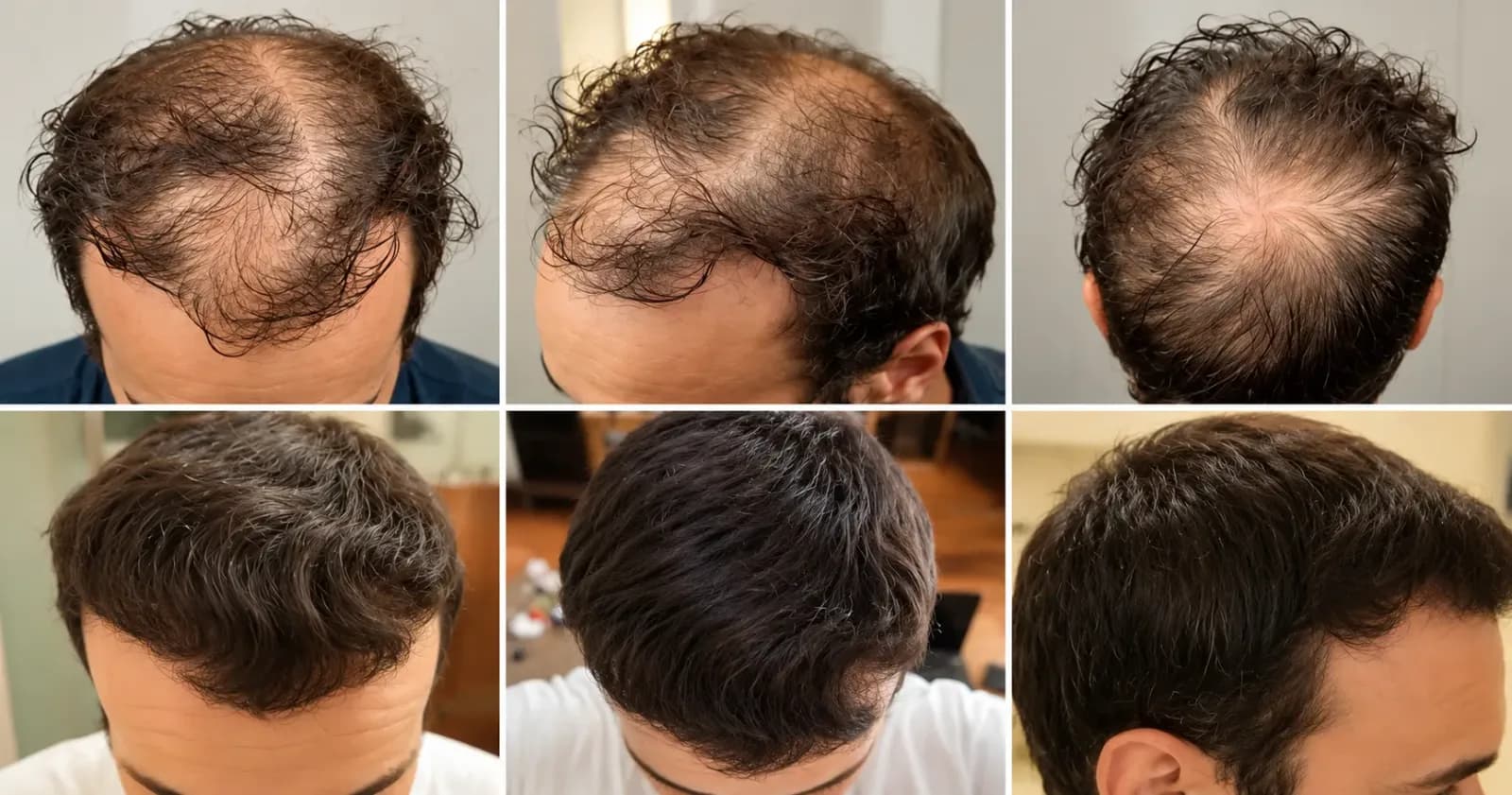
Most people are back to desk work within a week of a hair transplant, but the full result takes nine to twelve months to show. Expect swelling and scabs in the first ten days, shedding of the transplanted hair between weeks two and six, and new growth from around month three or four. If you are weighing up a FUE hair transplant in Delhi, knowing this timeline helps you plan work, travel and events with realistic expectations.
How long does hair transplant recovery take?
Recovery happens in two stages. The first is wound healing, which takes roughly seven to ten days. The second is hair growth, which is slow and steady over many months.
Healing is quicker after follicular unit extraction (FUE), because there is no long cut in the donor area. Hair growth follows the same natural cycle whichever technique is used. Results vary from person to person, and the crown often takes longer than the front.
Hair transplant recovery week by week
Day 1 to 3: rest and protect the grafts
The scalp feels tight and tender. Mild oozing from the donor area is common on the first night. Sleep with your head raised and do not touch, scratch or rub the grafts. Take only the medicines your doctor has prescribed.
Day 3 to 5: forehead swelling
Swelling often moves down to the forehead and sometimes around the eyes. It looks dramatic but usually settles within a few days. Keeping your head raised and following the washing routine you are given both help.
Day 7 to 14: scabs lift
Small crusts around each graft soften and fall away with gentle washing. Redness fades. Most people with office jobs return to work in this period. Avoid helmets, tight caps, the gym and swimming until your doctor says it is safe.
Weeks 2 to 6: shedding phase
Many transplanted hairs fall out. This is expected and is often called shock loss. The follicle stays in the skin and enters a resting phase. Some nearby native hair may also shed temporarily.
Months 3 to 4: first new growth
Fine, soft hairs begin to appear. Growth can look patchy at this stage. Pimple-like bumps can appear as hairs break through the skin; tell your doctor if they become painful or fill with pus.
Months 6 to 12: thickening and the final look
Hairs grow longer and thicker, and the hairline starts to look natural. Most of the result is visible by nine to twelve months. The crown can take longer. A follow-up review with photos helps you see real progress.
FUE vs FUT: what is the difference?
Both techniques move hair from the back and sides of the scalp, where follicles are usually resistant to pattern hair loss, to thinning areas. The difference is how the donor hair is harvested.
| Point | FUE (follicular unit extraction) | FUT (strip method) |
|---|---|---|
| How grafts are taken | Individual follicular units removed with a fine punch | A thin strip of scalp is removed and divided into grafts |
| Donor scarring | Tiny scattered dots, usually hidden by short hair | One linear scar, hidden under longer hair |
| Stitches | None in the donor area | Stitches or staples that need removing |
| Donor healing | Usually quicker, less tightness | Longer, with more tightness at first |
| Short hairstyles | Generally easier to wear | The scar may show with very short hair |
| Hair growth timeline | Same: about 9 to 12 months | Same: about 9 to 12 months |
At Paradise Wellness, transplants are performed using the FUE method. For most people in Delhi who like to keep their hair short, especially in summer, the lack of a linear scar is an important factor. Your doctor will explain the options for your donor area at consultation.
Who is a good candidate for a hair transplant?
A transplant works well when the pattern of hair loss is clear and the donor supply is strong. Good candidates usually:
- Are adults whose hair loss has been stable for some time
- Have a dense, healthy donor area at the back and sides of the scalp
- Have pattern hair loss, a receding hairline, a thinning crown or stable scar areas
- Understand that the aim is natural density, not the hair they had at eighteen
- Are willing to continue treatment that protects their existing hair
Women can be suitable too, but female thinning is often diffuse. A careful assessment comes first, and medical treatment may be the right starting point. If you are unsure what is causing your hair fall, start with our guide to hair fall and thinning.
Who should not have a hair transplant yet?
Some situations need treatment or time before surgery. Your doctor may advise waiting if you:
- Are pregnant or breastfeeding
- Have an active scalp infection, a psoriasis flare or an untreated scalp condition
- Take blood thinners or have a bleeding or clotting disorder
- Have uncontrolled diabetes, high blood pressure or heart problems
- Have patchy hair loss (alopecia areata) or very recent, fast hair loss
- Have a history of keloids or poor wound healing
Never stop a prescribed blood thinner on your own. Your prescribing doctor must agree to any change. If hair loss is linked to thyroid problems, low iron, illness or stress, treating that cause comes first.
Side effects and warning signs after a hair transplant
These are normal and usually settle on their own:
- Forehead swelling for a few days
- Small scabs and redness for one to two weeks
- Shedding of transplanted hair at two to six weeks
- Numbness or tightness of the scalp for some weeks
Call your clinic promptly if you notice increasing pain, heat, pus or spreading redness, bleeding that does not stop with gentle pressure, fever or feeling unwell, or swelling so severe that you cannot open your eyes.
How to protect your scalp in Delhi's climate during recovery
Delhi's strong sun, summer heat and monsoon humidity all affect healing. Plan the procedure around your calendar if you can.
- Avoid direct sun on the scalp in the first weeks. Use a loose cap only once your doctor allows it.
- Sweat and humidity can irritate healing skin. Rest indoors and avoid heavy exercise as advised.
- Pollution and dust settle on the scalp. Follow the washing routine you are given exactly.
- If your area has hard water, ask whether you should use filtered or boiled-and-cooled water for the first washes.
- Avoid smoking and alcohol for at least a week before and after, as both can slow healing.
Will I still need other hair treatment after a transplant?
Often, yes. A transplant moves hair; it does not stop pattern hair loss in the hair you still have. Over the years, native hair around the grafts can keep thinning, which can leave an uneven look.
Many people continue doctor-prescribed medical treatment, or add GFC and PRP hair treatment or hair mesotherapy to support existing hair. Your doctor will advise when these can start after the procedure.
How to choose a clinic for a hair transplant in Delhi
- Doctor-led assessment. The procedure should be performed by a qualified doctor after a full scalp and medical assessment.
- Honest planning. Ask how many grafts your donor area can safely give and what density is realistic.
- A natural hairline. The design should suit your age and face, and still look right as you get older.
- Clear aftercare. You should leave with written instructions, prescribed medicines and a booked follow-up.
- A long-term plan. Good clinics talk about protecting your existing hair, not just the transplant day.
Frequently asked questions
When can I go back to work after a hair transplant?
Many people with desk jobs return within seven to ten days, once swelling settles and scabs start to lift. If your work involves heavy lifting, heat, dust or wearing a helmet, you may need longer. Your doctor will give you a timeline based on how your scalp is healing and the type of work you do.
Is shedding after a hair transplant normal?
Yes. Most transplanted hairs fall out between weeks two and six. The follicle remains in the skin and rests before growing a new hair, usually from around month three or four. Some nearby native hair may also shed for a while. It can be worrying, but it is an expected part of recovery.
When can I wash my hair after a transplant?
Your doctor will give you a specific washing routine, often starting a day or two after the procedure with very gentle technique and a mild shampoo. Do not rub or scrub the grafts. Following this routine helps scabs lift cleanly and lowers the risk of infection, so stick to it closely.
Can I wear a cap or helmet after a hair transplant?
Not straight away. Tight caps and helmets can dislodge or press on fresh grafts. A loose cap may be allowed after the first week or so, and helmets usually need to wait longer. Ask your doctor before wearing anything on your head, especially if you ride a two-wheeler daily.
Is FUE or FUT better for me?
It depends on your donor area, hairstyle and goals. FUE avoids a linear scar and usually heals faster in the donor area, which suits people who wear their hair short. FUT removes a strip of scalp and leaves a line scar. Your doctor will discuss which approach fits your scalp after examining it.
Can I have a second hair transplant later?
Some people choose a second session to add density or treat a new area as hair loss progresses. This depends on how much safe donor hair remains. Planning your first procedure with the future in mind helps keep options open. Your doctor will review this at your follow-up visits.
If you are considering a hair transplant, the first step is an honest assessment of your donor area and the cause of your hair loss. Book a free consultation at any of our four clinics in Vasant Vihar, Gurugram, Pitampura or Civil Lines, and we will talk you through whether a transplant, another treatment or a combination suits you.