





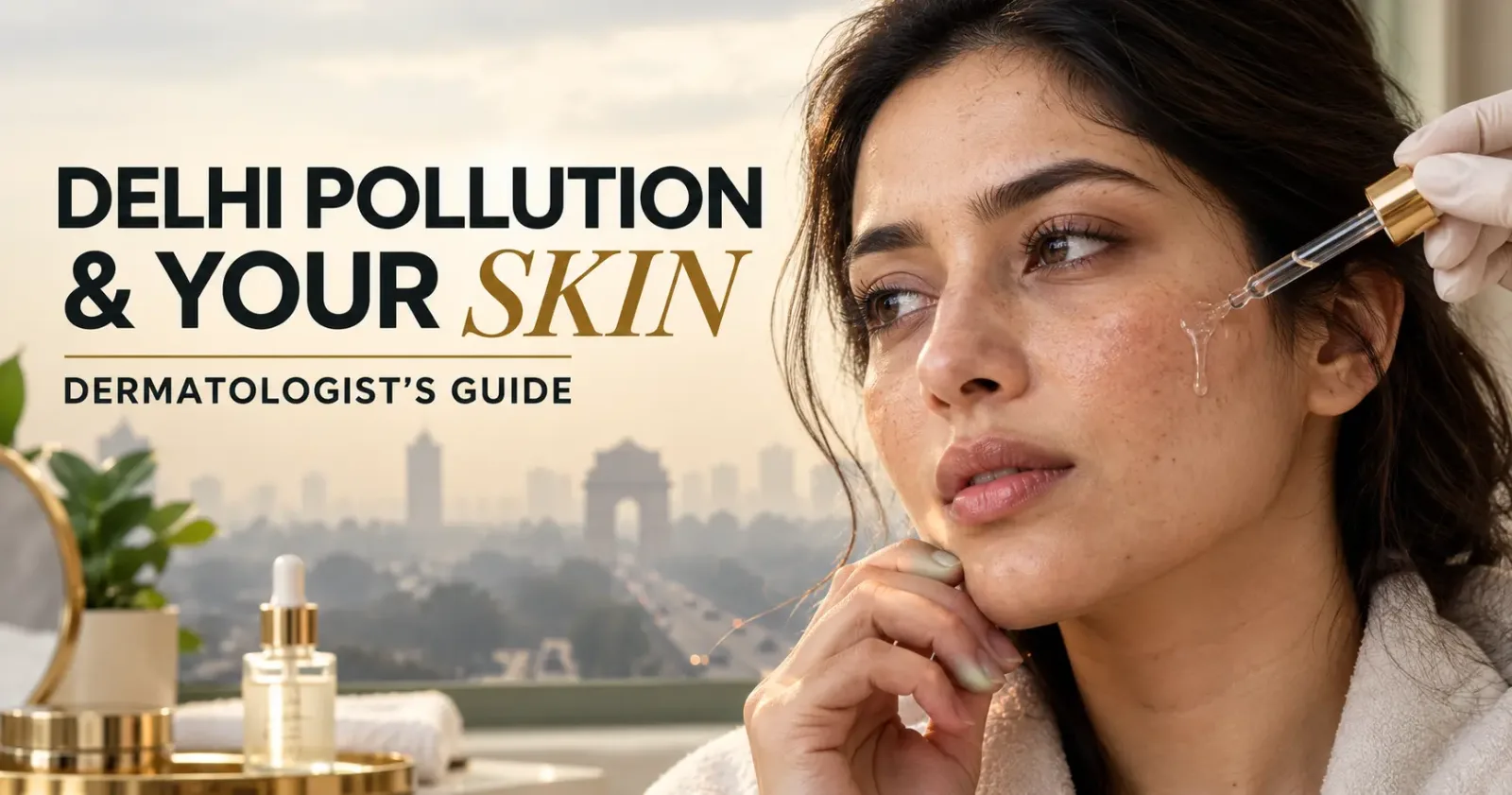
Delhi's air pollution can make skin look dull, feel dry and break out more, and over time it adds to pigmentation and early ageing. The good news is that a simple daily routine, good sun protection and the right clinic treatments can limit much of the damage.
This guide explains what smog does to your skin, what to change in your routine from October to February, and when it is worth seeing a dermatologist.
How pollution affects your skin
Delhi's winter air carries fine particles (PM2.5 and PM10), gases such as nitrogen dioxide and ozone, and smoke. Research links long-term exposure to these pollutants with more pigment spots and wrinkles. Three things happen on the skin:
Oxidative stress. Pollutants create free radicals that damage the skin's oils, proteins and collagen. This is one reason polluted cities see earlier fine lines and uneven tone.
A weaker skin barrier. Particles and smoke strip the skin's natural lipids. Skin loses water faster, so it feels tight and looks dull, and sensitive skin stings more easily.
Clogged, inflamed pores. Fine dust mixes with sweat, sebum and make-up. In acne-prone skin this can mean more blackheads and breakouts.
Pollution and sunlight also work together: UV rays make the damage from pollutants worse. That is why sunscreen still matters on hazy winter days.
Signs your skin is reacting to the smog
A grey, tired or dull look that does not improve with sleep
Tightness, flaking or rough patches, especially on the cheeks
More blackheads, whiteheads or small bumps on the forehead and nose
New or darker patches of pigmentation
Redness, itching or flare-ups of eczema or rosacea
If you notice these every winter, your skin barrier needs more support during smog season.
A daily routine for high-AQI days
Morning
Gentle cleanser. Use a mild, non-foaming or low-foam cleanser. Harsh face washes strip the barrier further.
Antioxidant serum. A vitamin C serum, or one with niacinamide, helps neutralise free radicals and supports even tone.
Moisturiser. Look for ceramides, glycerin or hyaluronic acid. A good moisturiser acts as an extra layer between your skin and the air.
Broad-spectrum sunscreen, SPF 30 or higher. Apply every morning, even when the sky is grey, and reapply if you are outdoors.
Evening
Double cleanse. Start with a cleansing oil or micellar water to lift sunscreen, make-up and particles, then use your gentle cleanser.
Treatment step. If your doctor has prescribed a retinoid or a pigmentation cream, use it now. Do not add new strong actives during a flare.
Richer moisturiser. Night is when the barrier repairs itself, so a slightly heavier cream helps.
Habits that help
Wash your face once you are home, not just at bedtime.
Drink enough water; the heater and dry air pull moisture from the skin.
Wear a well-fitting mask outdoors on very poor AQI days; it also shields the lower face.
Change pillowcases often and keep phone screens clean.
Avoid scrubbing. Gritty scrubs damage an already weak barrier.
Clinic treatments that help skin recover
A home routine protects your skin. Clinic treatments help repair what the season has already done. A dermatologist will suggest one based on your skin type and concern.
Deep-cleansing hydration facials
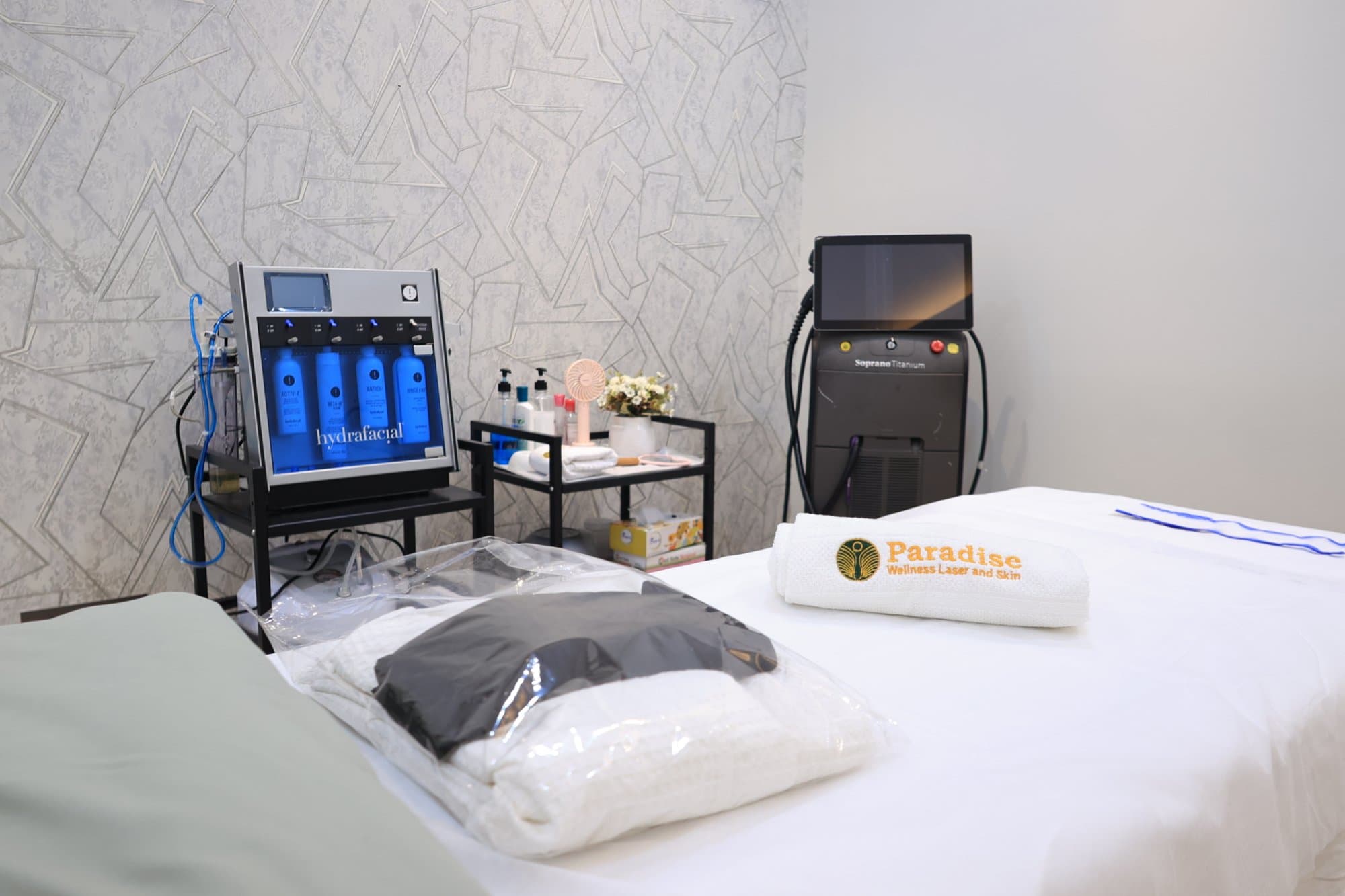
A HydraFacial cleanses, exfoliates and extracts congested pores, then infuses hydrating serums. It suits most skin types and has no downtime, so it is a popular reset in the middle of smog season. Our medi-facials are another option, chosen by the doctor for dryness, congestion or dullness.
Gentle peels for dullness and uneven tone
Mild chemical peels remove the dull top layer and help fade pigmentation. Strength and type are chosen for your skin; Indian skin needs care to avoid post-peel darkening.
Treatments for pigmentation that builds up
If pollution and sun have left patches or spots, read our guide to pigmentation and melasma treatment. Options include peels, laser toning and prescription creams.
Support for breakouts
If congestion turns into acne, a doctor-led plan for acne and breakouts works better than stronger face washes.
Who needs extra care
Sensitive skin, eczema or rosacea: keep the routine very simple and see a doctor if redness or itching persists.
Acne-prone skin: choose non-comedogenic moisturisers and sunscreens.
People who commute by bike, auto or on foot: cleanse as soon as you reach home.
Anyone with melasma: heat and visible light can also darken it, so strict sun protection matters all year.
When to see a dermatologist
Book a consultation if your skin stays dull or flaky despite a good routine, if pigmentation is spreading, if acne is leaving marks, or if you have redness that does not settle. A doctor can tell you whether you need a barrier-repair plan, a prescription or an in-clinic treatment. Results vary from person to person.
Frequently asked questions
Does pollution really cause wrinkles?
Studies link long-term exposure to air pollution with more pigment spots and wrinkles, mainly through oxidative stress that damages collagen. Pollution is one factor alongside sun, smoking, genetics and age. Daily sunscreen, antioxidants and a healthy barrier reduce the effect.
Do I need sunscreen on smoggy, cloudy days?
Yes. UV rays reach the skin through haze and cloud, and UV makes pollution damage worse. Use a broad-spectrum SPF 30 or higher every morning and reapply when you spend time outdoors.
Are anti-pollution creams worth it?
Look at the ingredients rather than the label. Antioxidants such as vitamin C, vitamin E and niacinamide, plus barrier-repair ingredients like ceramides, are useful. A product called "anti-pollution" without these offers little extra.
How often should I get a facial in winter?
Many people book a hydrating facial such as a HydraFacial every 3 to 4 weeks during smog season, but the right gap depends on your skin. Your dermatologist will advise.
Should I exfoliate more to remove pollution?
No. Over-exfoliating weakens the barrier and makes skin more reactive. Thorough but gentle cleansing in the evening is enough; leave stronger exfoliation to a doctor-chosen peel.
Can pollution cause acne?
It can make acne worse in people who are prone to it, by clogging pores and increasing inflammation. Cleansing after being outdoors and using non-comedogenic products helps. Persistent acne needs a doctor's plan.
Is a face mask enough to protect my skin?
A mask shields part of the face and helps your lungs, but the forehead and cheeks are still exposed. Combine it with sunscreen, moisturiser and evening cleansing.
If smog season leaves your skin dull, dry or breaking out, our dermatologists can build a plan for your skin type. Book a consultation at any of our four clinics in Vasant Vihar, Gurugram, Pitampura or Civil Lines.