




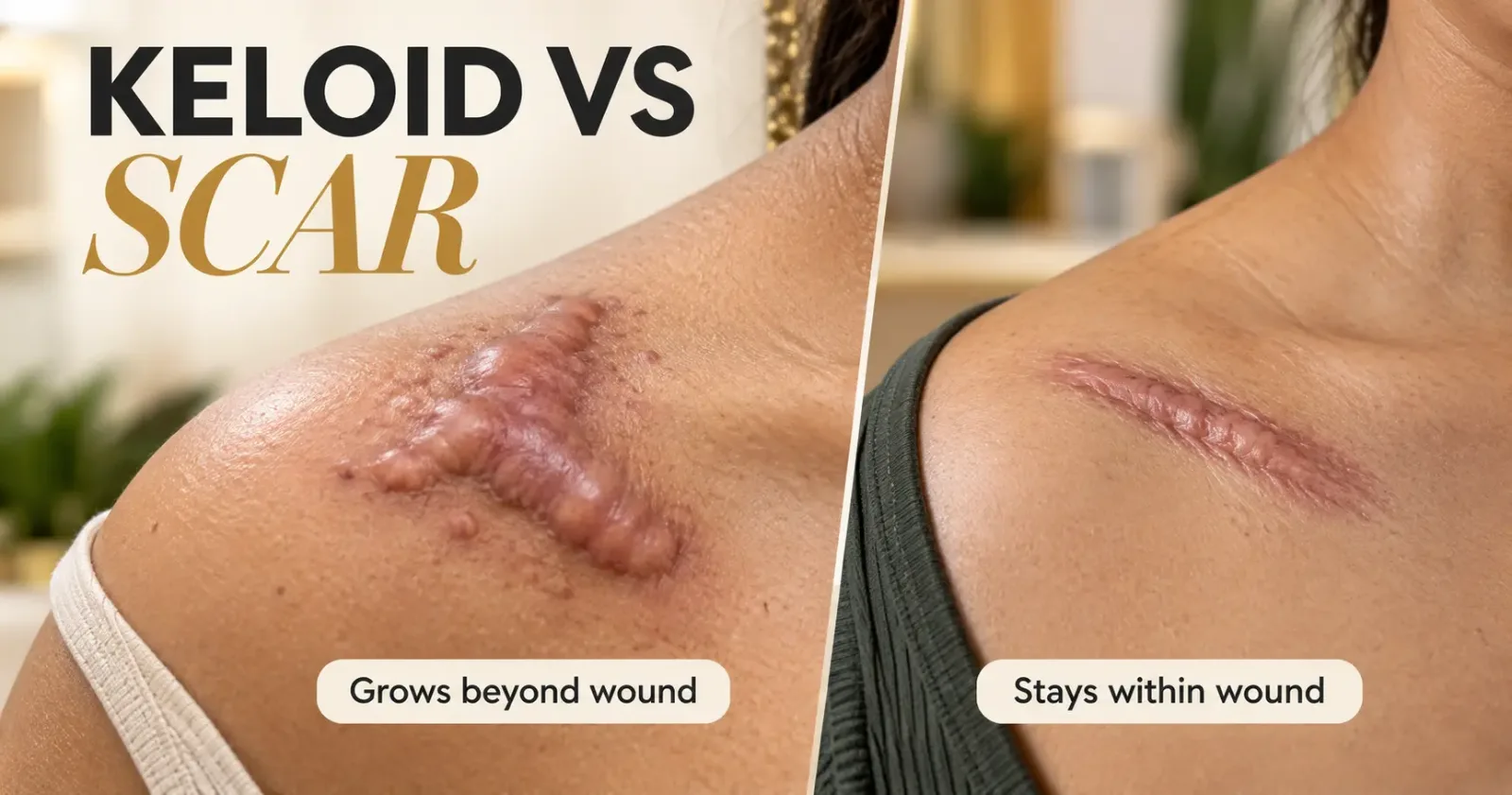
A keloid is a raised scar that spreads beyond the edges of the original wound, while a hypertrophic scar stays within those edges and often flattens on its own with time. Keloids come back more often because the skin keeps over-producing scar tissue, even after treatment. A series of steroid injections is the main keloid and raised scar treatment, often combined with silicone, pressure, cryotherapy or laser.
This guide explains how to tell the two scars apart, why keloids are so persistent, and what treatment can and cannot do. Results vary from person to person, and a doctor's examination is always the first step.
What is the difference between a keloid and a hypertrophic scar?
Both are raised scars. They form when the skin makes too much collagen while it heals. The difference lies in how they grow and how they behave over time.
| Feature | Keloid | Hypertrophic scar |
|---|---|---|
| Edges | Grows beyond the original wound, often rounded or claw-like | Stays within the line of the original wound |
| When it appears | Can appear months after an injury, sometimes after a very minor one | Usually within weeks of the injury |
| Over time | Tends to stay or slowly grow | Often softens and flattens over a year or two |
| Common areas | Earlobes, chest, shoulders, upper back, jawline | Anywhere, often across joints or after burns and surgery |
| How it feels | Firm, itchy, sometimes tender | Itchy, sometimes tight |
| After cutting out alone | Often returns, sometimes larger | Less likely to return |
In the early months it can be hard to tell which one you have. A doctor looks at the scar, asks how and when it formed, and checks whether you have had keloids before. That history matters more than appearance alone.
Why do keloids form?
A keloid is an overactive healing response. The skin does not get the signal to stop making scar tissue, so the scar keeps growing past the wound. Common triggers include:
- Ear piercings, especially on the upper ear or the earlobe
- Acne on the chest, shoulders and back
- Burns, surgery and stitched cuts
- Vaccinations, insect bites and chickenpox spots
- Sometimes no injury you can remember
Some people are more prone than others. Keloids often run in families. Darker skin types, including many Indian skin types, form them more readily. They are more common in teenagers and younger adults, and in areas where the skin is under tension, such as the chest and shoulders.
In Delhi's hot, humid months, sweat and friction from straps or tight collars can irritate a healing scar. Picking at chest or back acne in summer is a common start for raised scars on the trunk.
Why do keloids come back after treatment?
This is the question most people ask after a keloid returns. There are a few honest reasons:
- The tendency lies in your skin. Treating one scar does not change how your skin heals elsewhere or in future.
- Cutting it out creates a new wound. If a keloid is removed with surgery alone, the fresh cut can heal as a new keloid, often larger than before.
- Stopping treatment too early. A scar that looks flatter can still be active underneath. Follow-up sessions help keep it settled.
- Ongoing triggers. New piercings, untreated acne and constant friction can start new scars or wake up old ones.
So the realistic aim is control rather than cure. Good treatment can make a keloid flatter, softer, less itchy and less noticeable. It cannot always remove it completely, and it cannot promise it will never return.
Which treatments help keloids and raised scars?
Most plans combine more than one method. Your doctor chooses based on the size, age and location of the scar, and your skin type.
Steroid injections
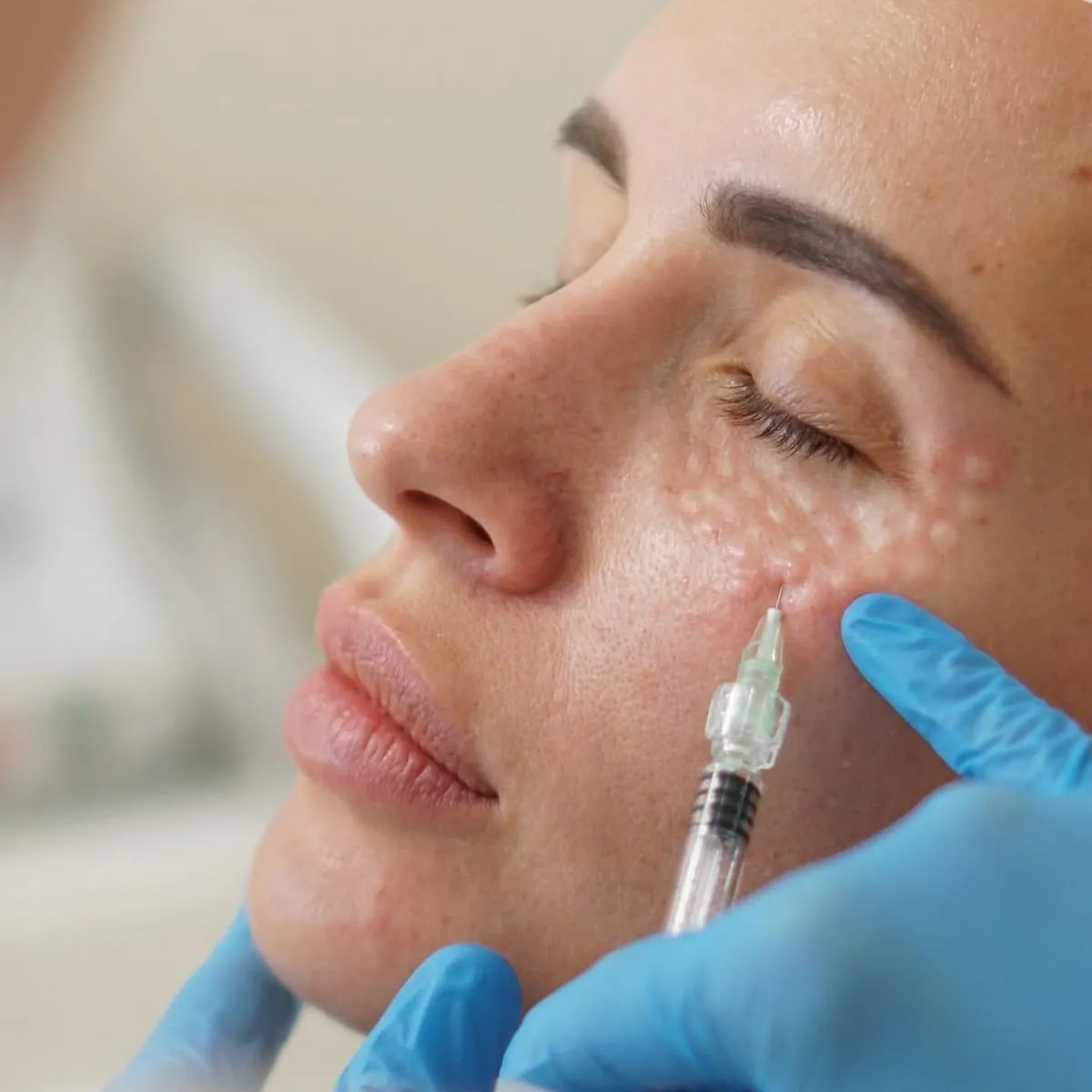
This is the main treatment. Small amounts of steroid are injected into the scar with a fine needle every few weeks. Over several sessions, the scar usually becomes flatter and softer, and itching eases. Hypertrophic scars often respond faster than keloids.
Silicone gel or sheets
Silicone is used daily over months. It suits hypertrophic scars and helps keep a treated keloid calm. It works slowly, so regular use matters.
Pressure
Pressure earrings or garments may be advised after treatment, especially for earlobe keloids.
Cryotherapy
Freezing can help some smaller scars, often alongside injections. On darker skin it can leave a lighter patch, so it is used with care.
Laser
Laser can reduce redness and improve the surface texture of a raised scar. It is rarely enough on its own for a keloid and is usually paired with injections. Note that pitted or depressed acne scars are a different problem. Our guide to acne scar treatment covers resurfacing options such as CO2 laser.
Surgery, only with other measures
For some large keloids, surgery may be considered, but only when combined with injections or other steps to lower the chance of return. It is never the first or only answer.
How many sessions does keloid treatment take?
Each injection session usually takes 15 to 30 minutes. Numbing may be used, and most people feel a sharp pinch and some pressure. There is little or no downtime.
Most people need several sessions, spaced a few weeks apart. A newer, smaller scar often responds sooner than an old, large one. Progress is gradual, so photos are taken to compare over time. Results vary, and your doctor will adjust the plan at each review. You can read more about the process on our keloid treatment in Delhi page.
Side effects and warning signs
Some reactions are normal after injections:
- Mild pain or tenderness at the injection site
- Slight bruising or redness for a day or two
- Gradual softening and flattening over weeks
Steroids can sometimes thin the skin or leave paler patches. This shows more on darker skin, which is why doses are measured carefully. Contact the clinic if you notice:
- Skin over or around the scar becoming very thin or sunken
- Light or white patches that keep spreading
- Spreading redness, heat, pus or fever
- The scar growing quickly or bleeding
Who should wait or take extra care?
Tell your doctor before treatment if any of these apply:
- You are pregnant or breastfeeding. Timing needs discussion.
- There is an infection or broken skin over the scar.
- You have diabetes that is not well controlled. Steroids can affect sugar levels.
- You take blood thinners.
- The lump is changing fast, bleeding or looks unusual. Not every raised lump is a keloid, and it needs checking first.
How can you stop a keloid from coming back?
- Avoid new piercings, tattoos and cosmetic cuts in keloid-prone areas.
- Tell any doctor or surgeon about your keloid history before a procedure.
- Treat acne early, especially on the chest and back. See our page on acne breakouts.
- Do not pick, squeeze or scratch spots and healing wounds.
- Use silicone if advised, and protect scars from sun, which can darken them.
- Book a review early if itching or growth returns. Small changes are easier to treat.
Frequently asked questions
Can a keloid go away on its own?
Keloids rarely flatten on their own. They tend to stay or slowly grow over months and years. Hypertrophic scars are different, and many soften and flatten over a year or two without treatment. If a raised scar is itchy, growing or past the edges of the original wound, it is worth having a doctor look at it rather than waiting.
Is a keloid dangerous?
Keloids are benign, which means they are not cancer. They can still be itchy, painful and distressing, and they can affect confidence. A lump that grows very fast, bleeds, ulcerates or looks different from a typical scar should be examined, because other skin conditions can sometimes look similar at first.
Can I pierce my ears again after an earlobe keloid?
Doctors usually advise against it, because the piercing can trigger a new keloid in the same spot or nearby. If you have had a keloid before, the risk is higher. Discuss your history at consultation. If you still wish to wear earrings, your doctor can talk through lower-risk alternatives and how to protect the area.
Does laser remove keloids?
Laser alone rarely removes a keloid. It can reduce redness and improve the surface of a raised scar, and it works well alongside steroid injections. The injections do most of the flattening. Your doctor will explain whether laser adds value for your particular scar.
Do home remedies help keloids?
There is little reliable evidence that onion extract, garlic, toothpaste or similar home remedies flatten keloids. Some, such as raw garlic, can burn or irritate the skin and make the scar angrier. Silicone gel is a sensible home measure when a doctor recommends it. Avoid cutting or tying a scar yourself.
How soon should a new keloid be treated?
Earlier is usually easier. A newer, smaller keloid tends to respond to fewer sessions than one that has grown for years. If you notice a scar becoming raised, itchy or wider than the wound, book an assessment rather than waiting to see what happens.
If you have a keloid or a raised scar that bothers you, a doctor can examine it and explain your options honestly. Book a free consultation at any of our four clinics in Vasant Vihar, Gurugram, Pitampura or Civil Lines.