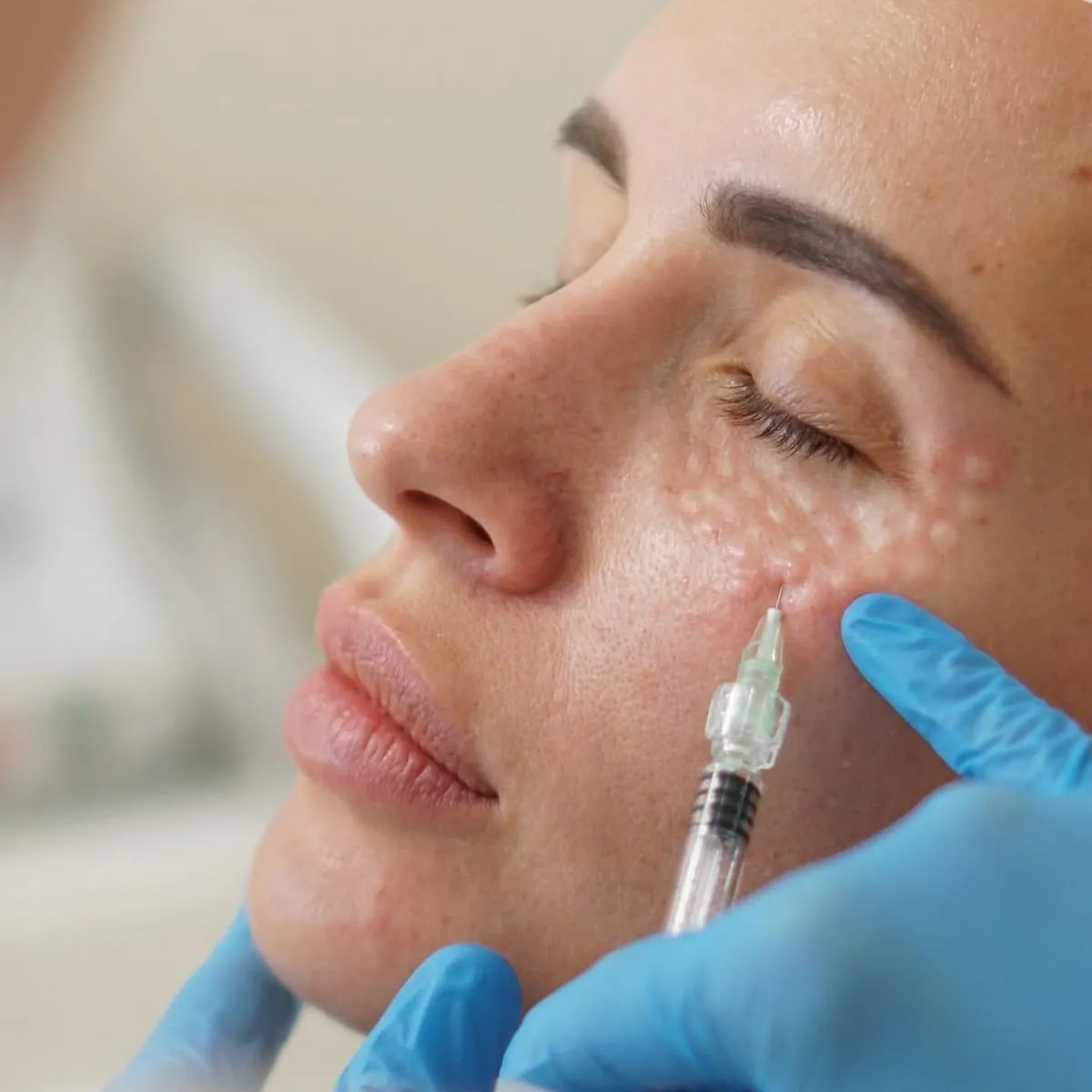






Hair fillers are scalp boosters, not volume fillers. A doctor injects small amounts of a solution containing ingredients such as peptides and hyaluronic acid into thinning areas of the scalp, usually over a course of four to six sessions a few weeks apart. They suit adults with early to moderate thinning whose follicles are still present, and they are most useful as part of a wider plan. If you are considering hair fillers in Delhi, this guide explains what they can and cannot do.
What are hair fillers, and what is actually injected?
The name causes a lot of confusion. Facial dermal fillers are gels placed under the skin to add volume to lips, cheeks or the jawline. Hair fillers do something different. They do not add volume to the scalp and they do not make hair look thicker straight away.
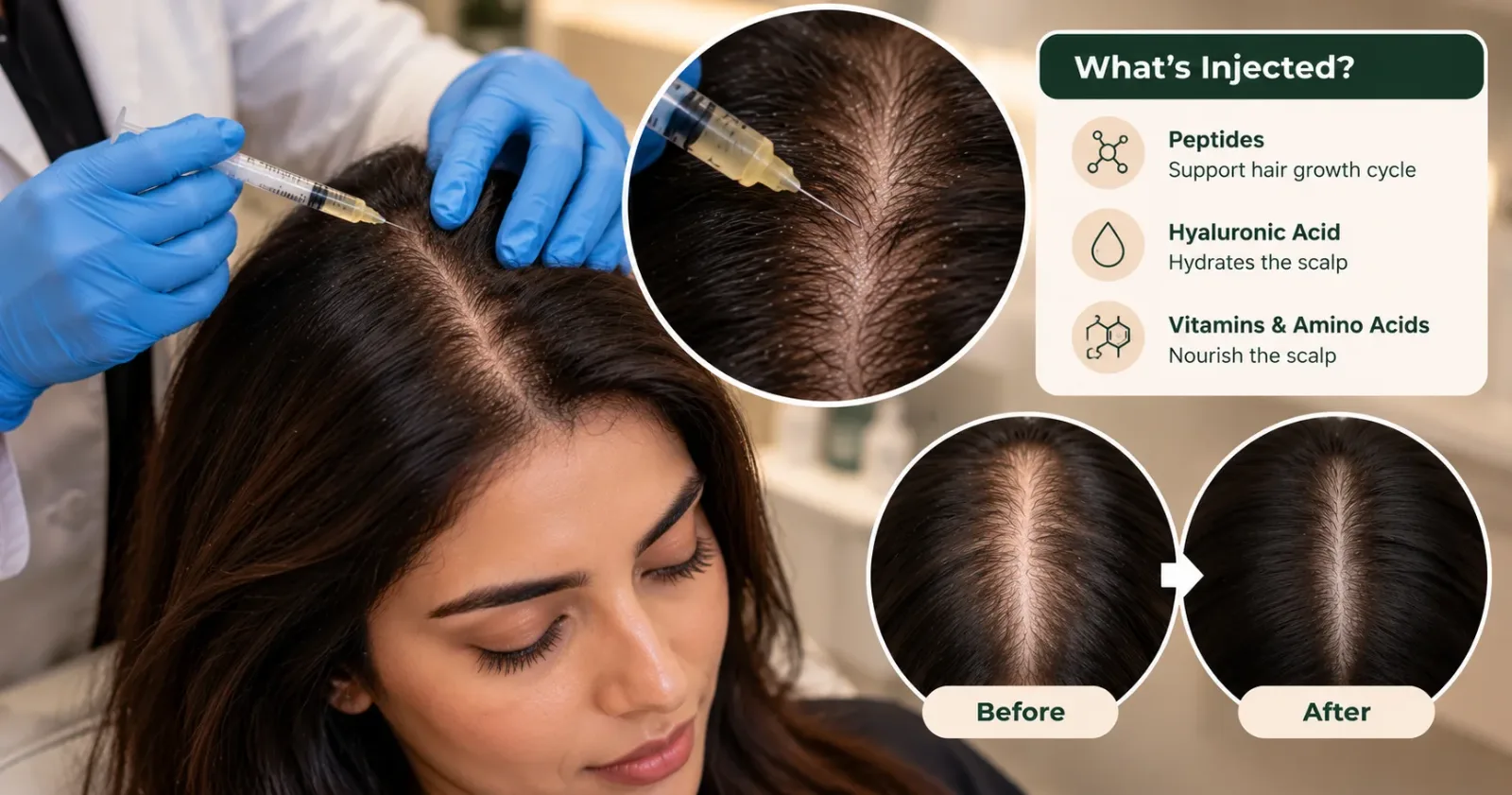
Instead, they are injectable scalp boosters. The solution is placed into the scalp with a very fine needle. Depending on the product your doctor chooses, it may contain:
- Peptides, short chains of amino acids that are thought to support the hair growth cycle.
- Hyaluronic acid, which holds water and helps hydrate the scalp.
- Vitamins and amino acids, in some formulations, to nourish the area around the follicle.
The aim is a healthier scalp environment that supports weakening follicles. It is a supportive treatment rather than a cure for hair loss.
Do hair fillers work? An honest look at the evidence
Evidence for hair fillers is still limited compared with established options such as prescribed medicines and PRP. Some people notice less shedding and better hair quality after a course. Others see little change. Results vary from person to person, and nobody can promise a set amount of new hair.
What makes the biggest difference is choosing the right person and finding the cause first. Thinning in India is often linked to more than one factor. Low iron or vitamin levels, thyroid problems, hormonal changes such as PCOS, recent illness or fever, crash dieting and stress can all trigger shedding. These need their own treatment. A scalp booster cannot correct a blood test result.
That is why a doctor-led assessment comes before any injection. Your doctor will look at your scalp, ask about your hair history and may advise blood tests. You can read more about the common causes on our hair fall and thinning page.
Who are hair fillers suitable for?
Hair fillers tend to suit:
- Adults with early to moderate thinning, including pattern hair loss and diffuse thinning, where follicles are still present.
- People who want to support their hair alongside medical treatment or other in-clinic therapy.
- Those with diffuse thinning once medical causes have been checked and treated.
- People who are comfortable with a gradual change and with maintenance sessions.
They are less likely to help where an area has been bald and shiny for a long time. When follicles have gone, there is nothing left to support. In that situation your doctor may talk to you about a hair transplant or scalp micropigmentation instead.
How many sessions of hair fillers will I need?
A typical course is four to six sessions, spaced a few weeks apart, as your doctor advises. After the main course, many people move to maintenance sessions at longer gaps. The exact plan depends on how much thinning you have, how your scalp responds and what else you are using.
Each session usually takes about 30 to 45 minutes. The steps are simple:
- Assessment and photos. Your doctor checks your scalp and records progress with photos so changes can be compared over time.
- Preparation. The scalp is cleaned with an antiseptic. A numbing cream may be applied for comfort.
- Injections. Small amounts of the booster are placed across the thinning areas with a very fine needle.
- Review. At each visit, your doctor checks progress and adjusts the plan if needed.
Changes are slow because hair grows slowly. Some people notice less shedding and better hair quality from about three to six months. It is worth judging progress on photos rather than on the mirror day to day.
Hair fillers vs PRP, GFC and hair mesotherapy: which is right for you?
Several scalp treatments work in a similar way, by delivering active ingredients close to the follicle. The main difference is what is injected. Your doctor may suggest one or combine them.
| Treatment | What is injected | Often considered for |
|---|---|---|
| Hair fillers | Prepared solution with peptides and hyaluronic acid, sometimes vitamins or amino acids | Early to moderate thinning, dry or tired scalp |
| PRP / GFC | A concentrate prepared from your own blood | Pattern thinning and shedding, often as a course |
| Hair mesotherapy | A blend of vitamins, minerals and other nutrients | Diffuse thinning and weak, fine hair |
| Medical treatment | Prescribed creams, lotions or tablets | Most types of thinning, often as the base of the plan |
If you prefer a treatment based on your own blood, read about GFC and PRP for hair. If you want to compare a nutrient-based option, see hair mesotherapy. Neither is automatically better. The right choice depends on your cause of thinning, your health and your preferences.
Who should not have hair fillers, or should wait?
Tell your doctor about your full health history. Hair fillers may not be suitable, or may need to wait, if you:
- Are pregnant or breastfeeding.
- Have an active scalp infection, a psoriasis flare or open wounds on the scalp.
- Have an allergy to hyaluronic acid, any ingredient in the product or numbing cream.
- Take blood thinners or have a bleeding disorder. Do not stop a prescribed medicine unless your prescribing doctor agrees.
- Have an autoimmune disease or a weakened immune system.
- Have a history of keloids.
Patchy, round areas of hair loss are a different condition and need a separate medical plan, so mention them at your consultation.
Side effects, recovery and warning signs
Downtime is usually one to two days. It is normal to have:
- Mild redness, tenderness or small bumps for a day or two.
- Pinpoint bleeding or small bruises at injection points.
- Slight scalp swelling that settles quickly.
For the first 48 hours, avoid the gym, heavy sweating, swimming, steam and strong sun. Do not massage the scalp or colour your hair for a few days. Wash your hair only after the time your doctor advises. In Delhi's summer heat, plan sessions for days when you can stay indoors and avoid sweating under a helmet or cap.
Call the clinic promptly if you notice increasing pain, redness, heat or pus, a rash, hives or facial swelling, fever, or feeling unwell. Severe pain, or skin that turns pale, dusky or blotchy after an injection, needs urgent attention.
How to choose a clinic for hair fillers in Delhi
Look for a clinic where a doctor assesses your scalp and looks for the cause before suggesting injections. Ask how progress will be measured, what the full course involves and what happens if you do not respond. A good plan should be honest about limits and should not rely on one treatment alone. At Paradise Wellness, every course of hair filler treatment starts with a free consultation, and the plan and cost are confirmed before anything is booked.
Frequently asked questions
Are hair fillers the same as dermal fillers?
No. Facial dermal fillers are gels that add volume to areas such as the lips or cheeks. Hair fillers are scalp boosters that aim to hydrate the scalp and support follicles that are still working. They do not add bulk to the scalp, and they do not make hair look fuller on the day. Any change in hair quality builds slowly over months.
Can hair fillers regrow a bald patch?
Not on areas that have been bald for a long time. Hair fillers need living follicles to support. Where follicles have gone, a booster has nothing to work on. Your doctor may discuss options such as a hair transplant or scalp micropigmentation for those areas. Patchy, sudden hair loss is a different condition and needs its own medical assessment.
Do hair filler injections hurt?
Most people feel a series of small pricks across the scalp. A numbing cream can be applied beforehand to make it more comfortable. The scalp may feel tender for a day or two afterwards. Most people find the session manageable and return to normal routines the next day, while avoiding sweating and heat for 48 hours.
How long do the results of hair fillers last?
Hair loss is often ongoing, so any benefit needs support to last. After the main course, many people continue with maintenance sessions at longer gaps, along with any prescribed treatment. How long results hold varies between people and depends on the cause of thinning, hormones, diet, stress and how well home care is followed.
Can I combine hair fillers with PRP or medicines?
Often, yes. Many people do well with a combined plan, for example medical treatment as the base with in-clinic sessions on top. Your doctor will decide the order and the gaps between treatments so your scalp has time to recover. Do not add new medicines or supplements without checking with your doctor first.
When is the right time to start hair fillers?
Earlier is usually better, while follicles are still present. If you are noticing a wider parting, more scalp showing in photos or a thinner ponytail, it is worth having an assessment. Starting when thinning is mild gives any treatment more to work with. Your doctor will first check for causes that need treatment on their own.
If you are noticing thinning and want to know whether hair fillers suit you, book a free consultation at any of our four clinics in Vasant Vihar, Gurugram, Pitampura and Civil Lines. A doctor will assess your scalp, look for the cause and talk you through all your options.