





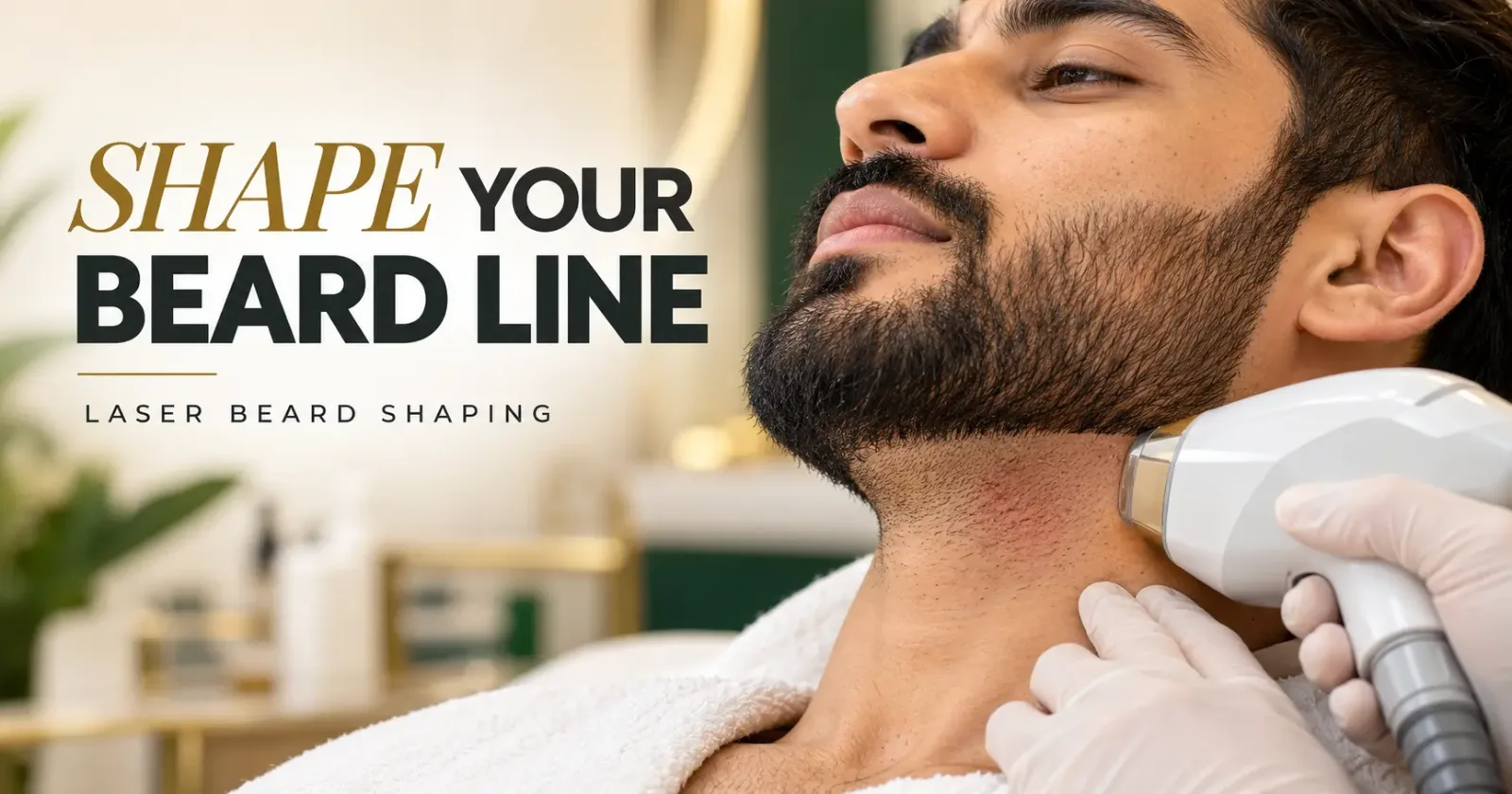
Laser beard shaping reduces stray hair above the cheek line and below the jaw, so your beard keeps a clean edge without daily trimming. Because the result is long-term, choosing the line is the most important step: plan it conservatively, as you can always take more away later but cannot easily grow reduced hair back. For many men it also reduces razor bumps on the neck over a course of sessions.
This guide covers how to choose your beard line and what to expect for razor bumps. For sessions, preparation and aftercare, see our page on laser beard shaping in Delhi.
What is laser beard shaping?
It is laser hair reduction applied only to the edges of the beard. The laser targets pigment in the hair and damages the follicle, so less hair grows back in the treated zone. The beard you keep is untouched. Common areas include:
- Cheek line: scattered hair high on the cheeks, above where the beard naturally starts
- Neck line: hair below the jaw and on the front of the neck
- Back of the neck: the nape, for a tidy line between haircuts
Most men need six to eight sessions, spaced four to six weeks apart, and some need more because beard hair is dense and driven by testosterone. Individual results vary.
How do you choose a cheek line?
The cheek line sets the upper edge of the beard. There are three broad options:
- Natural line: follows where your beard is already dense and only clears the scattered hairs above it. This is the safest choice for a first course.
- Slightly lowered line: a cleaner, sharper edge a little below the natural line. It suits fuller faces and gives a groomed look.
- Low, sharp line: a strongly defined edge. It looks striking, but it is hard to reverse and can date as styles change.
A useful rule is to follow the curve from the top of the ear towards the corner of the mouth, rather than drawing a straight line across the cheek. A straight line rarely suits the natural shape of the face.
How do you choose a neck line?
The neck line is where most men see the biggest difference. Many barbers place it about one or two fingers above the Adam's apple, curving back towards the ears beneath the jaw. Things to think about:
- Too high a line can make the beard look like a chinstrap and the jaw look weaker.
- Too low a line can leave hair on the neck that looks untidy when the beard is short.
- Look at the line from the side and with your head tilted down, not only straight on.
- If you sometimes shave the beard off completely, a very high line may look odd when clean-shaven.
Bring photos of beard styles you like. Your doctor maps the line with you in the mirror, marks it on the skin and agrees it with you before the first pulse.
Why plan your beard line conservatively?
Hair reduced by laser does not reliably grow back. Beard styles change over the years, and so does how your face looks with age. A conservative plan means:
- The first line is marked slightly fuller than you may ask for.
- After a few sessions you review the look in daily life.
- If you want it sharper, the line is moved a little further in a later session.
This step-by-step approach avoids the one result that cannot easily be fixed: a line that is too high. If you are unsure whether laser suits your hair at all, our page on unwanted hair compares the main options.
Why do razor bumps happen on the neck?
Razor bumps, known medically as pseudofolliculitis barbae, happen when coarse or curly beard hair is cut and then grows back into the skin. The skin reacts with a red or dark bump, sometimes with a small pus spot. The neck is most affected because hair there often grows in different directions and lies flat against the skin.
Bumps are common in men with curly or coarse hair, and on Indian skin they often leave dark marks that take weeks to fade. Close shaving, shaving against the grain and pulling the skin tight make them worse. Delhi's summer heat and sweat can add to the irritation.
Does laser help razor bumps?
For most men, yes. With fewer and finer hairs on the neck, there is less hair to grow back into the skin, so bumps and ingrown hairs usually reduce over the course. Many men notice a difference within a few sessions. Laser is one of the most reliable long-term options for this problem.
| Option | How it helps | Limits |
|---|---|---|
| Shaving with the grain | Leaves hair slightly longer, so it is less likely to curl back in | Less close finish; bumps can still happen |
| Trimming instead of shaving | Hair is never cut below the skin | Leaves stubble on the neck |
| Gentle exfoliation | Helps free trapped hairs | Can irritate if overdone |
| Laser beard shaping | Reduces the hair that causes bumps | Needs a course and occasional top-ups |
Until laser takes effect, use a clean, sharp razor, shave with the grain, avoid pressing hard and do not pick at bumps. Signs of infection, such as spreading redness, pain, heat or pus, need a doctor's review. If you tend to form raised, thick scars on the jaw or neck, mention it at consultation, as this changes the plan.
Who should wait before laser beard shaping?
Laser may need to wait, or the plan may change, if you:
- Have infected bumps, broken skin or an active rash on the area
- Have a recent tan or sunburn on the face and neck
- Are taking isotretinoin or other acne medicines, or medicines that make skin sensitive to light
- Have a history of keloid scarring
- Have grey or white beard hair in the zone, which laser cannot target well
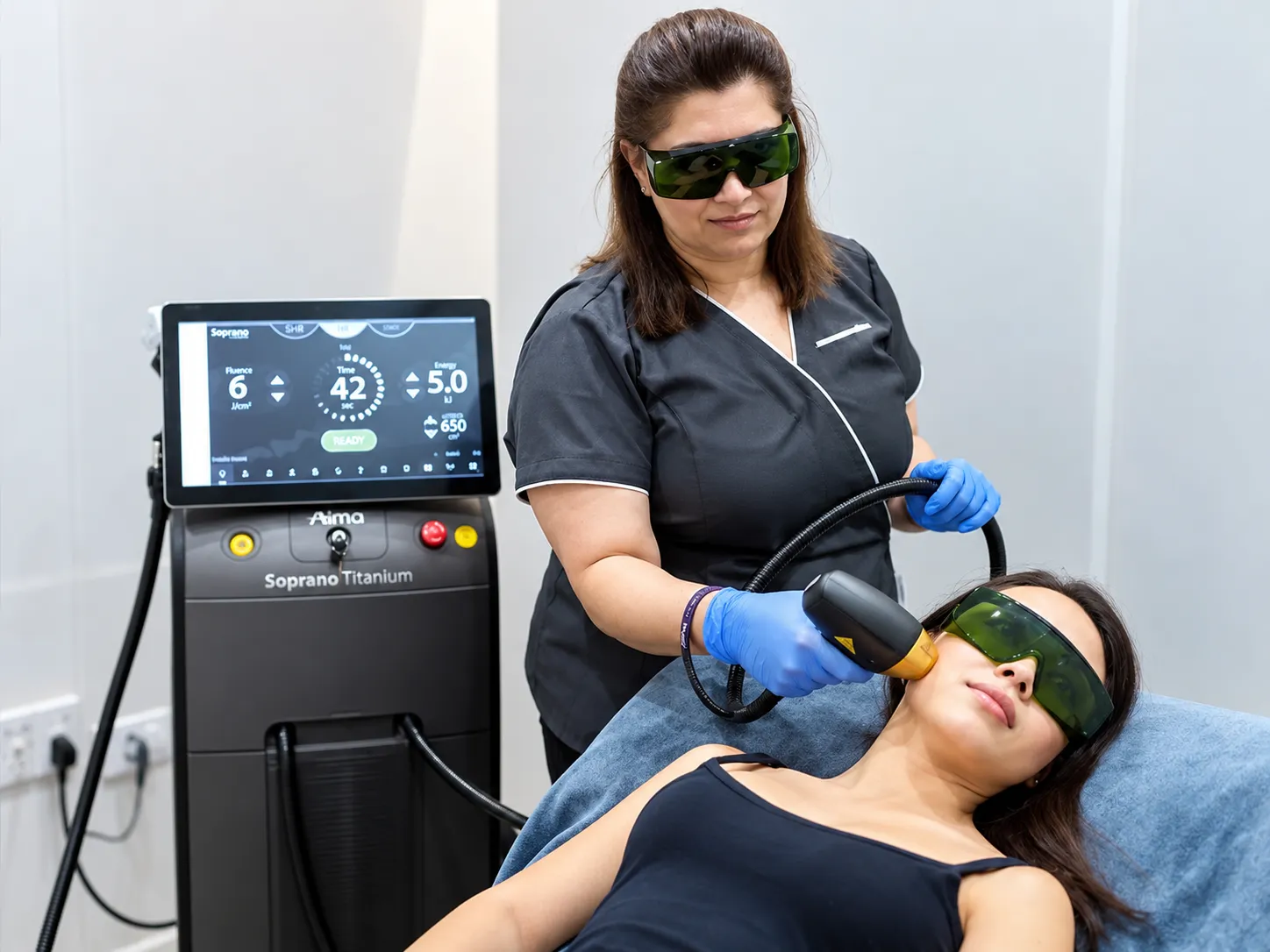
At Paradise Wellness, sessions use the Soprano Titanium by Alma Lasers, adjusted for your skin tone after a patch test. If you are thinking about the face or body more widely, our page on laser hair removal for men covers other areas, and our laser aftercare guide explains what to do after each session.
Frequently asked questions
Is laser beard shaping permanent?
It gives long-term hair reduction rather than guaranteed removal of every hair. Most men keep a much cleaner line for a long time, with occasional top-up sessions because testosterone can activate new follicles. That is why the line is planned conservatively. Individual results vary, and your doctor will explain what is realistic for your hair.
What if I want a fuller beard later?
This is the main reason to plan carefully. Hair reduced by laser does not reliably grow back, so the first line is marked conservatively and agreed with you before treatment. You can always take a little more away in later sessions, but you cannot easily add hair back once it has been reduced.
Can laser fill in a patchy beard?
No. Laser reduces hair; it cannot make new hair grow. If your beard is patchy, shaping the edges can make it look tidier and more deliberate, but it will not fill gaps. Talk to the doctor about what you want, and they will tell you honestly whether laser suits your goal.
Why does my beard line look patchy between sessions?
Hair grows in cycles, so not all hairs are treated in the same session. Treated hairs shed over one to three weeks, and others grow in later. This can make the edge look uneven for a few weeks. It evens out as the course goes on.
Can I shave or trim between sessions?
Yes. Shaving and trimming are fine between sessions, and you should shave the edges cleanly a day before each visit so the line can be marked. Avoid waxing, threading and plucking, because laser needs the root in place. After a session, wait 24 hours before shaving the treated area.
Does laser on the neck hurt?
Most men describe a quick, warm snap. The neck is usually the most sensitive part of beard shaping, especially over the Adam's apple. Built-in cooling helps, and the pace can be adjusted if an area feels sharp. Sessions for beard edges are short, usually 15 to 30 minutes.
If you want a cleaner beard line or relief from razor bumps, book a free consultation at any of our four clinics in Vasant Vihar, Gurugram, Pitampura or Civil Lines. A doctor will map your line with you and plan a course of laser beard shaping that suits your face and skin.