



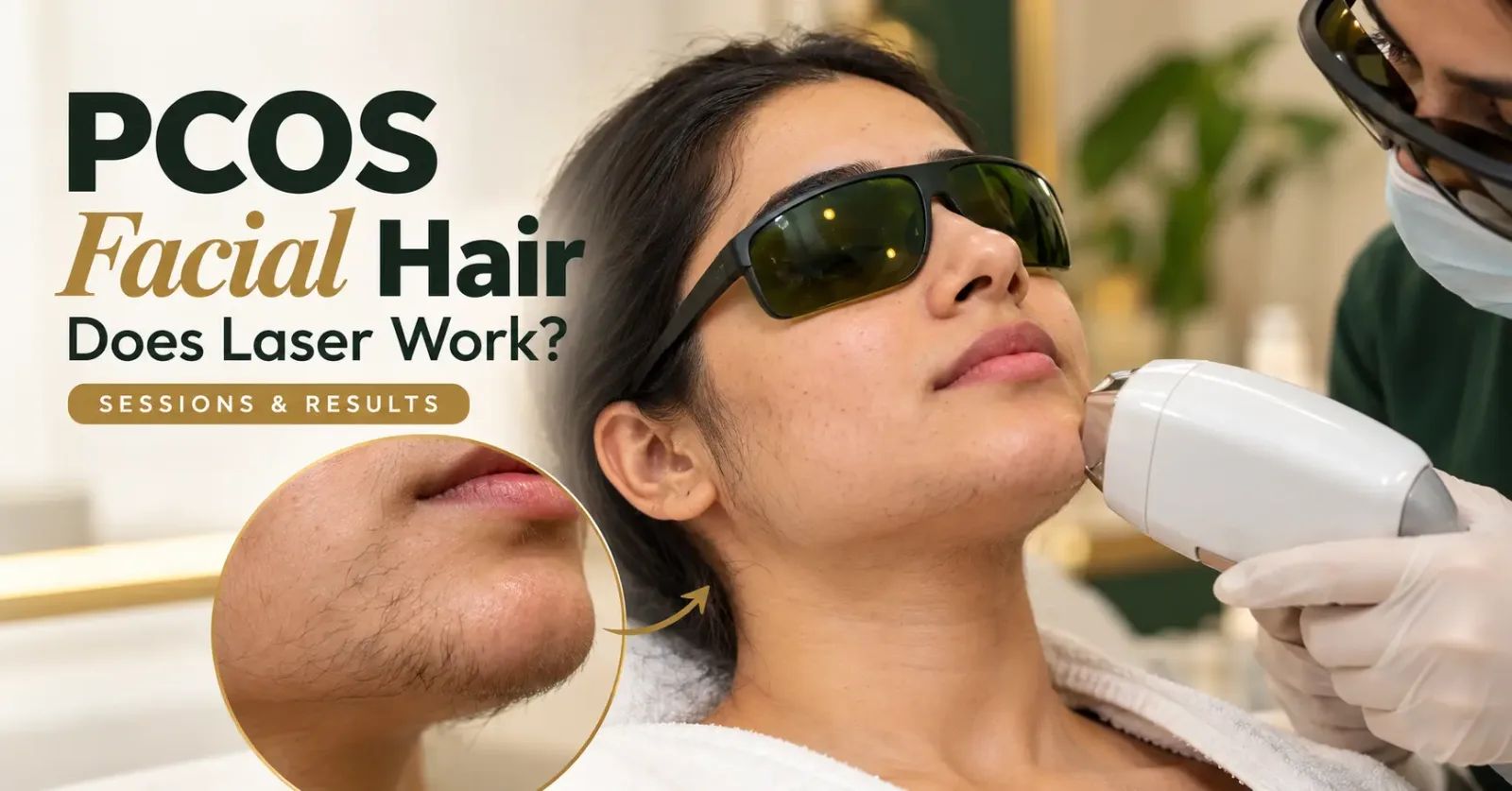
Yes, laser hair removal usually works well on PCOS facial hair, especially coarse, dark hair on the chin, jawline and neck. Most women need more sessions than usual, often beyond the standard six to eight, because hormones can keep activating new follicles, so occasional maintenance sessions are normal. Results are strongest when the hormonal cause is also being managed by a doctor.
This guide explains why PCOS hair behaves differently and what a realistic course looks like. For an overview of areas, sessions and preparation, see our page on laser hair removal for women.
Why does PCOS cause facial hair?
Polycystic ovary syndrome (PCOS) is a common hormonal condition. In many women it raises the level of androgens, the hormones often called "male" hormones, or makes hair follicles more sensitive to them. Androgens can turn fine, light vellus hair into coarse, dark terminal hair in places such as:
- The chin and jawline
- The upper lip and sides of the face
- The neck
- The chest, stomach and the line below the navel
This pattern of growth is called hirsutism. It is not caused by threading, shaving or anything you did. It reflects what is happening inside the body, which is why PCOS hair can feel stubborn and frustrating.
Does laser hair removal work for PCOS hair?
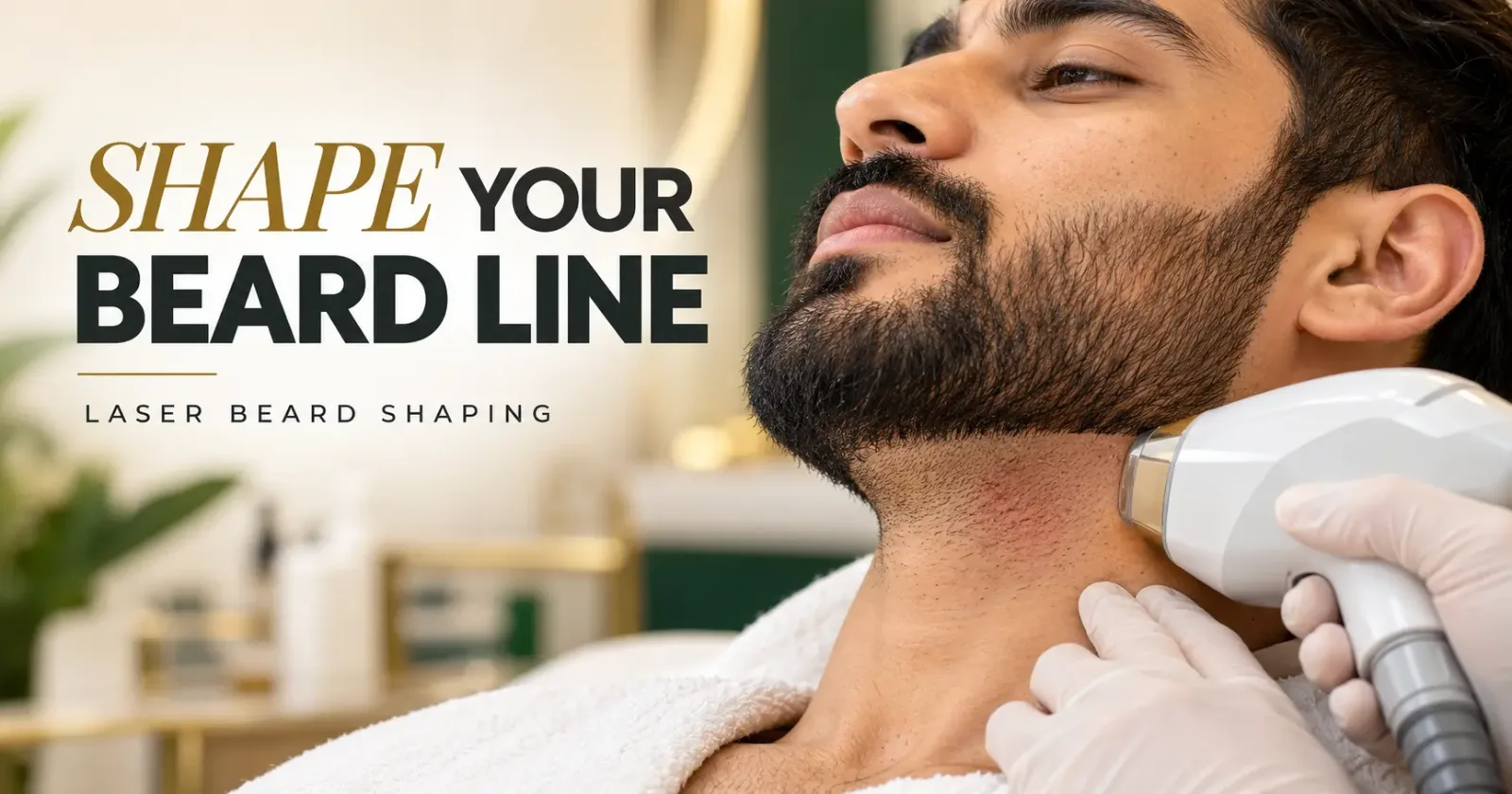
For most women, yes. Laser energy is absorbed by the pigment in the hair and travels down to the follicle, where it damages its ability to grow hair. PCOS hair on the chin and jawline is usually dark and coarse, which is exactly the kind of hair laser targets well.
What makes PCOS different is not how well laser works on existing hair, but what happens next. While androgen levels remain high, the body can keep converting fine hairs into new coarse ones. These are new follicles, not treated hairs growing back, but the effect can feel similar. Individual results vary.
Laser is less effective on hair that is very fine, grey, white or light blonde, because there is little pigment to absorb the energy.
How many sessions do you need for PCOS facial hair?
A standard laser course is six to eight sessions. With PCOS, many women need more, followed by occasional maintenance. A typical pattern looks like this:
- Main course: sessions every four to six weeks on the face, matched to the hair cycle.
- Extra sessions: often needed for dense or very hormone-driven areas such as the chin.
- Maintenance: a session every few months, or when new growth appears, to keep the area under control.
Your doctor reviews your progress at each visit and adjusts the plan. Hair often becomes finer, lighter and slower-growing well before it disappears, which is a good sign the treatment is working.
Laser vs threading, waxing and shaving for PCOS hair
| Method | How long it lasts | Common problems | Fit for PCOS hair |
|---|---|---|---|
| Shaving | A day or two | Stubble, shadow on the chin | Safe between laser sessions |
| Threading or waxing | A couple of weeks | Bumps, ingrown hairs, darkening | Must stop during a laser course |
| Plucking | A couple of weeks | Ingrown hairs, marks, irritation | Must stop during a laser course |
| Laser hair reduction | Long-term reduction, with maintenance | Temporary redness; rare pigment changes | Usually effective on coarse, dark hair |
Laser needs the root to be in place, so threading, waxing and plucking must stop for about four weeks before and during a course. Shaving is fine, because it leaves the root intact. Many women find this the hardest part at first, but shaving does not make hair grow thicker.
Why treating the hormones matters too
Laser works on hair that is already there. It does not change the hormones that create new hair. That is why doctors often suggest managing PCOS alongside laser, with care from a gynaecologist or endocrinologist. Treatment for the hormonal side may include lifestyle changes and medicines prescribed by your own doctor, and it can slow down new growth.
When both sides are managed, laser results tend to last longer and fewer maintenance sessions are needed. If you notice sudden, rapid new hair growth, a deeper voice or other new symptoms, see your doctor, as these need medical checks rather than laser alone.
Is laser safe for Indian skin with PCOS?
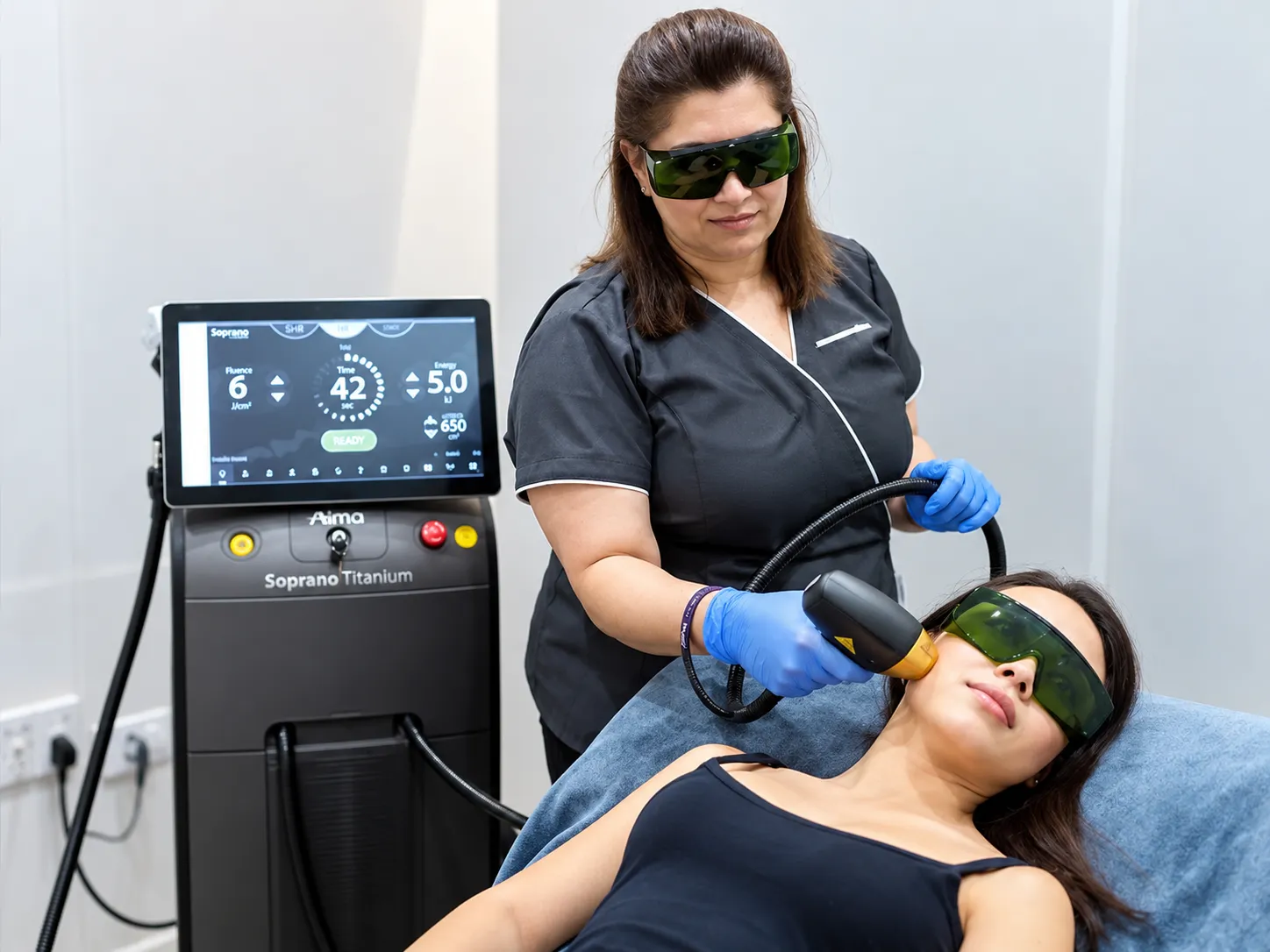
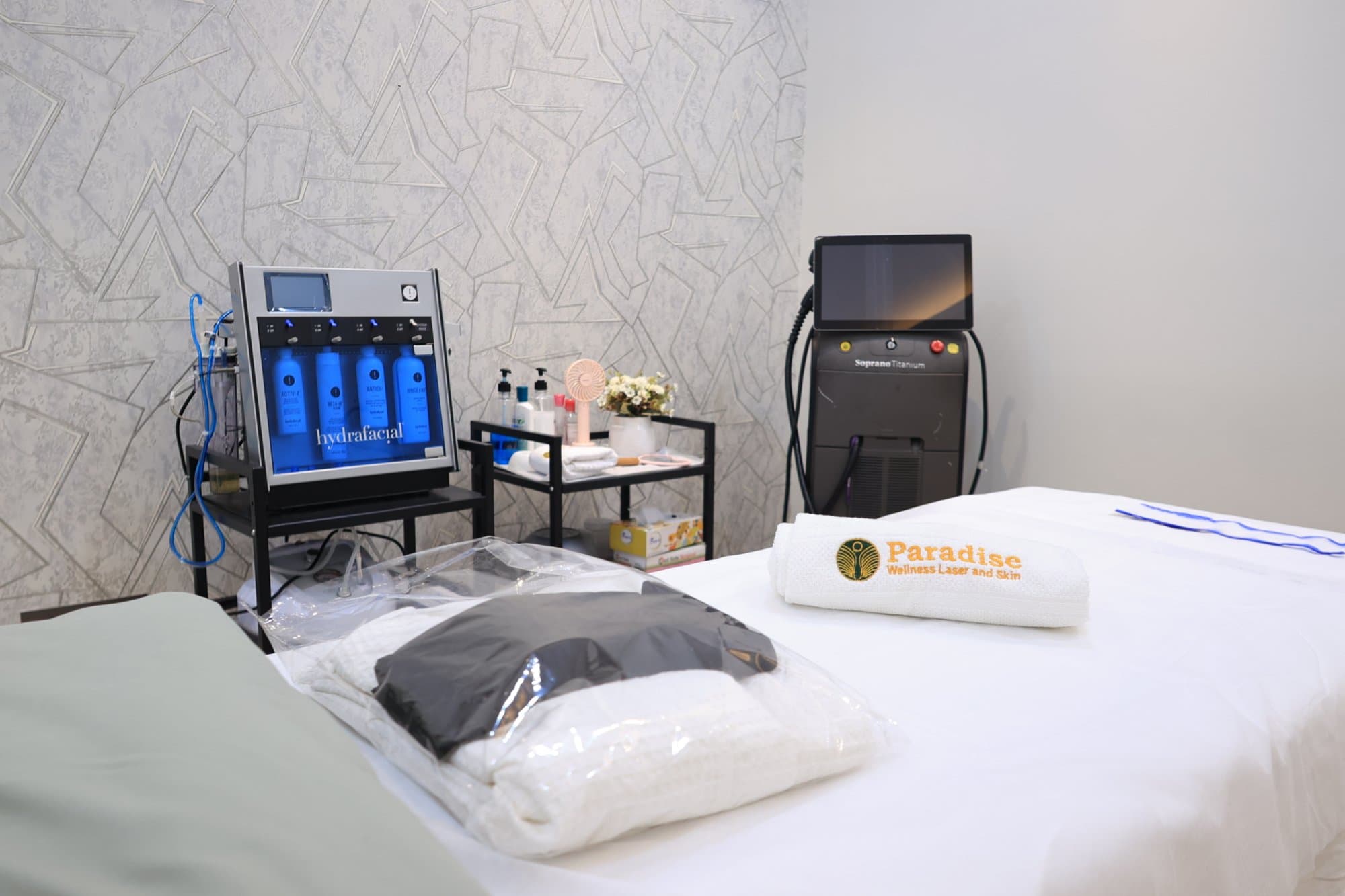
Yes, when the device and settings are right for your skin. At Paradise Wellness, sessions use the Soprano Titanium by Alma Lasers, which can be adjusted for Indian skin tones. A patch test comes first, and the doctor sets and reviews the settings at each visit.
Many women with PCOS also have darkening on the chin, neck or underarms from years of threading or from the condition itself. Settings are adjusted for this. If darkening remains a concern once hair is reduced, the doctor may suggest a separate treatment such as laser toning, planned after an assessment.
Who should wait before starting laser?
Laser should wait, or needs a doctor's review first, if you:
- Are pregnant, or think you might be
- Are breastfeeding: your doctor will advise on timing
- Have a tan, sunburn or broken skin on the area
- Have an active infection, cold sores or acne flare on the face
- Are taking isotretinoin or medicines that make skin sensitive to light
- Have a history of keloid scarring
Tell the doctor about any hormonal treatment you are on or planning, as it can affect how your hair responds. After each session, follow our laser hair removal aftercare advice.
How to choose a clinic for PCOS laser in Delhi
Look for a clinic where:
- A doctor assesses you before the first session, not only a therapist
- Someone asks about your hormones, medicines and other symptoms
- A patch test is done, and settings are adjusted for your skin
- You are told honestly that maintenance is likely
- Progress is reviewed at every visit
Our page on unwanted hair explains how laser fits alongside other options.
Frequently asked questions
Will PCOS hair come back after laser?
Treated follicles are usually reduced for the long term, but PCOS hormones can activate new follicles over time. That is why some new growth can appear months or years later. Occasional maintenance sessions keep this under control, and managing the hormonal cause with your doctor can slow it down. Individual results vary.
Can I have laser while taking PCOS medicines?
In most cases, yes. Many women have laser while on treatment prescribed by their gynaecologist or endocrinologist, and the two often work well together. Some medicines can make skin more sensitive to light, so tell the doctor about everything you take before the patch test and at each visit.
What can I do about hair between sessions?
Shaving is the safe option between sessions, because it leaves the root in place for the laser to target. Trimming is also fine. Avoid threading, waxing, plucking and bleaching, as these remove or change the hair the laser needs. Shaving does not make the hair thicker or darker.
Does laser work on fine PCOS hair?
Laser works on pigment, so very fine, light or grey hair responds poorly. Dark, coarse hair responds well. If most of your hair is fine and soft, the doctor will tell you honestly what laser can achieve and whether another approach makes more sense for you.
Can laser cause more hair to grow?
Rarely, laser on the face and neck can stimulate finer new hair near a treated area. This is called paradoxical hair growth. It is uncommon, but it is a real effect, so tell the doctor if you notice more hair around a treated area. Settings and the plan can then be adjusted.
Should I wait until my PCOS is under control?
You do not have to wait, but it helps to have a doctor involved. Many women start laser and hormonal treatment around the same time. Starting laser while untreated hormones keep driving new growth can mean more sessions overall, so your doctor will discuss timing with you.
If PCOS hair is affecting how you feel, book a free consultation at any of our four clinics in Vasant Vihar, Gurugram, Pitampura or Civil Lines. A doctor will assess your hair and skin, discuss your hormonal history and plan a realistic course of laser hair removal for women.