




Botox and fillers are both quick, injectable treatments, and people often use the two names as if they mean the same thing. They do not. They work in completely different ways and treat different problems, which is why many faces benefit from one, the other, or a small amount of both. Here is how to tell which one you need.
The short answer
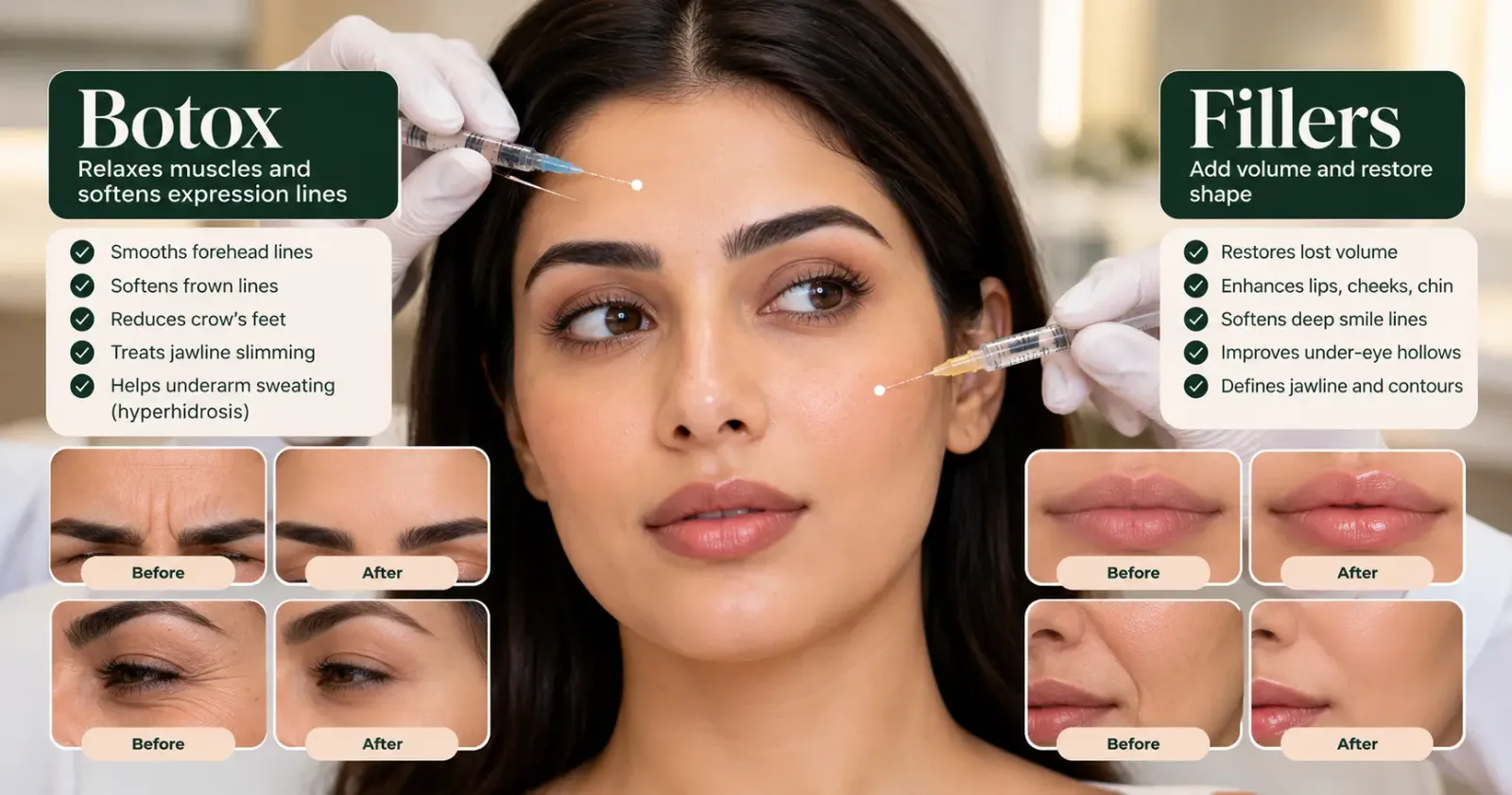
- Botox relaxes muscles. It softens lines that appear when you move your face: frown lines, forehead lines and crow's feet.
- Fillers add volume. They restore or add shape where the face has lost it: lips, cheeks, under-eye hollows, chin and jawline, and deeper folds such as smile lines.
A simple test: if a line is only there when you frown, raise your brows or smile, Botox is usually the answer. If a line or hollow is there even when your face is at rest, volume loss is part of the cause and a filler, skin booster or other treatment may help more.
How Botox works
Botox is a purified protein injected in tiny amounts into specific facial muscles. It reduces the signal from the nerve to the muscle, so the muscle contracts less and the skin above it creases less. The effect starts after 3–5 days, is fully visible at about 2 weeks and usually lasts 3–4 months.
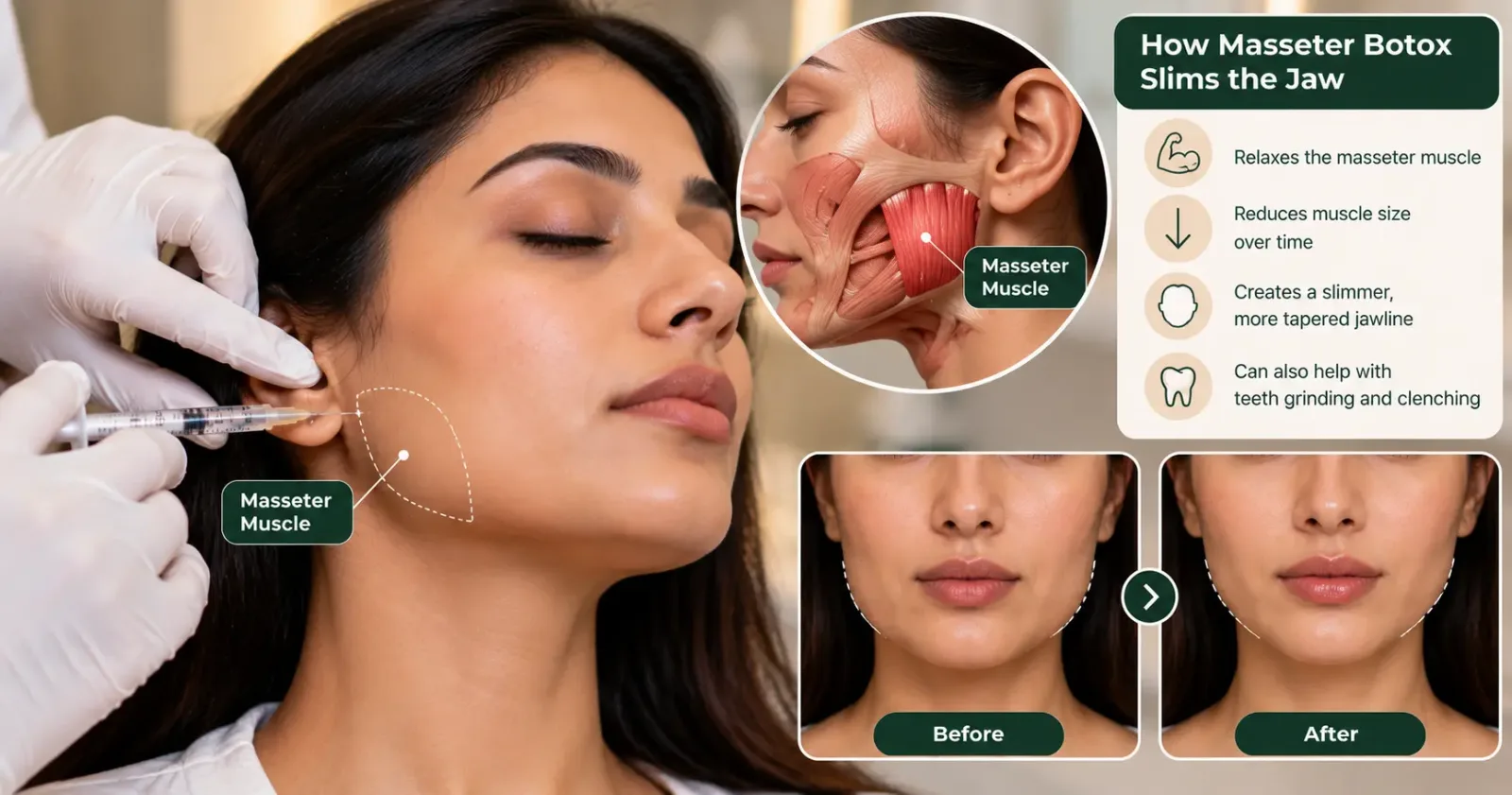
Common areas are the frown lines between the brows, the forehead and crow's feet around the eyes. Our doctors also use it for jaw slimming when the chewing muscle is enlarged, and for excessive underarm sweating.
How fillers work
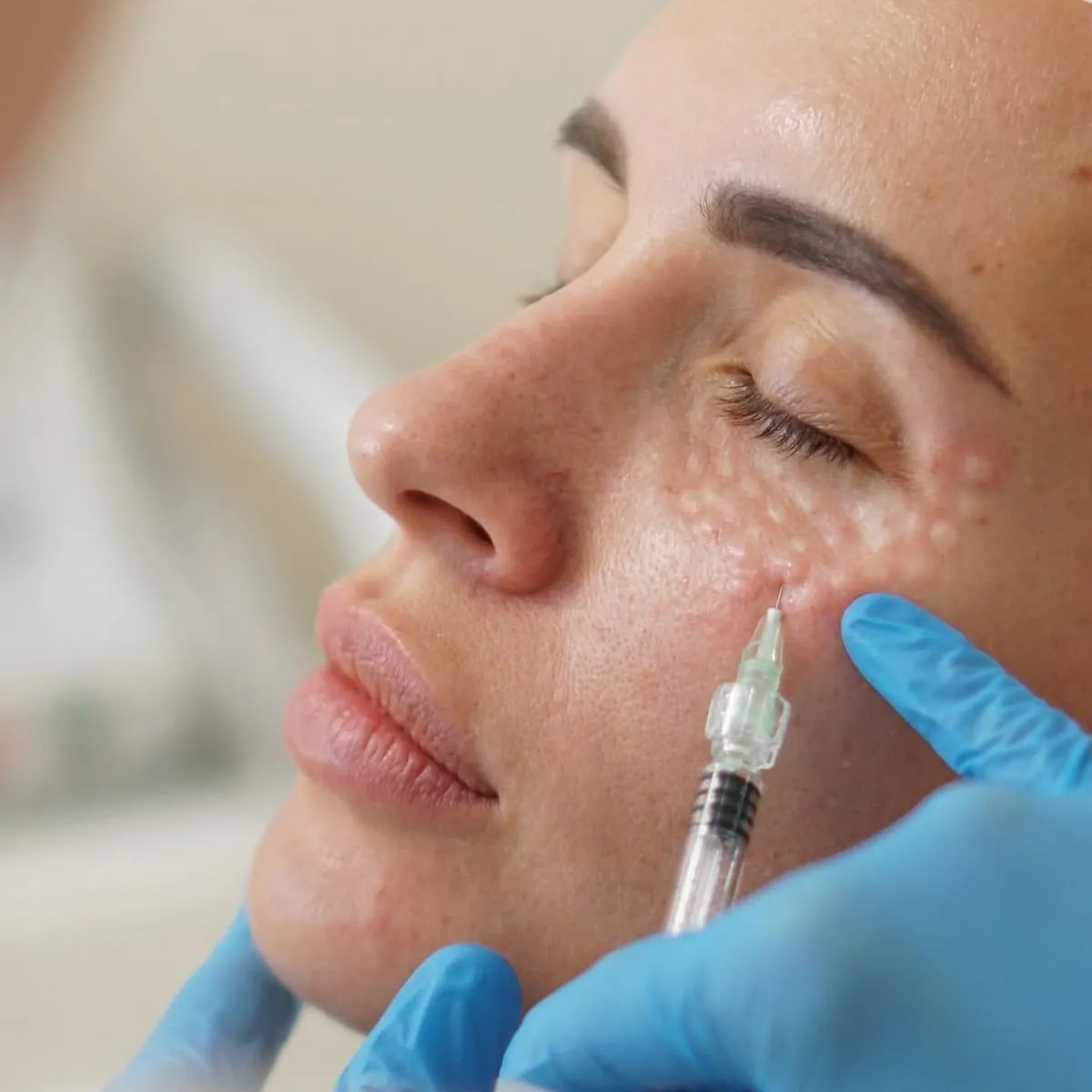
Dermal fillers are gels, most often made of hyaluronic acid, a substance found naturally in the skin. Placed under the skin, they add volume straight away. Results settle over about 2 weeks and usually last 6–18 months depending on the area and product. Hyaluronic acid fillers can be dissolved if ever needed.
Popular areas include:
- Lips, for volume, shape and definition
- Under-eye hollows (tear troughs), when the shadow comes from hollowness rather than pigment
- Cheeks, chin and jawline, for lift, balance and definition
- Smile lines and marionette lines that are deep even at rest
Side by side
| Botox | Fillers | |
|---|---|---|
| What it does | Relaxes muscles that cause lines | Adds volume and shape |
| Best for | Lines that show when you move | Lines, hollows and flat areas at rest |
| When you see it | 3–5 days; full effect at 2 weeks | Straight away; settled at 2 weeks |
| How long it lasts | Usually 3–4 months | Usually 6–18 months |
| Downtime | Little or none; small marks for an hour | Swelling for 1–3 days; possible bruising |
| Reversible? | Wears off on its own | Hyaluronic acid filler can be dissolved |
When both make sense
Ageing rarely has one cause. A common example is the forehead and brow: Botox softens the frown lines, while a little filler in the temples or cheeks restores the support that was lost. In the lower face, Botox can relax the muscle that pulls the corners of the mouth down, while filler supports the chin and jawline. A doctor plans the combination so the face still looks like you and still moves naturally.
What neither treatment does
Neither Botox nor filler tightens loose skin, removes fat under the chin or improves pigmentation. For those concerns, treatments such as HIFU, fat-dissolving injections or skin boosters may suit you better, and many plans combine them.
Is it safe?
Both are safe in experienced medical hands. At Paradise Wellness, every Botox and filler treatment is planned and performed by our doctors, who start with a consultation, explain the side effects and check whether either treatment suits you at all. Pregnancy, breastfeeding and some medical conditions mean waiting. Individual results vary.
Not sure which one you need?
Book a free consultation. The doctor will look at your face at rest and in movement and tell you honestly whether Botox, filler, both or something else will help most.