




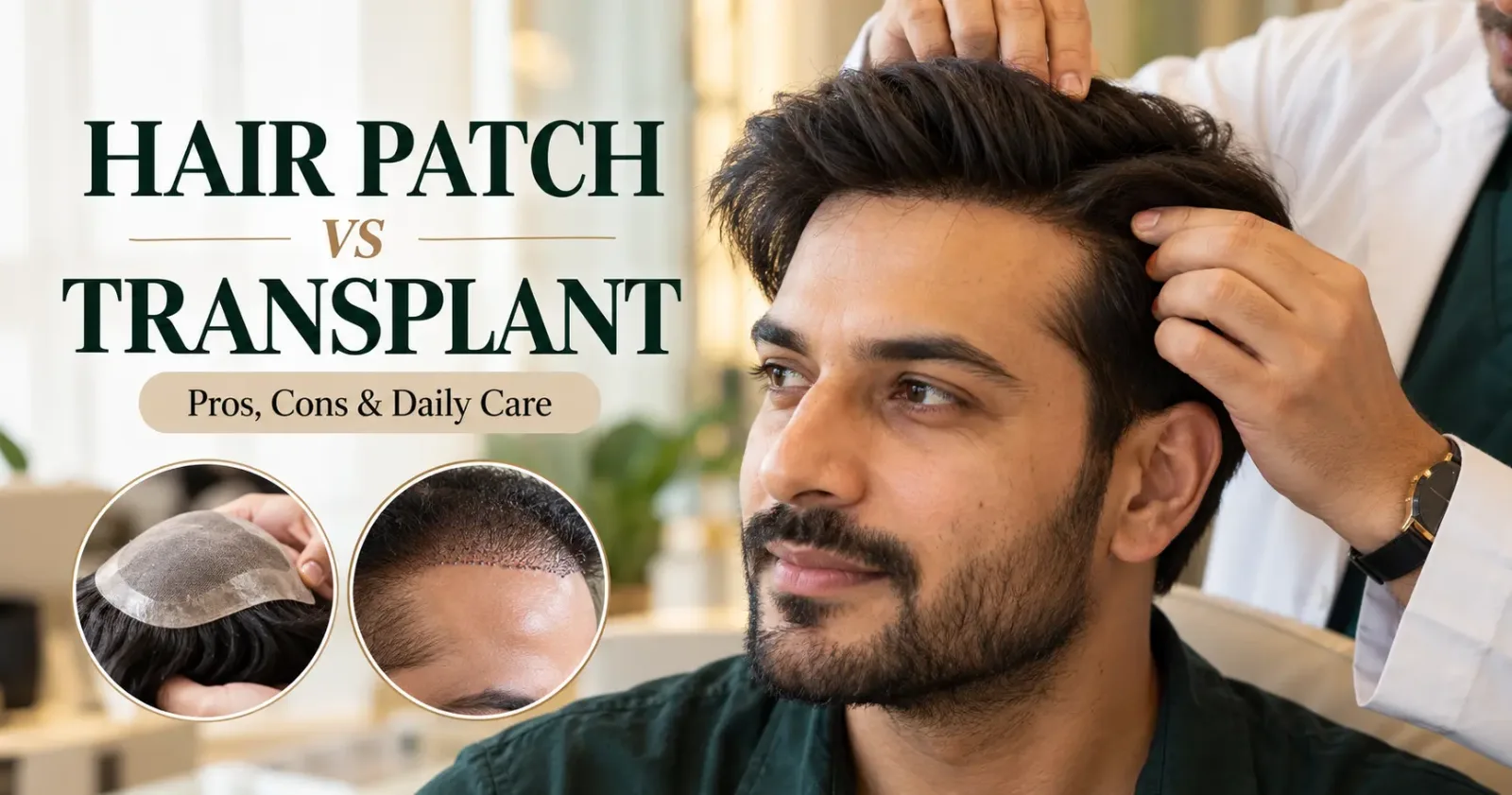
A hair patch is a thin base with real or synthetic hair attached, fixed over a thinning or bald area with tape, skin-safe adhesive or clips. It gives instant coverage with no surgery, but it needs re-fixing every few weeks, replacing over time and careful scalp hygiene. If you are looking into a non-surgical hair patch in Delhi, this guide covers the honest pros and cons, daily care and how it compares with a transplant.
What is a hair patch and how does it work?
A hair patch is also called a hair system or non-surgical hair replacement. It is a cosmetic option, not a medical treatment. The process usually involves:
- Consultation. Your scalp is checked, and your goals, work and lifestyle are discussed.
- Measuring and matching. The area is measured and a template is made. Colour, texture, density and hair direction are matched to your own hair.
- Fitting. The scalp is cleaned and the patch is fixed. A patch test of the adhesive may be done first.
- Cutting and styling. The hair is cut and styled to blend with your natural hair.
Fitting takes around one to two hours, and the change is visible immediately.
What are the pros of a hair patch?
- Instant result. You walk out with fuller-looking hair the same day.
- No surgery or downtime. There are no injections, wounds or recovery period.
- Works with advanced hair loss. It can cover large areas, even where little donor hair remains.
- Flexible. You can change style, colour or density with a new system, or stop at any time.
- An option when a transplant is not suitable. For example, with limited donor hair or health reasons that rule out surgery.
What are the cons of a hair patch?
- It does not grow hair. Your natural hair under and around the patch may keep thinning.
- Ongoing maintenance. Re-fixing and scalp cleaning are needed every three to six weeks.
- Replacement. The system wears out and needs replacing after some months of regular use.
- Heat and sweat. Delhi summers and monsoon humidity can loosen adhesive and irritate the skin.
- Skin reactions. Some people react to tapes or adhesives.
- Traction risk. Tight clips or pulling at the edges can thin your own hair over time.
How to look after a hair patch every day
Good care keeps the patch looking natural and protects the scalp underneath.
Washing
Use the shampoo and conditioner advised for your system. Wash gently in the direction of the hair, without rubbing or scrubbing. Pat dry with a towel rather than twisting. Hot water and hard water can dry out the hair on the system, so lukewarm water and a good conditioner help.
Sweat, gym and sport
Rinse sweat away after exercise. Sweat trapped under the base for long periods can cause itching, odour and skin irritation. Chlorine and salt water loosen adhesive faster, so ask about protection before swimming.
Styling
Limit high heat from dryers and straighteners, as hair on a system does not grow back if damaged. Use a heat protectant. Brush gently with a soft brush, especially near the edges.
Sleeping
A smooth pillowcase reduces friction and tangling. Follow the advice you are given about sleeping in your system.
Sun and pollution
Sun can fade the colour of the system hair over time, and dust settles on the scalp. A cap outdoors in strong sun and regular cleaning help.
Maintenance visits
Return for re-fixing and scalp cleaning on schedule. Skipping visits is the most common reason for irritation and a lifted, less natural look.
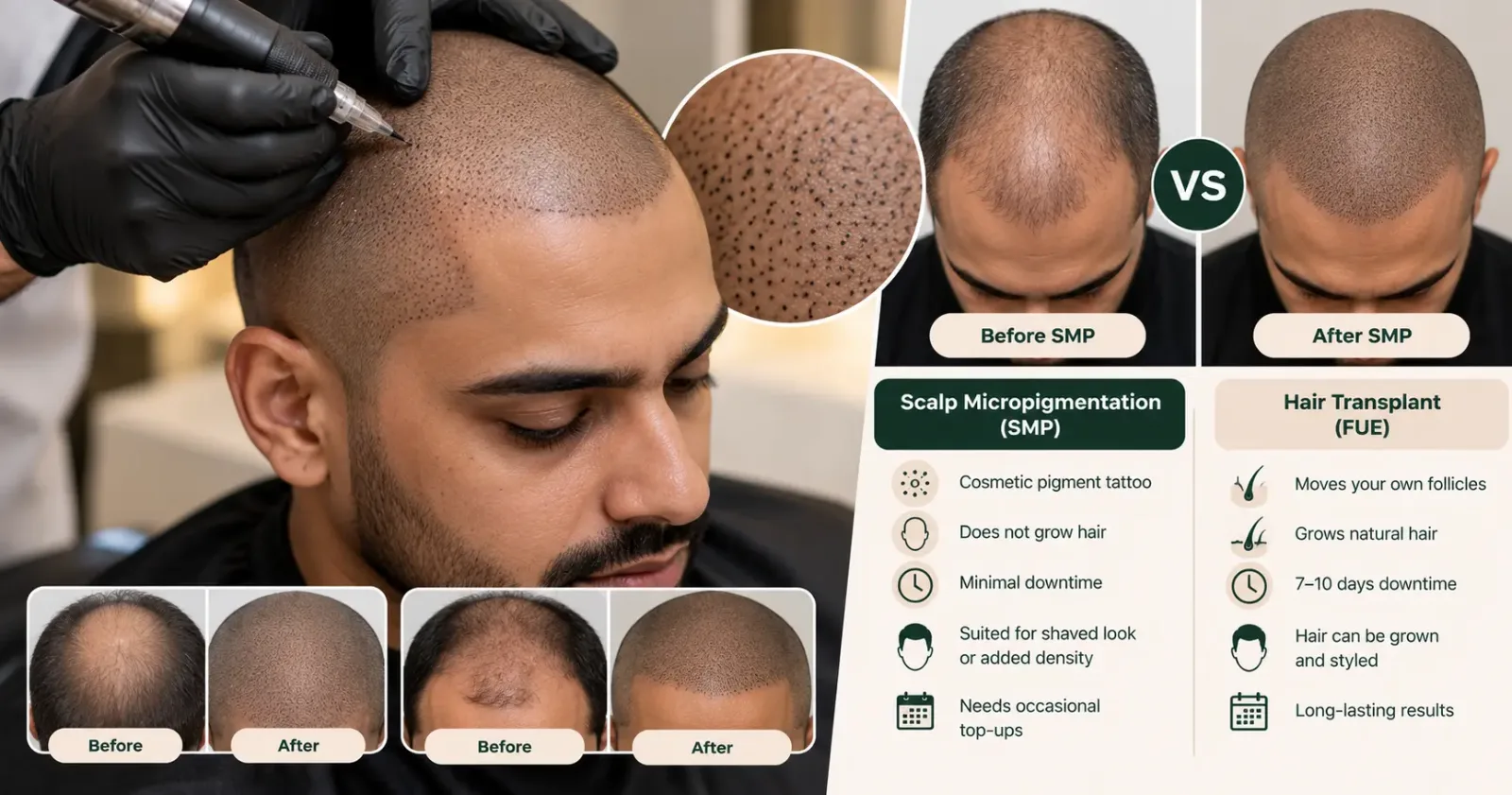
Hair patch vs hair transplant vs scalp micropigmentation
| Point | Hair patch | Hair transplant (FUE) | Scalp micropigmentation |
|---|---|---|---|
| What it is | Non-surgical hair system | Minor surgery moving your own follicles | Cosmetic pigment tattoo |
| Grows hair | No | Yes | No |
| Needs donor hair | No | Yes | No |
| Result | Immediate | Gradual, over 9 to 12 months | After the first session |
| Downtime | None | About 7 to 10 days | Minimal |
| Upkeep | Re-fixing every few weeks, replacement over time | Care to protect existing hair | Occasional top-ups |
| Hairstyle | Medium or longer styles possible | Grow and style your own hair | Very short look or density behind longer hair |
A transplant may fit better if you have a strong donor area and want your own hair long term. Scalp micropigmentation may fit better if you like a very short look. A patch fits people who want instant, full coverage without surgery and are happy with regular upkeep. Your doctor can help you compare these honestly.
Can I protect my own hair while wearing a patch?
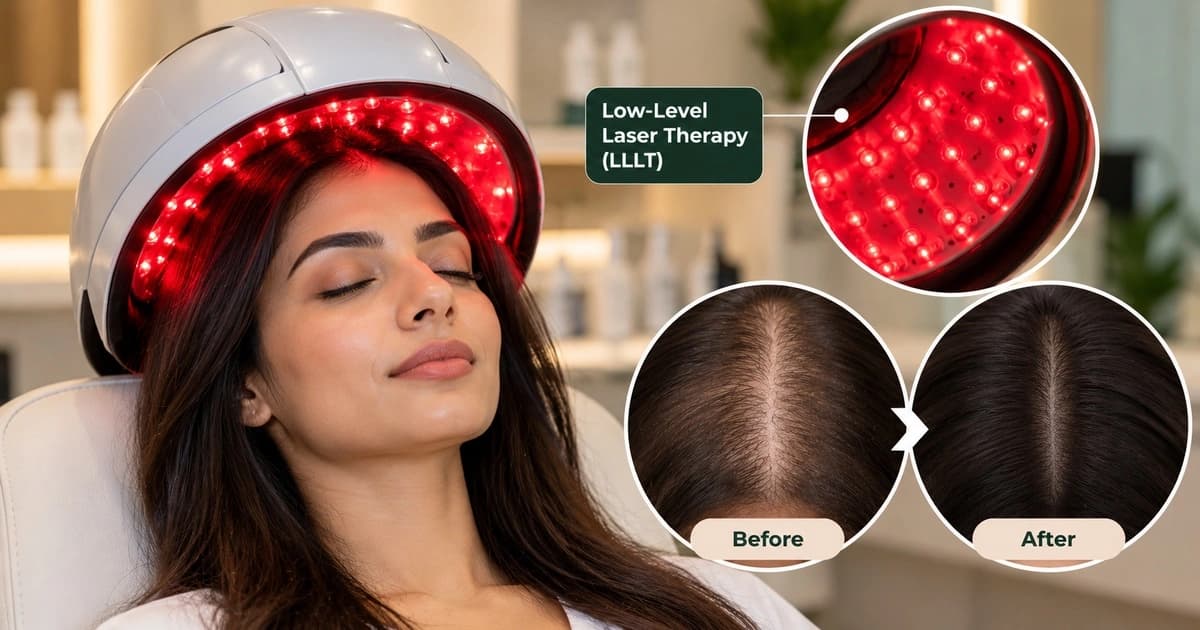
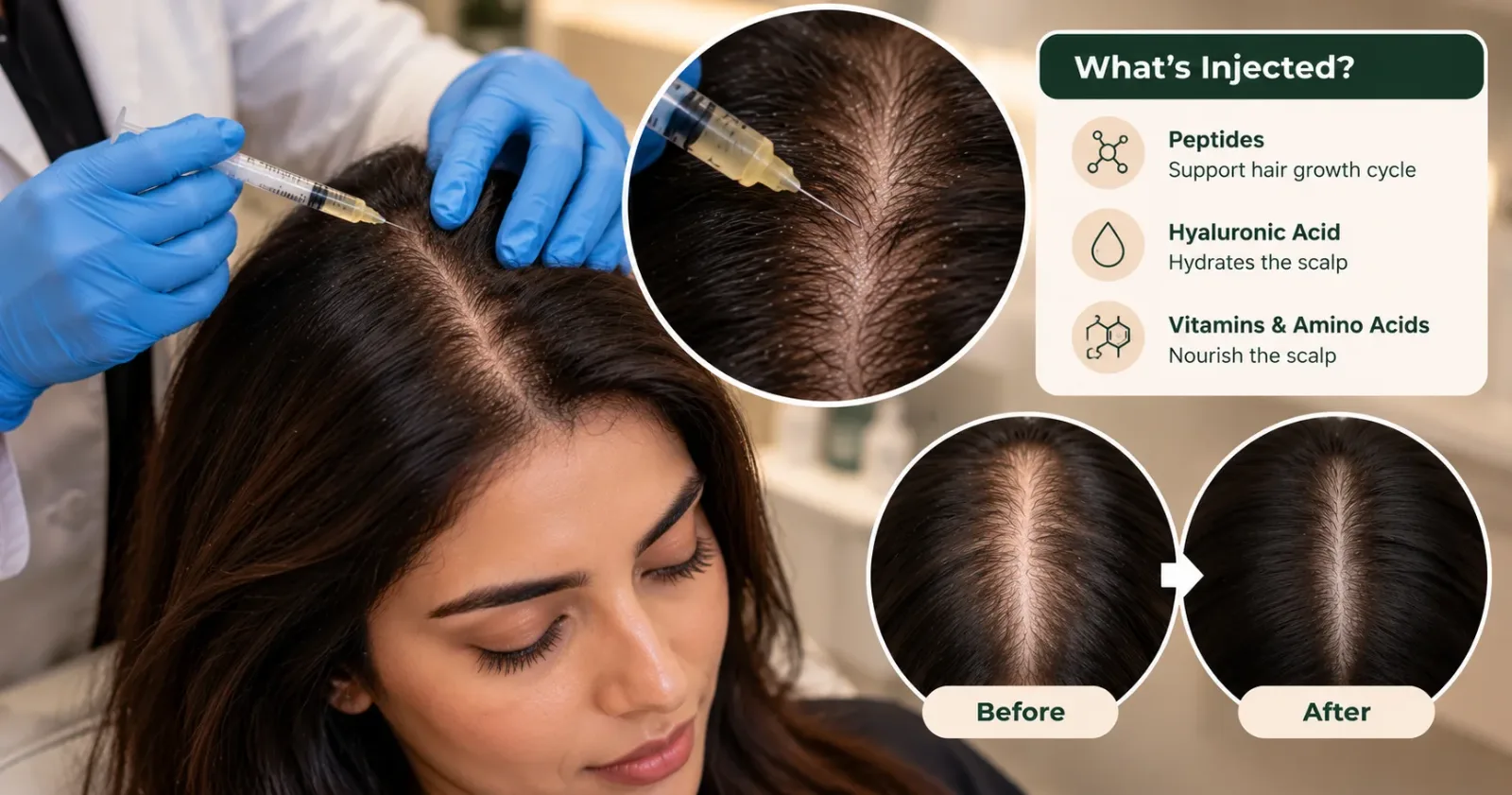
Yes, and it is worth doing. A patch covers hair loss but does not slow it. If you still have thinning hair around the edges or at the front, your doctor may suggest medical treatment, GFC and PRP hair treatment or hair mesotherapy. Keeping the hair you have helps the patch blend for longer.
It also helps to know why you are losing hair. Thyroid problems, low iron and hormonal changes can all play a part. Read more on causes of hair fall and thinning.
Who should not wear a hair patch, or wait first?
- People with an active scalp infection, a dandruff flare, eczema or psoriasis
- Anyone with a known allergy to adhesives or tapes (a patch test is advised)
- People with open wounds or recent surgery on the scalp
- Those with very sensitive skin that reacts to sweat or covering
Call your clinic if you notice redness, rash, blisters or itching under the adhesive, pain, pus or sores on the scalp, or hair loss around the edges of the patch.
How to choose a hair patch provider in Delhi
- Your scalp should be checked first, so a condition that needs treatment is not missed.
- Ask about base types, hair types and fixing methods, and what suits your lifestyle.
- Ask how often re-fixing is needed and what each maintenance visit includes.
- Check that hygiene and scalp cleaning are part of every visit.
Frequently asked questions
Does a hair patch damage your natural hair?
If fitted and maintained properly, it should not. Problems usually come from pulling at the edges, clips that are too tight, adhesive left on too long or poor scalp hygiene. These can cause irritation or traction thinning. Regular maintenance visits, gentle handling and keeping the scalp clean help protect your own hair underneath.
How long does a hair patch last?
It depends on the base material, the fixing method, your sweat levels and how well it is cared for. Most systems need replacing after some months of regular wear. Between replacements, the patch needs re-fixing and scalp cleaning every three to six weeks. Your provider will advise a schedule that fits your system.
Can I sleep, swim or go to the gym with a hair patch?
With the right fixing, many people carry on their normal routine. Heavy sweating, chlorine and salt water loosen adhesive faster, so extra care is needed. Rinse sweat away after workouts and ask about protection before swimming. Follow the advice you are given about sleeping in your system.
Will people be able to tell I am wearing a hair patch?
A well-matched, well-maintained patch can blend closely with your own hair. Colour, density, hair direction and a soft front edge all matter. It tends to look less natural when it lifts at the edges or is overdue for maintenance. Results vary with your hair type and the system chosen.
Is a hair patch better than a hair transplant?
Neither is better for everyone. A patch gives instant coverage without surgery but needs lifelong upkeep and does not grow hair. A transplant grows your own hair but needs a good donor area, a minor procedure and months of waiting. Your doctor can help you decide based on your hair loss and priorities.
Does a hair patch treat hair loss?
No. A hair patch is a cosmetic hair system that covers thinning or bald areas. It does not treat the cause of hair loss or grow new hair. If you want to protect or regrow your own hair, a doctor's assessment is the right first step, and medical or clinic treatments may help alongside the patch.
To find out whether a hair patch, a transplant or another option suits you, book a free consultation at our Vasant Vihar, Gurugram, Pitampura or Civil Lines clinic. We will check your scalp and talk you through each choice.