




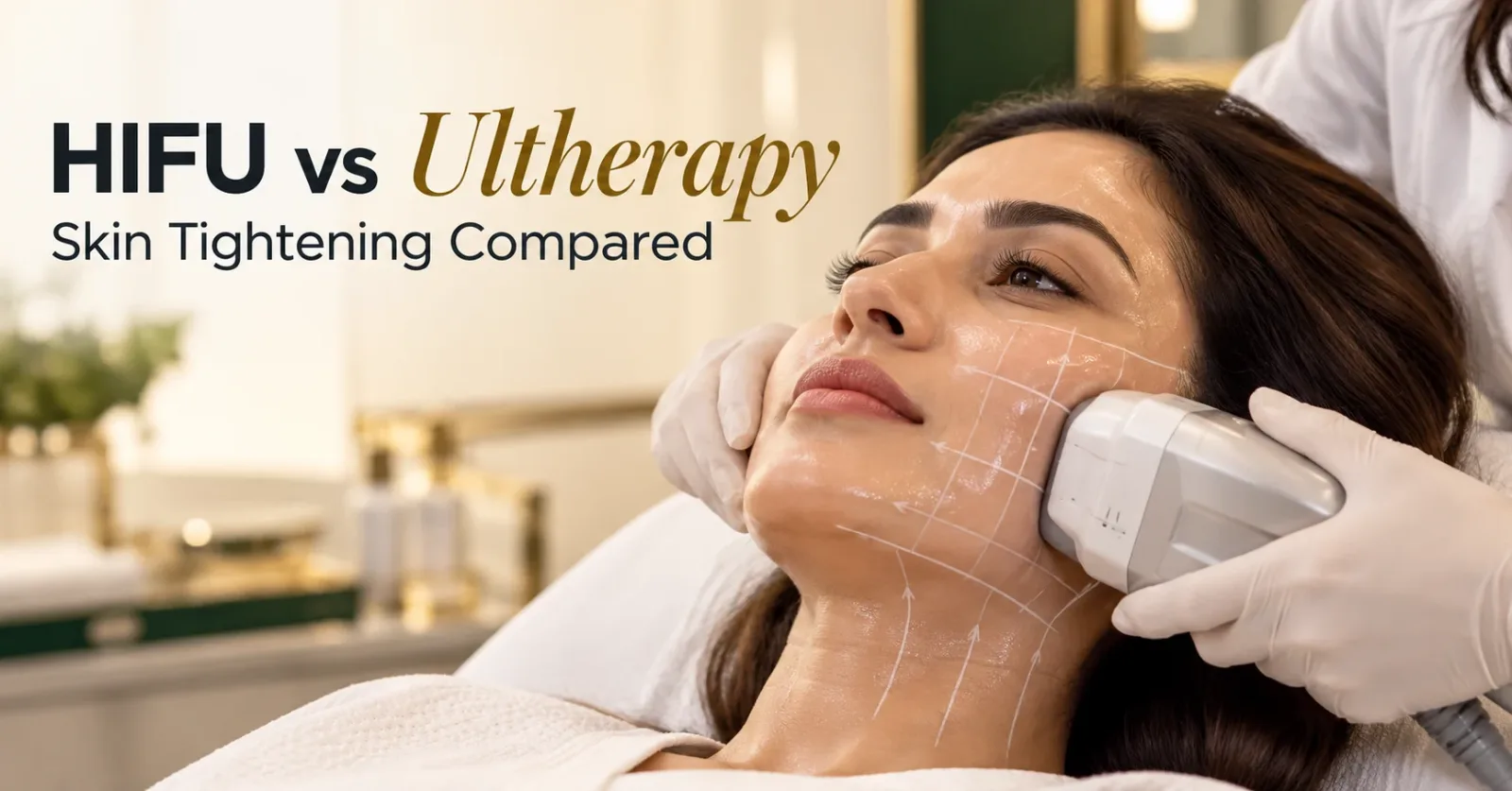
HIFU and Ultherapy work in the same way: both deliver focused ultrasound to the deep supporting layers under the skin, without cuts or needles, to stimulate new collagen and gradually lift and firm the face and neck. Ultherapy is one specific, branded form of this technology. At our clinics, the main differences are the length and planning of the session and the price: Ultherapy is a longer, once-a-year treatment of the face and neck, while HIFU is shorter and can be booked for a single area.
This guide explains how they compare so you can discuss the right option with your doctor. See our HIFU page and Ultherapy page for full details of each.
How focused ultrasound lifts the skin
Focused ultrasound places tiny points of heat at set depths beneath the skin, including the layer that is tightened in a surgical facelift. The heat makes the tissue contract and prompts the body to build new collagen over the following months. That is why results are gradual: some people notice slight firming on the day, visible tightening at 4–8 weeks and the fullest change at around three months.
HIFU vs Ultherapy at a glance
| HIFU | Ultherapy | |
|---|---|---|
| Technology | Focused ultrasound | Focused ultrasound (a specific brand) |
| Session time | 45–90 minutes | Up to 2 hours |
| Areas | Full face, face and neck, or under-chin alone | Full face and neck, mapped area by area |
| Downtime | None | None |
| Results | Build over 2–3 months | Build over about 3 months |
| Repeat | Usually once a year | Every 10–12 months |
| Guide price | From ₹9,999 (under-chin); ₹19,999 full face; ₹24,999 face and neck | ₹59,999 full face and neck |
Prices are guide prices from our price list and are the same at all four clinics. Your exact price is confirmed at a free consultation.
What is different about an Ultherapy session?
With Ultherapy, the doctor maps the face, jawline and neck and plans the treatment depth for each area before starting, then delivers the ultrasound line by line. Because the whole face and neck are covered in detail, the session is longer — up to two hours — and it is designed as a once-a-year treatment.
HIFU can be booked for a smaller area, such as under the chin, which makes it a lower-cost way to start or to treat one concern.
Who suits each?
Both suit people with early to moderate sagging: a softer jawline, early jowls, loosening neck skin, under-chin fullness or a heavy brow. Neither can match a surgical facelift for significant sagging, and your doctor will tell you honestly if another option would suit you better, such as a thread lift.
- HIFU often suits a first treatment, a single area such as the under-chin, or a lower budget.
- Ultherapy often suits people who want the whole face and neck treated in one detailed, once-a-year session.
If you would rather have a course of gentler sessions, radiofrequency treatments such as Exilis Face are another option.
Does it hurt?
You feel deep warmth or prickly pulses along each line, especially over bony areas such as the jaw. It is usually well tolerated. Mild redness, slight swelling and tenderness along the jaw for a few days are normal.
Who should wait?
We do not give HIFU or Ultherapy during pregnancy, or where there is active acne, an open wound or infection in the area. Tell your doctor about recent fillers or threads, metal implants or a pacemaker before treatment.
Frequently asked questions
Is Ultherapy better than HIFU?
Not automatically. They use the same principle. The better choice depends on which areas you want treated, how much laxity you have and your budget. Your doctor will recommend one after assessing your skin.
How long do results last?
Results typically last around a year, as the skin continues to age naturally. Most people repeat once a year.
Can I combine HIFU or Ultherapy with Botox or fillers?
Yes. Focused ultrasound tightens by building collagen, while Botox softens expression lines and fillers restore volume. Your doctor will advise on timing. For more comparisons, read microcurrent facial vs HIFU.