



Melasma is best controlled with strict daily sun protection plus a doctor-prescribed cream, with peels or gentle laser toning added when needed. It can be improved a lot but tends to come back, especially with sun and heat, so the goal is long-term control rather than a one-time cure.
What is melasma?
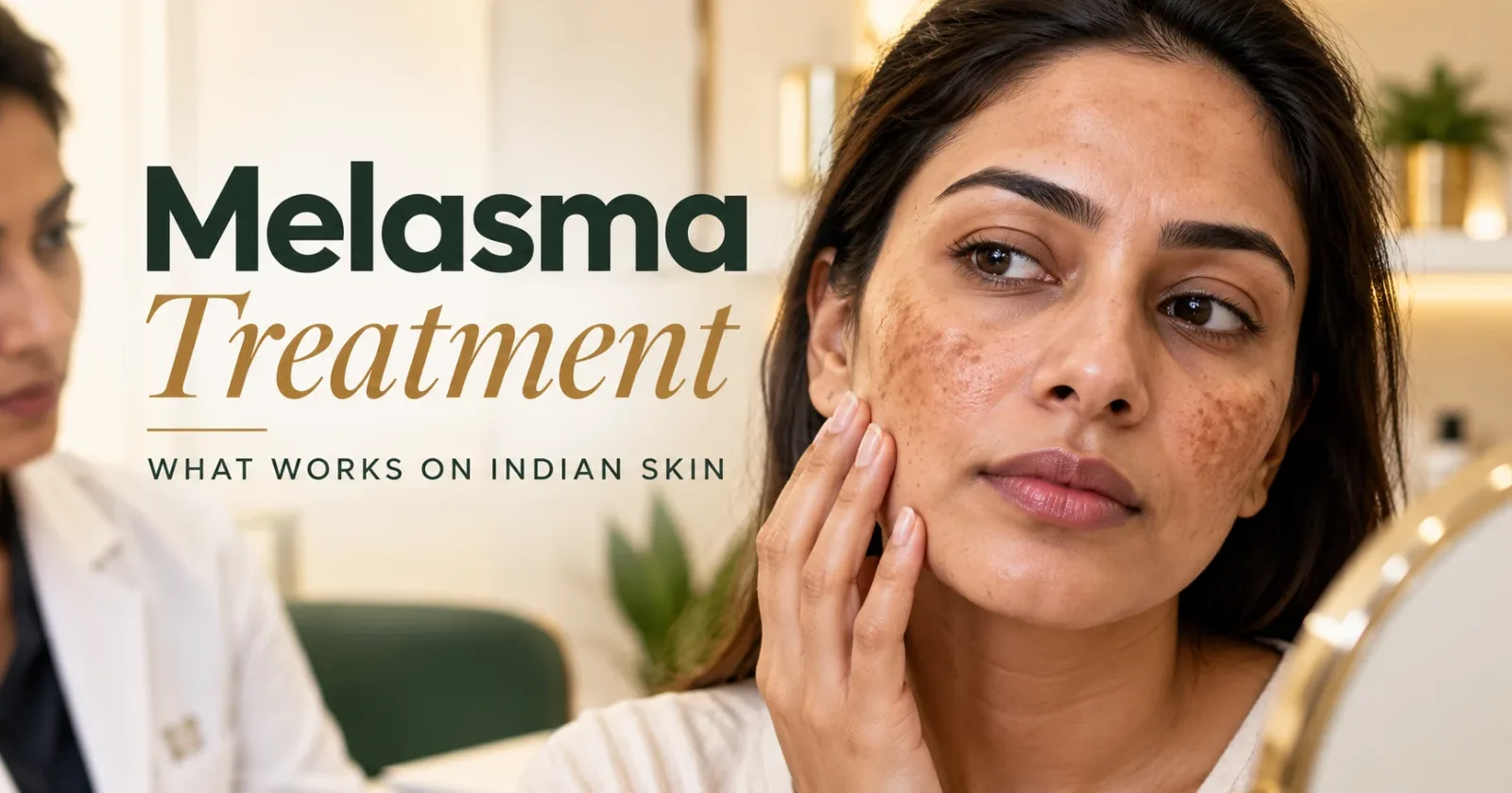
Melasma is a common skin condition that causes brown or grey-brown patches, usually on the cheeks, forehead, nose bridge, upper lip and chin. The patches often appear on both sides of the face in a similar pattern. It is not harmful or contagious, but it can affect confidence.
Why it is so common in Indian skin
Medium to brown skin (Fitzpatrick III to V) has active pigment cells that react strongly to triggers. Common triggers include:
Sun and visible light: the biggest trigger. Delhi's strong sun keeps melasma active for much of the year.
Heat: cooking, saunas and hot weather can darken patches.
Hormones: pregnancy, birth control pills and hormone therapy.
Genetics: it often runs in families.
Irritating products: harsh scrubs, unprescribed steroid creams and some cosmetics.
Melasma or something else?
Sun spots, freckles, post-acne marks and other conditions can look similar. A dermatologist may use a Wood's lamp or dermoscopy to see how deep the pigment is, which helps decide treatment. Deeper (dermal) melasma is slower to respond.
What works
1. Sun protection every single day
Use a broad-spectrum SPF 30 or higher every morning and reapply every 2–3 hours outdoors. Tinted sunscreens containing iron oxides also protect against visible light, which matters for melasma. Add a hat and shade. Without this step, no treatment lasts.
2. Prescription creams
Doctors may prescribe creams that slow pigment production, such as hydroquinone-based combinations, azelaic acid, kojic acid, niacinamide or cysteamine. Some are used only for a limited time under supervision.
3. Oral medicine in selected cases
Oral tranexamic acid is used for stubborn melasma in some patients, after screening for risks such as clotting problems. It must only be taken on a doctor's prescription.
4. Chemical peels
Gentle, repeated pigmentation peels help remove pigment from the top layers. Strength is increased slowly on Indian skin to avoid irritation, which can darken melasma. Our Cosmelan peel is a depigmenting option some patients use.
5. Gentle laser toning
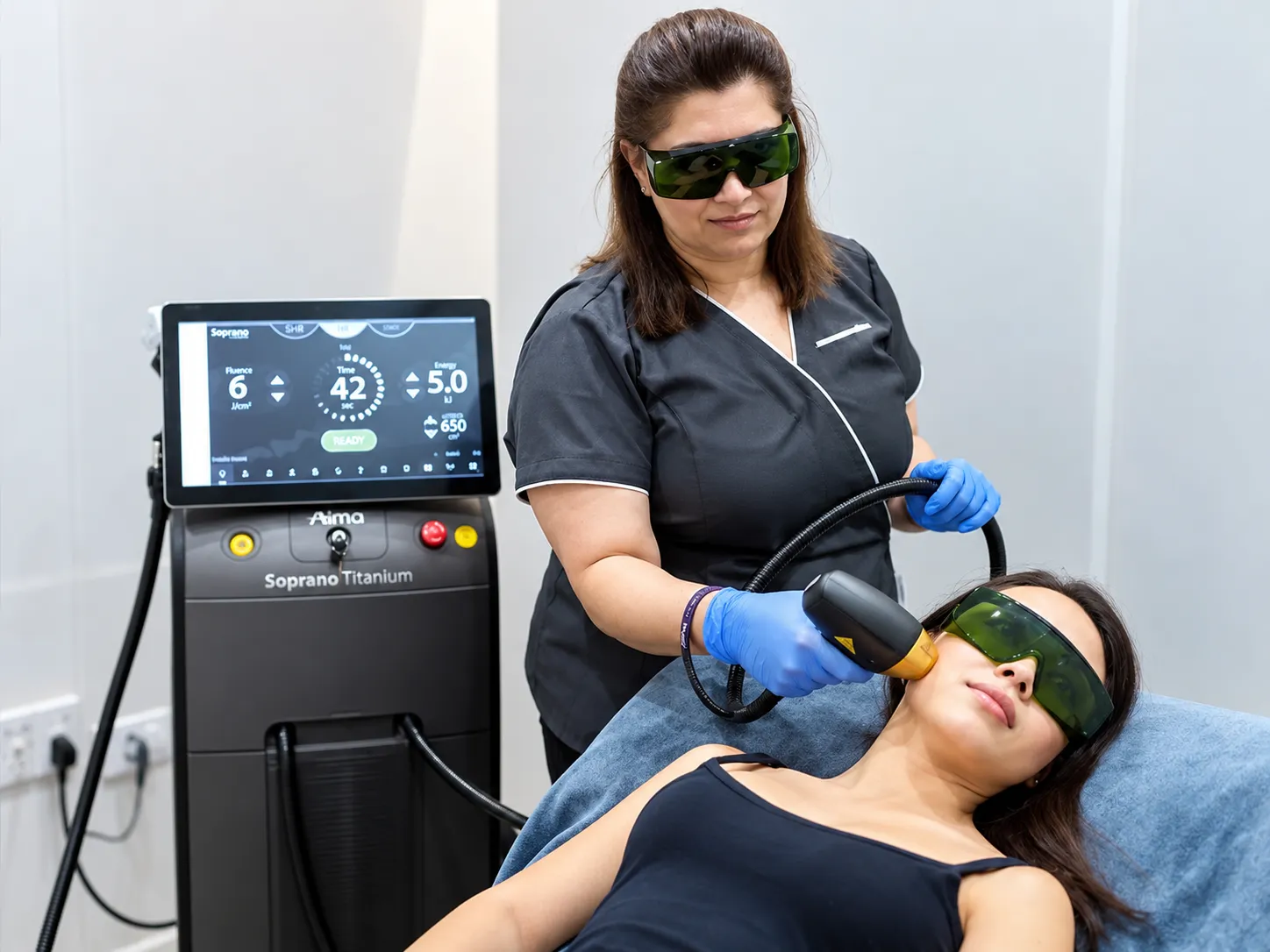
Laser toning uses low-energy laser in a series of sessions to break up pigment gradually. It is usually added to creams and sun protection rather than used alone. Aggressive laser can make melasma worse.
What doesn't work (or makes it worse)
Unprescribed steroid creams: mixed creams bought over the counter can thin the skin and cause rebound darkening.
Scrubs and home remedies: lemon, raw potato or harsh scrubs irritate the skin and can deepen pigment.
Strong, one-off laser sessions: heat-heavy lasers can trigger more pigment.
Stopping sunscreen once it fades: melasma returns quickly without daily protection.
How long does treatment take?
Most people notice lighter patches after 8–12 weeks of consistent treatment. Melasma often returns with summer sun, pregnancy or stopping treatment, so a maintenance plan is part of care. Results vary.
Melasma during pregnancy
Melasma often appears or darkens during pregnancy. Many creams, peels and oral medicines are not suitable at this time. Focus on sun protection and speak to your dermatologist and obstetrician before using any treatment.
Frequently asked questions
Can melasma be cured permanently?
Melasma can be lightened a lot, but it tends to come back with sun, heat or hormones. Long-term sun protection and maintenance treatment keep it under control.
Which is the best treatment for melasma?
There is no single best treatment. Most people do best with daily sunscreen plus a prescription cream, with peels or laser toning added if needed. The plan depends on how deep the pigment is.
Is laser good for melasma?
Gentle, low-energy laser toning can help as part of a combined plan. Strong lasers can worsen melasma in Indian skin, so laser should only be done by a dermatologist.
Does sunscreen really help melasma?
Yes. It is the most important step. Tinted sunscreens that also block visible light give extra protection.
Can I use hydroquinone without a prescription?
Avoid it. Hydroquinone and steroid combinations should be used only under a doctor's supervision, for a limited time, to avoid side effects.
Why does my melasma get darker in summer?
Stronger sun and heat both stimulate pigment cells. Increase sun protection and reapply more often from March to June.
How many peel sessions are needed for melasma?
Usually a series of 4 to 6 peels spaced a few weeks apart, alongside daily creams and sunscreen. Your doctor will decide based on your skin.
Melasma needs a careful, doctor-led plan. Learn more about pigmentation and melasma treatment, or book a consultation at any of our four clinics in Vasant Vihar, Gurugram, Pitampura or Civil Lines.