



Some birthmarks can be faded with laser, but not every birthmark can be removed, and laser usually fades a mark rather than erasing every trace. Flat pigmented birthmarks such as naevus of Ota often respond well over several sessions, while café-au-lait marks respond less predictably. Vascular birthmarks and congenital moles need a different assessment. A doctor's examination is the first step before any birthmark removal plan.
This guide explains the main types of birthmarks, what laser can and cannot do for each, and the warning signs that mean a mark needs medical checking rather than cosmetic treatment. Results vary from person to person.
What are the main types of birthmarks?
Birthmarks are areas of skin that look different from birth or soon after. They fall into two broad groups.
Pigmented birthmarks
These are caused by extra pigment in the skin. They include:
- Naevus of Ota: blue-grey or brown patches around the eye, temple or cheek.
- Café-au-lait marks: flat, light-brown patches with clear edges.
- Becker's naevus: a brown patch, often on the shoulder or chest, that may become more noticeable or hairy around puberty.
- Mongolian spots: blue-grey patches, usually on the lower back of babies, which often fade during childhood without treatment.
- Congenital moles: moles present from birth, which range from small to very large.
Vascular birthmarks
These are made of blood vessels. They include port-wine stains, which are flat pink, red or purple patches, and haemangiomas, which are raised red marks that often grow in infancy and then shrink over several years.
Which birthmarks can laser help?
Laser works by targeting colour in the skin. A pigment laser, such as a Q-switch laser, sends very short pulses that break up pigment so the body can clear it gradually. This is why it suits some flat pigmented birthmarks.
| Birthmark | What it looks like | How it tends to respond to pigment laser |
|---|---|---|
| Naevus of Ota | Blue-grey or brown patch around the eye or cheek | Often responds well over several sessions |
| Café-au-lait mark | Flat, light-brown patch | Unpredictable; may fade, fade only partly or return |
| Becker's naevus | Brown patch on shoulder or chest, sometimes hairy | Variable; may fade partly and can return |
| Mongolian spot | Blue-grey patch on a baby's lower back | Often fades on its own; treatment rarely needed |
| Port-wine stain or haemangioma | Pink, red or purple mark | Needs a different type of laser; usually referred to a specialist centre |
| Congenital mole | Brown or black mole present from birth | Needs a dermatologist's assessment; often not suitable for laser |
You can read more about Q-switch laser treatment, which is also used for other kinds of pigmentation.
What can laser not do for birthmarks?
It is important to be clear about the limits:
- Laser usually fades rather than removes. Some marks fade a great deal; others fade only partly.
- Some marks do not respond. Even with good technique, a mark may not change much.
- Some marks come back. Café-au-lait marks and Becker's naevus can darken again over time, especially with sun.
- Vascular marks need different equipment. A pigment laser is not the right tool for port-wine stains.
- Moles are a separate matter. A mole is not treated like a flat birthmark. Our page on mole removal explains how moles are assessed.
The doctor will tell you plainly if laser is not the right choice for your mark.
Are congenital moles safe to remove with laser?
Congenital moles, especially large ones, need a dermatologist's assessment and often ongoing monitoring. Laser is generally not used to fade them, because it can make changes in the mole harder to watch. Large congenital moles may also need a specialist opinion on whether and how to treat them. Small congenital moles may be considered for removal after examination, but the decision depends on the mole, not on cosmetic wishes alone.
When should a birthmark or mole be checked urgently?
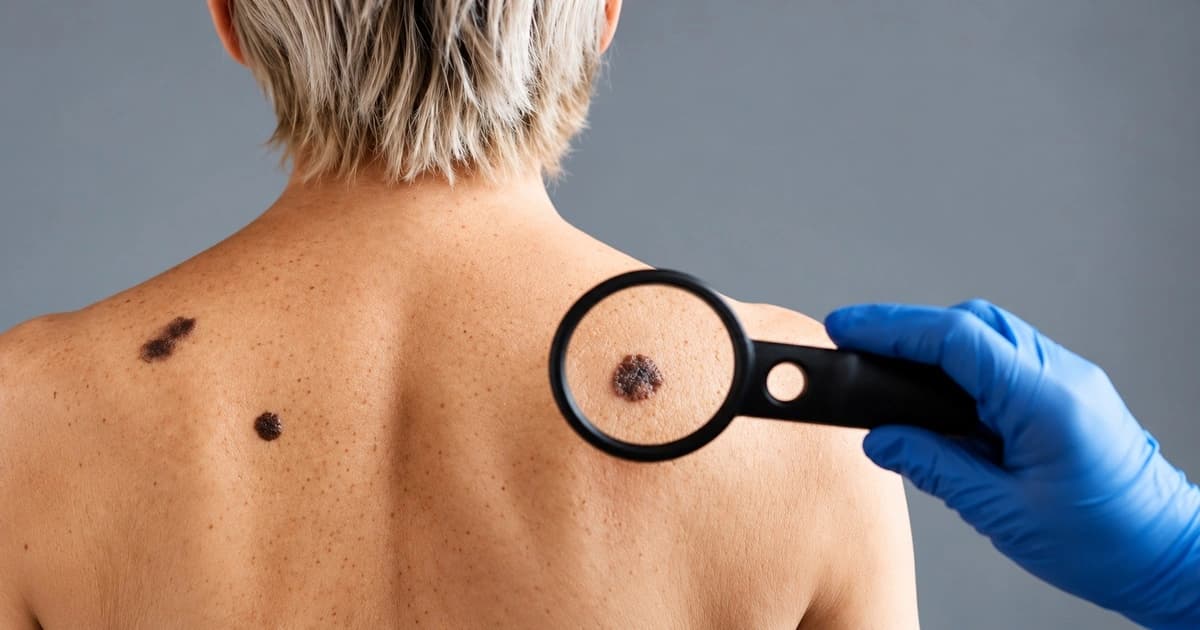
Any mole or mark that changes must be checked by a doctor before any cosmetic treatment. Watch for:
- A change in size, shape or colour
- Uneven edges or more than one colour
- Bleeding, crusting or itching without injury
- A new lump or raised area within a flat mark
- A sore that does not heal
These signs do not always mean something serious, but they need prompt medical assessment, not laser.
How does laser birthmark treatment work?
- Assessment and diagnosis. The doctor examines the mark, asks about its history and may take photos.
- Test spot. A small area may be treated first to see how your skin responds.
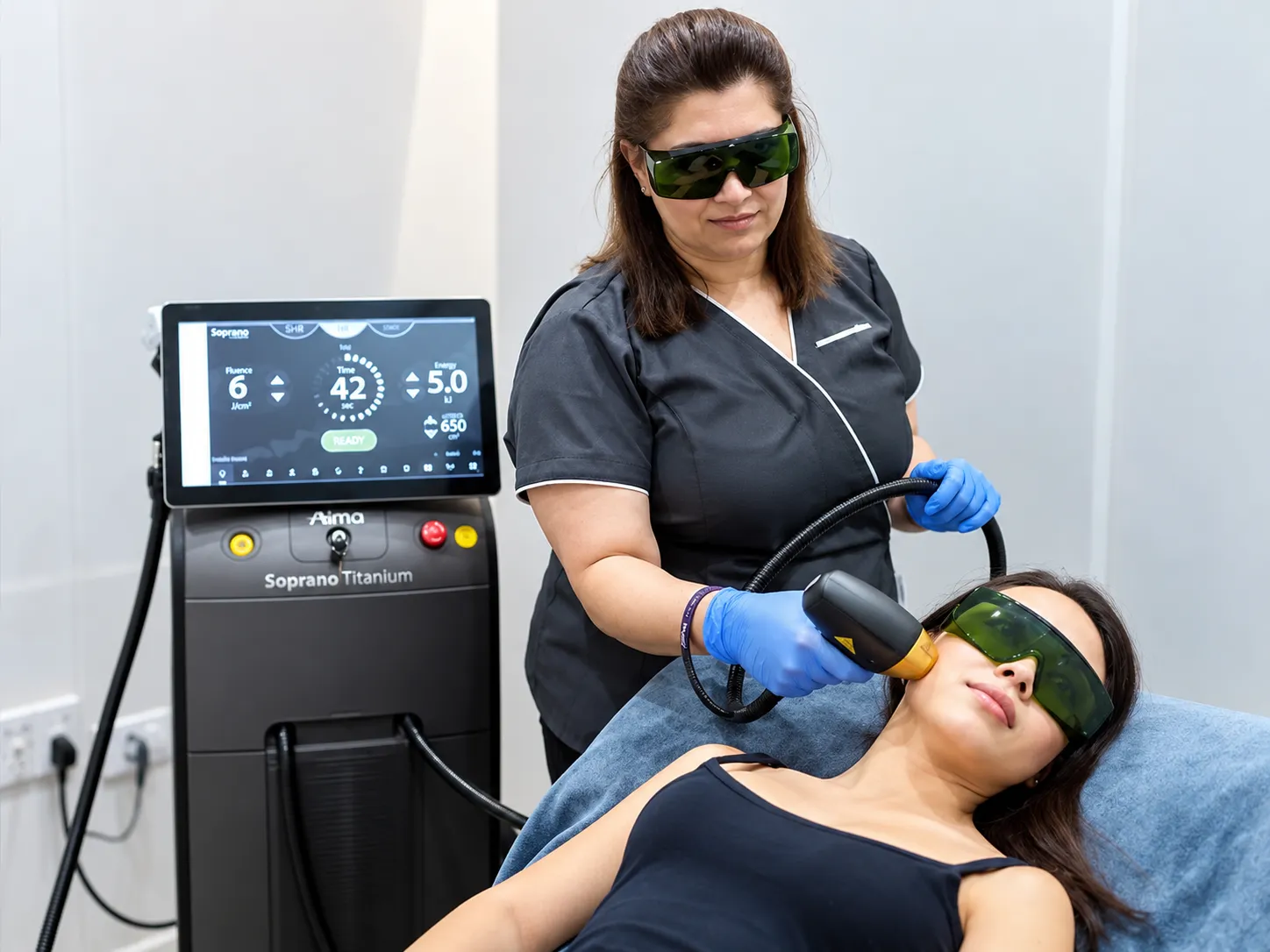
- Laser session. Eyes are protected and the skin may be numbed. The pulses feel like a quick snapping on the skin. Sessions usually take 15 to 30 minutes.
- Cooling and review. The skin is soothed, and progress is reviewed at each visit.
Most people need several sessions, spaced weeks apart. The number depends on the type, depth and size of the mark. More detail is on our laser birthmark treatment in Delhi page.
Is laser safe for Indian skin?
It can be, with careful settings, a test spot and strict sun protection. Darker skin has a higher risk of temporary dark patches (post-inflammatory hyperpigmentation) or light patches after laser. This is why settings are chosen with care and sessions are not rushed.
Delhi's strong sun can darken a treated area quickly. Daily broad-spectrum sunscreen, reapplied outdoors, and covering the area matter as much as the sessions. For other kinds of uneven tone, see our page on pigmentation and melasma.
Recovery, side effects and who should wait
After a session, expect redness, swelling or warmth for a few hours to days. Temporary darkening or fine crusting may appear and flake off within one to two weeks. Do not pick crusts. Avoid heat, steam rooms and pools for a few days. Our laser aftercare guide covers the details.
Contact the clinic if you notice blisters, oozing, signs of infection, pain that keeps increasing, or new white or dark patches that do not fade over weeks.
Treatment is usually delayed if you are pregnant or breastfeeding, have a recent tan, have taken isotretinoin recently, use medicines that make skin sun-sensitive, or have an infection, cold sores or eczema in the area. A mark that is raised, bleeding or changing is assessed first.
Frequently asked questions
Can every birthmark be removed with laser?
No. Some pigmented birthmarks fade well, some respond only partly, and some do not respond at all. Vascular birthmarks need a different laser and are usually referred to a specialist centre. Congenital moles need a dermatologist's assessment and are often not suitable for laser. The doctor will tell you honestly after examining your mark.
Will my birthmark go completely?
Laser usually fades a birthmark rather than removing every trace. Some marks fade a great deal, while others fade partly or return over time, especially with sun exposure. Results vary from person to person, so it helps to go in expecting gradual improvement rather than a clean disappearance.
How many sessions will I need?
Most people need several sessions, spaced weeks apart. The exact number depends on the type, depth and size of the mark, and on how your skin responds. Deeper marks such as naevus of Ota usually need more sessions than lighter, surface marks. Your doctor reviews progress at each visit.
Can children have birthmark treatment?
Children can be assessed with a parent present. Whether and when to treat depends on the type of mark and the child's age. Many Mongolian spots and haemangiomas change on their own in early childhood. The doctor may suggest waiting or a paediatric specialist opinion before any treatment.
Does laser birthmark treatment hurt?
Most people describe the pulses as a quick snapping or flicking feeling. Numbing cream may be used to make it more comfortable. The area can feel warm and look red for a few hours afterwards. Sensitive areas, such as near the eyes, are treated with extra care and eye protection.
Can a birthmark come back after laser?
Some can. Café-au-lait marks and Becker's naevus in particular can darken again over months or years, often with sun exposure. Daily sunscreen helps protect the result. If a mark darkens again, a review can help decide whether further sessions are worthwhile.
If you would like to know whether your birthmark may respond to laser, a doctor can examine it and give you an honest answer. Book a free consultation at any of our four clinics in Vasant Vihar, Gurugram, Pitampura or Civil Lines.