




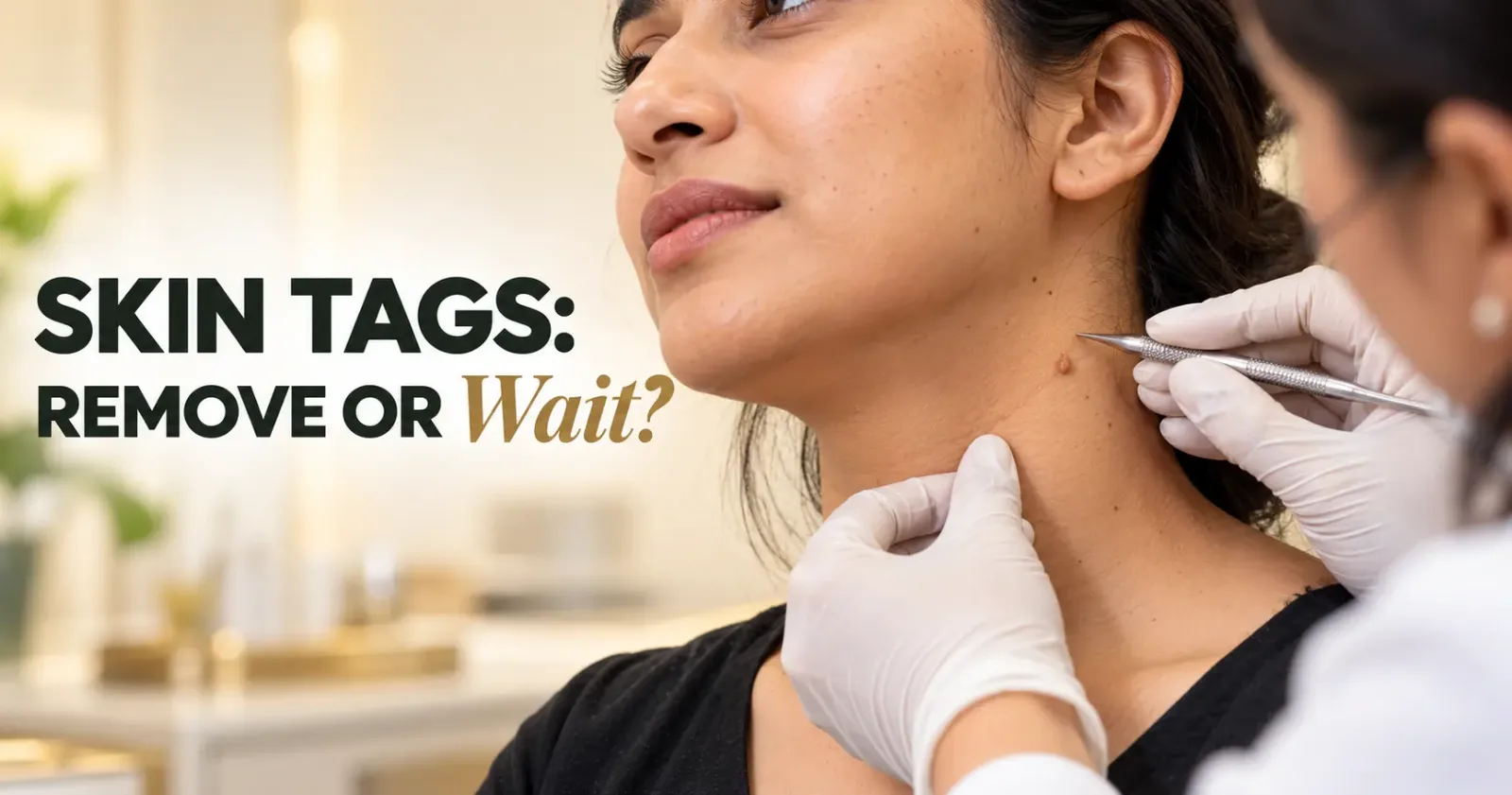
Skin tags are small, soft, harmless growths that appear where skin rubs against skin or clothing, such as the neck, underarms, eyelids and under the chest. Removal by a doctor is a quick, low-risk procedure, usually done with radiofrequency cautery after numbing. A tag removed properly rarely regrows in the same spot, but new tags can form elsewhere if the cause continues. If you are considering skin tag removal, here is what to know first.
What is a skin tag?
A skin tag is a small flap of soft skin attached by a thin stalk. It is usually skin-coloured or slightly darker. Tags range from the size of a pinhead to a small grape. They are not painful unless they twist, catch on something or get irritated.
Skin tags are benign, which means they are not cancer. They do not turn into cancer. Even so, a doctor should check any growth before removal, because some moles, warts and other lumps can look similar.
Why do skin tags appear on the neck and underarms?
The exact cause is not fully understood, but several factors make tags more likely:
- Friction. Skin folds rub constantly. Collars, chains, bra straps and bag straps add to it.
- Weight gain. More skin folds mean more friction.
- Insulin resistance and diabetes. Tags are more common when blood sugar control is affected.
- Pregnancy. Hormonal changes can bring new tags, and some shrink after delivery.
- Age and genes. Tags become more common from middle age and often run in families.
Delhi's long, humid summers mean more sweat and rubbing in the neck and underarm folds. That combination can irritate existing tags and make them catch on jewellery more often.
Are skin tags a sign of diabetes?
Not always. Many people with skin tags have normal blood sugar. But tags can be linked to insulin resistance, especially when many appear quickly or come with dark, velvety skin on the neck or underarms. If this sounds familiar, the doctor may suggest a check-up with your physician. Our page on dark underarms explains more about darkening in skin folds.
Skin tag, mole or wart: how can you tell?
These three are often confused. A rough guide:
| Feature | Skin tag | Mole | Wart |
|---|---|---|---|
| Texture | Soft, smooth, hangs on a stalk | Flat or raised, usually smooth | Rough, firm surface |
| Colour | Skin-coloured or slightly darker | Brown, black or skin-coloured | Skin-coloured or greyish |
| Common areas | Neck, underarms, eyelids, groin, under the chest | Anywhere | Hands, fingers, feet, face |
| Contagious? | No | No | Yes, caused by a virus |
| Needs checking if | It bleeds, changes colour or grows fast | It changes size, shape or colour | It spreads or is painful |
This table is a guide only. A doctor's examination is the reliable way to know. If a growth is a mole, see our page on mole removal, as moles are assessed differently.
Is skin tag removal safe?
When done by a doctor with clean technique, removal is generally safe and quick. The usual steps are:
- The doctor examines each growth to confirm it is a skin tag.
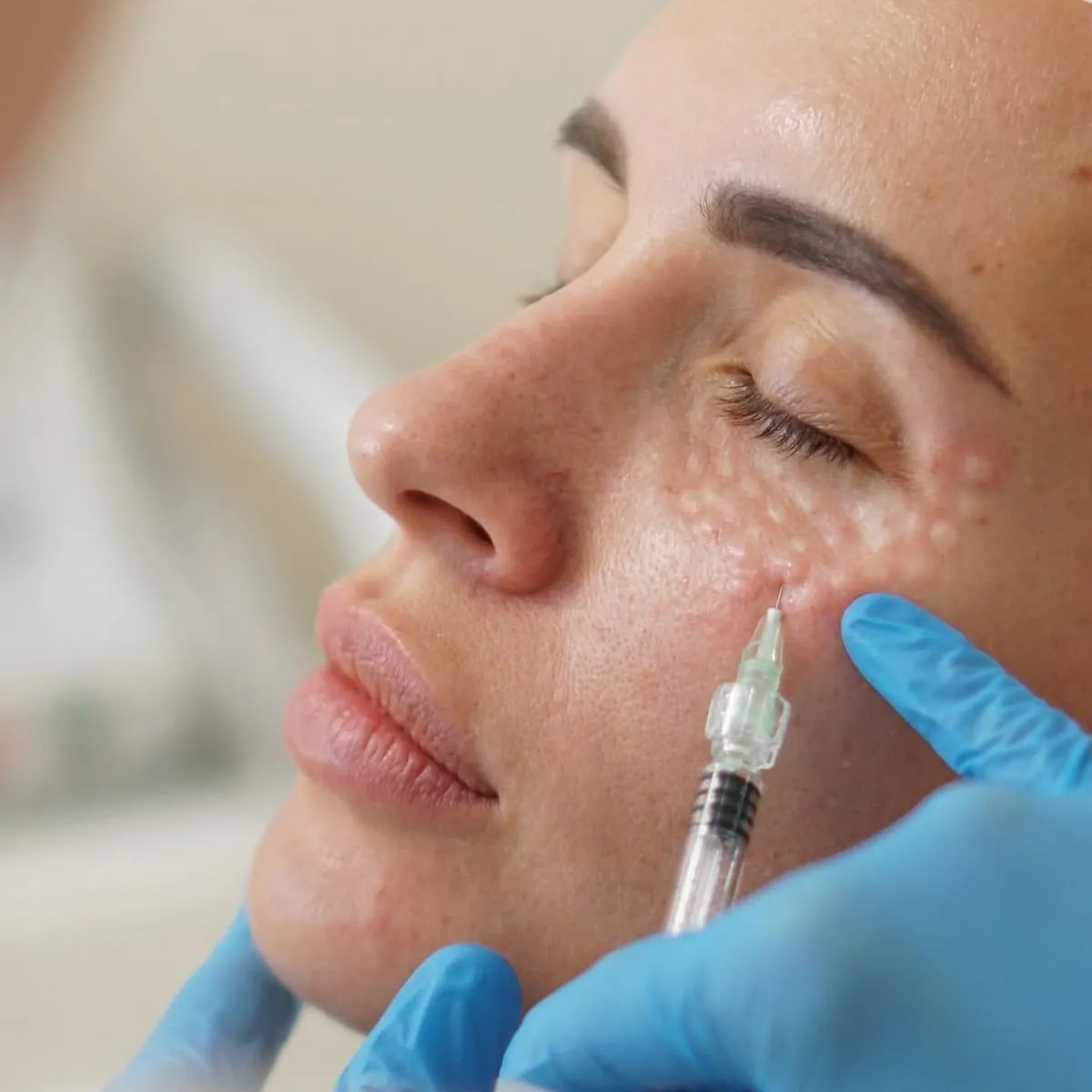
- The skin is cleaned and numbed with a local anaesthetic or numbing cream.
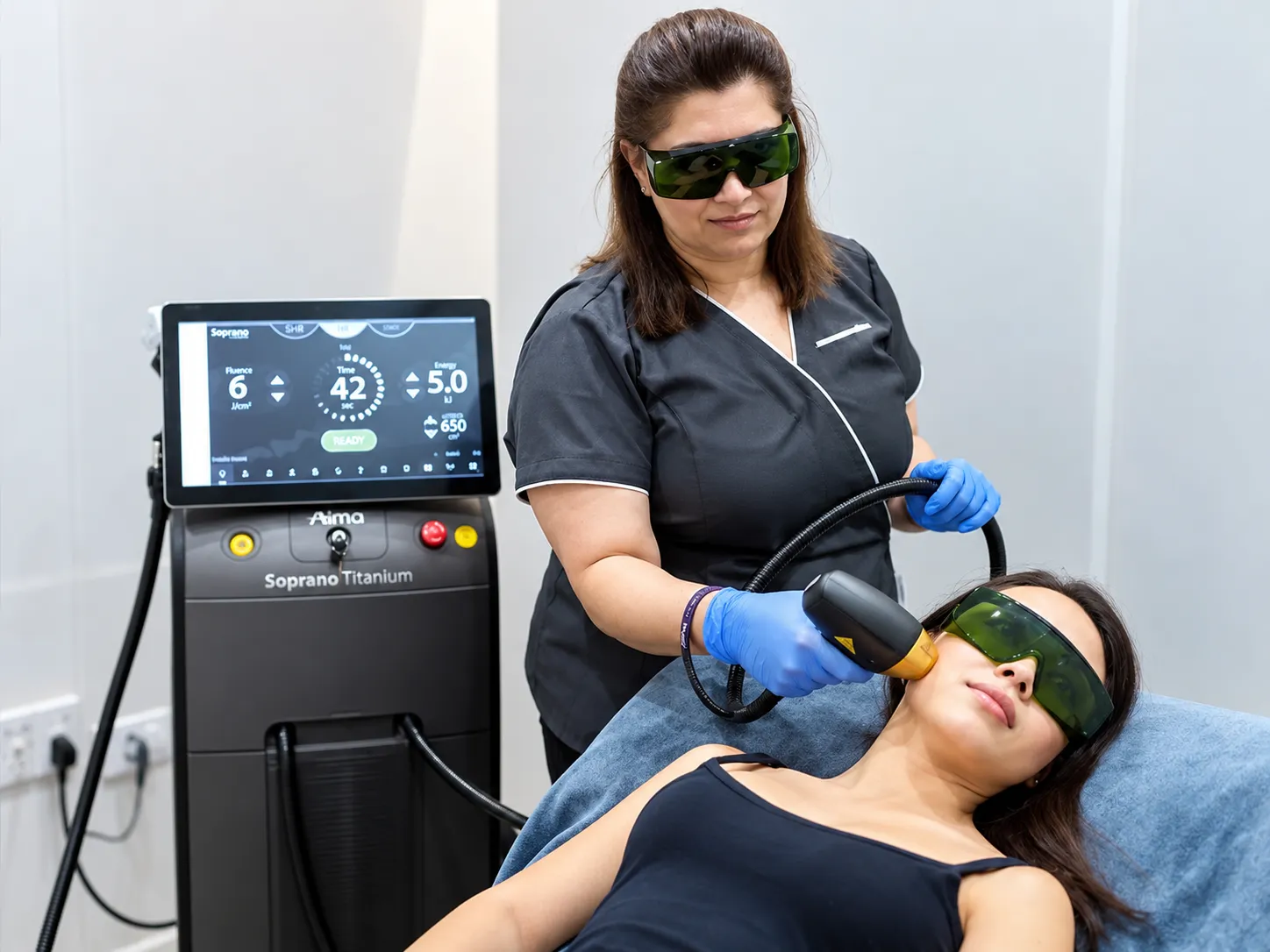
- Each tag is removed at its base, usually with radiofrequency cautery, which also seals small blood vessels.
- You receive simple aftercare advice.
A session usually takes 15 to 30 minutes, and several tags can often be treated in one visit. Tags on or near the eyelids are treated with extra care and eye protection. You can read more about cautery and how it is used for small skin growths.
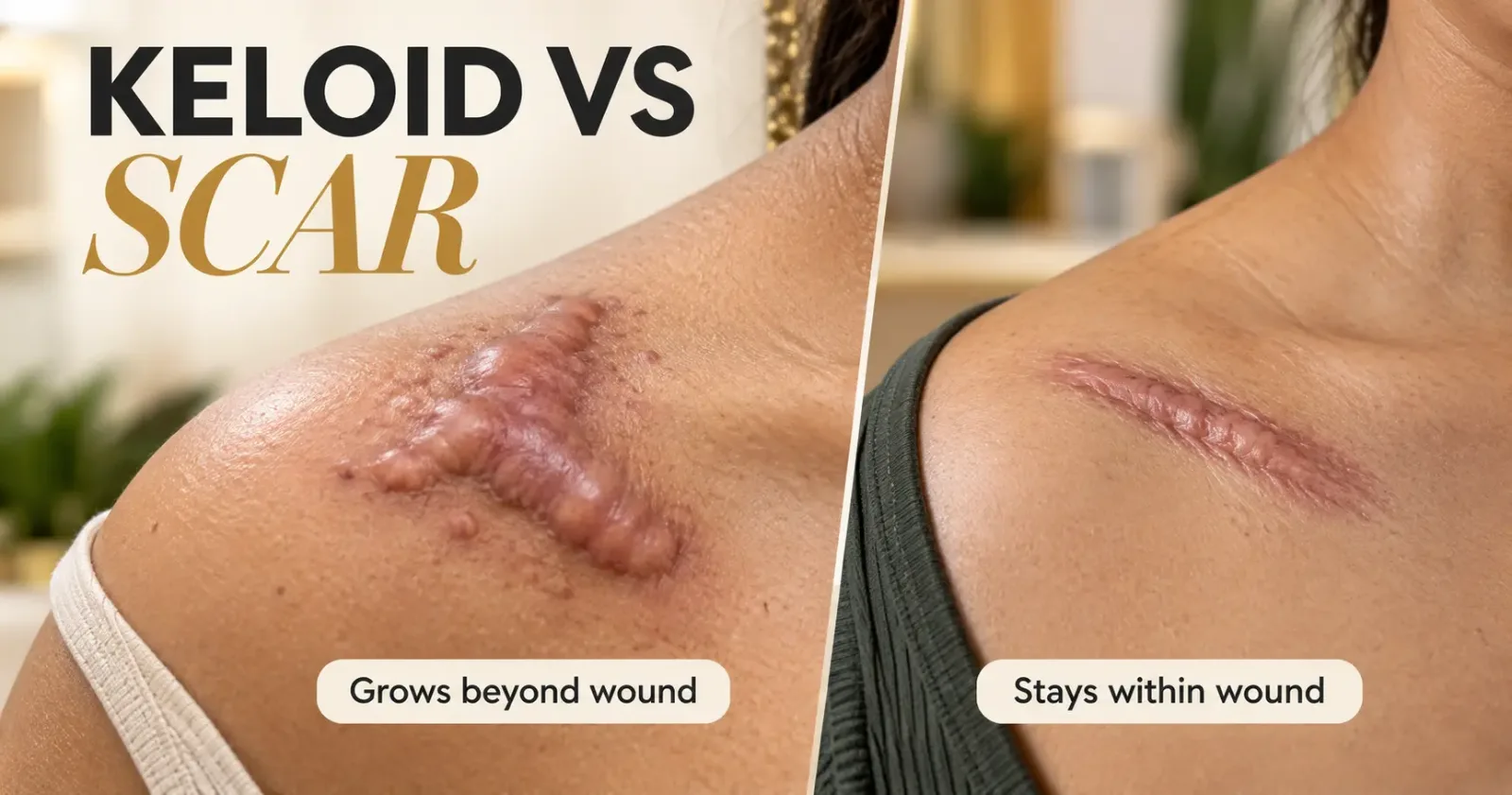
As with any procedure, there are small risks: temporary dark or light marks, a small scar, and rarely infection. People prone to keloids should mention this first.
Why you should not remove skin tags at home
Tying tags with thread, snipping them with scissors or using unregulated removal creams and patches is common advice online. We advise against it. Home removal can cause:
- Bleeding, as even small tags have a blood supply
- Infection, especially in warm, sweaty folds
- Scarring or dark marks that last longer than the tag would have bothered you
- A missed diagnosis, if the growth was not a skin tag at all
Do skin tags grow back after removal?
A tag removed at its base does not usually return in the same spot. However, removal treats the tags you have now. It does not stop new ones from forming. If friction, weight changes or blood sugar issues continue, new tags may appear over time.
To lower the chance of new tags, keep skin folds clean and dry, choose softer collars and lighter chains, manage weight where possible, and follow your physician's advice on blood sugar. Small new tags are quicker to remove, so there is no need to wait until they grow.
Who should wait before having skin tags removed?
- Pregnant women: tags may be checked, but removal is often delayed, as some shrink after delivery
- People on blood thinners or with a bleeding disorder
- Anyone with a history of keloids or raised scars
- People with diabetes that is not well controlled
- Anyone with an infection or rash in the area
- A growth that has changed colour, size or shape, which needs assessment first
Frequently asked questions
Is skin tag removal painful?
The area is numbed first, so most people feel little more than a pinch from the numbing injection, or nothing at all with numbing cream on very small tags. The treated spots may sting for a day or two afterwards. Most people return to work or college the same day.
How long do the marks take to heal?
Small scabs usually fall off on their own within one to two weeks. A light pink or dark mark may remain for a while and fades over time. On darker skin, marks can take longer to settle. Using sunscreen on exposed areas once healed, and not picking scabs, helps the skin recover evenly.
Can tags on the eyelids be removed?
Often, yes. Tags on or near the eyelids are treated with extra care and eye protection. The doctor will check whether removal is safe for your specific tag, depending on its size and how close it sits to the lash line. Some very close tags may need a different plan.
Can a skin tag become cancer?
Skin tags are benign and do not turn into cancer. The concern is that some growths look like skin tags but are something else. That is why a doctor checks each growth before removal. Any growth that bleeds without injury, changes colour or grows quickly should be examined.
Can I wear my chain or necklace after neck tag removal?
It is better to avoid chains, tight collars and straps over the treated area for a few days. Friction can rub off scabs early and slow healing. Once the scabs have fallen off and the skin has settled, you can return to your usual jewellery. Lighter chains help reduce rubbing in future.
Can several tags be removed in one visit?
Often, yes. Several small tags can usually be treated in one session, depending on their number, size and location. If you have many tags in different areas, the doctor may suggest splitting treatment across visits for comfort and easier aftercare.
If skin tags are catching on clothes or jewellery, or you would simply like them checked, a doctor can examine them and plan safe removal. Read more about skin tag removal in Delhi, or book a free consultation at any of our four clinics.