




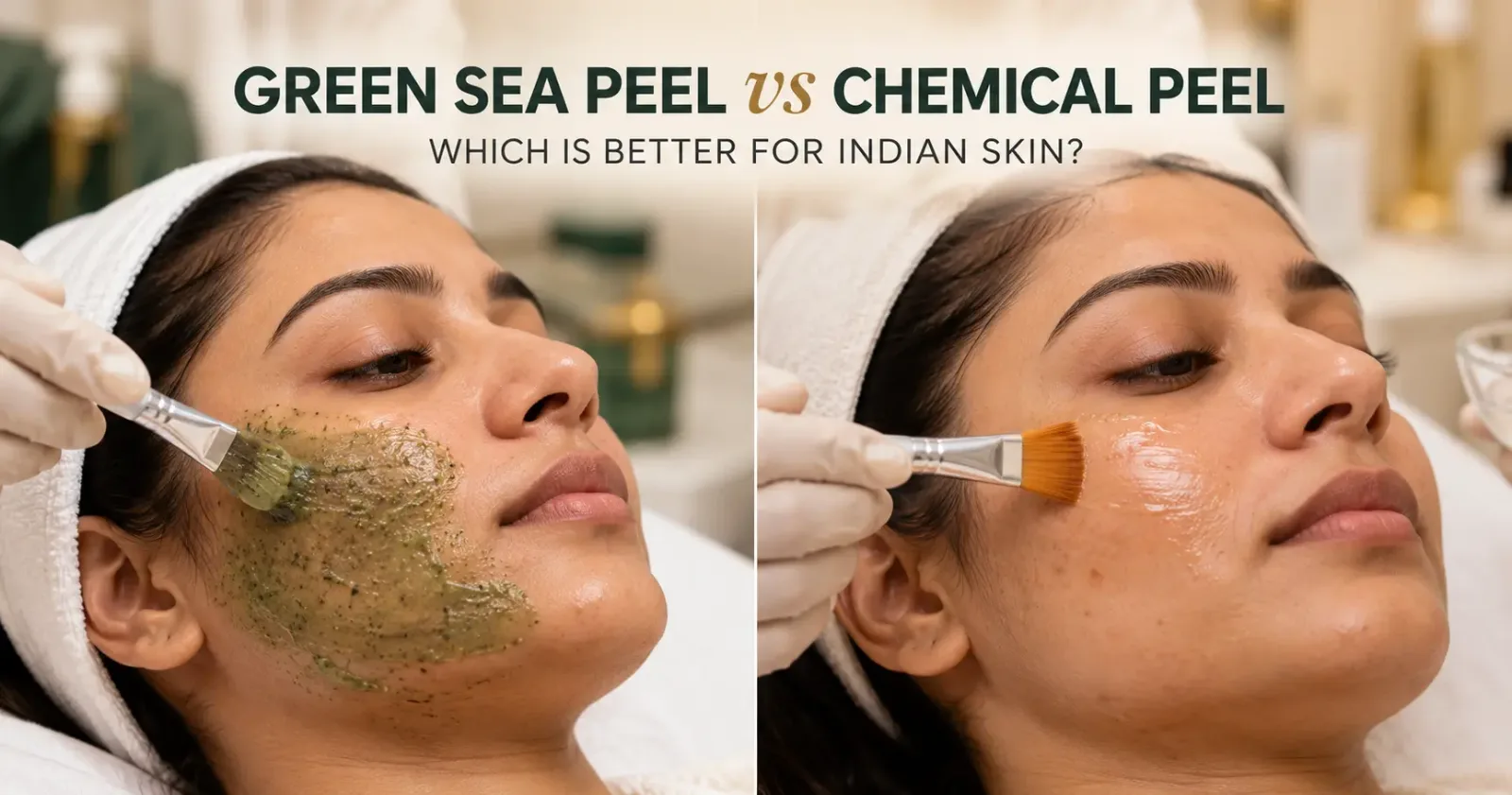
If you have acne marks, open pores or dull skin, a peel is usually the first treatment a skin doctor suggests. But today you have two very different choices: a classic chemical peel, or the newer Green Sea Peel. Both renew the top layer of skin. They just do it in completely different ways.
Here is a clear, honest comparison to help you choose.
How a chemical peel works
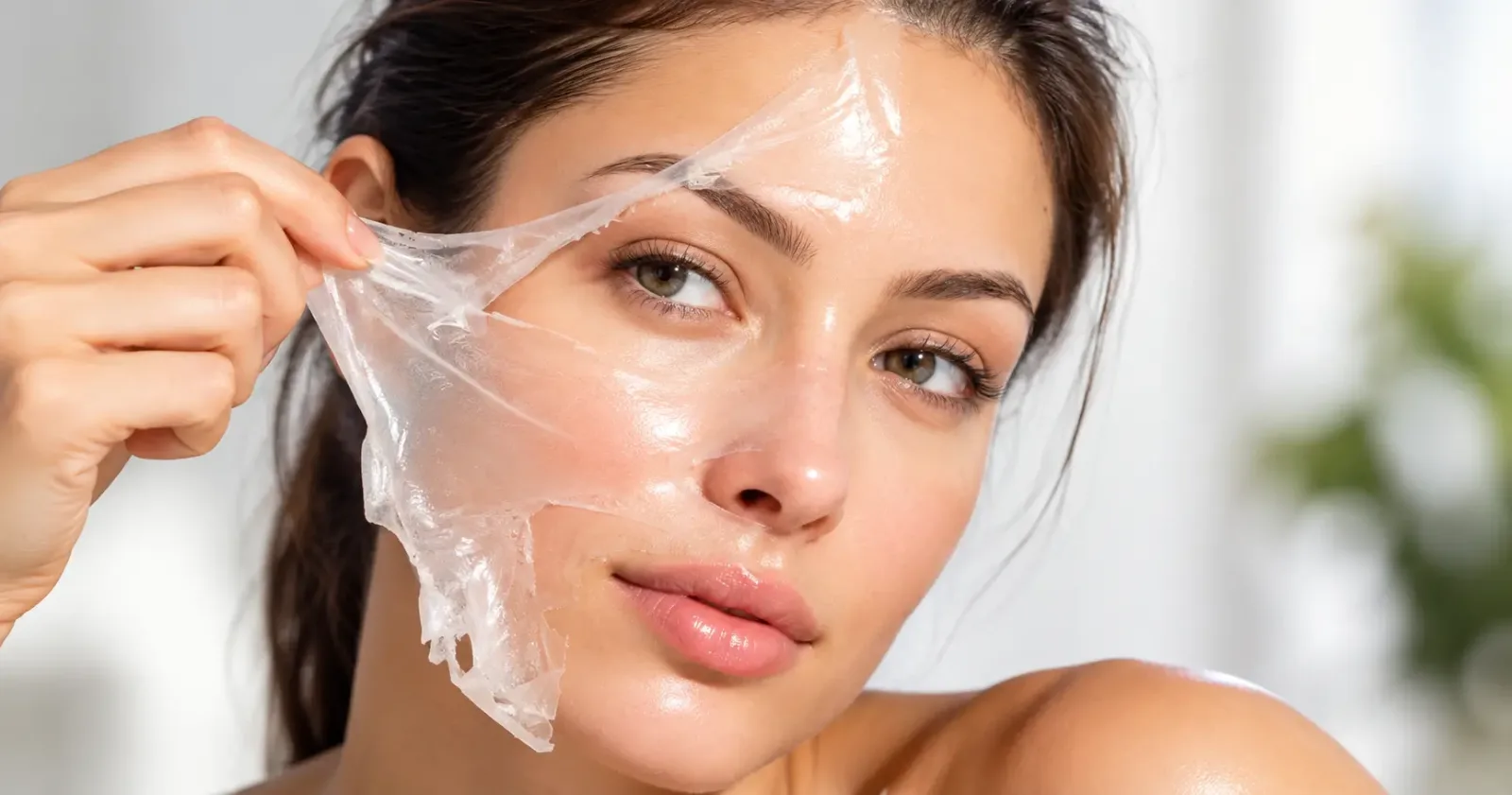
A chemical peel uses an acid, such as glycolic, salicylic, lactic or mandelic acid, to loosen the bonds between dead skin cells so they shed faster. Strength depends on the acid, its concentration and how long it stays on the skin. Most peels done in clinics in India are superficial peels, which treat only the outermost layer.
Chemical peels are well studied. A review in Clinical, Cosmetic and Investigational Dermatology by an Indian dermatologist describes the glycolic peel as simple, affordable and effective for acne, melasma, pigmentation and sun damage, when the skin is properly primed first. You can read about ours on the Glycolic Peel page.
How the Green Sea Peel works
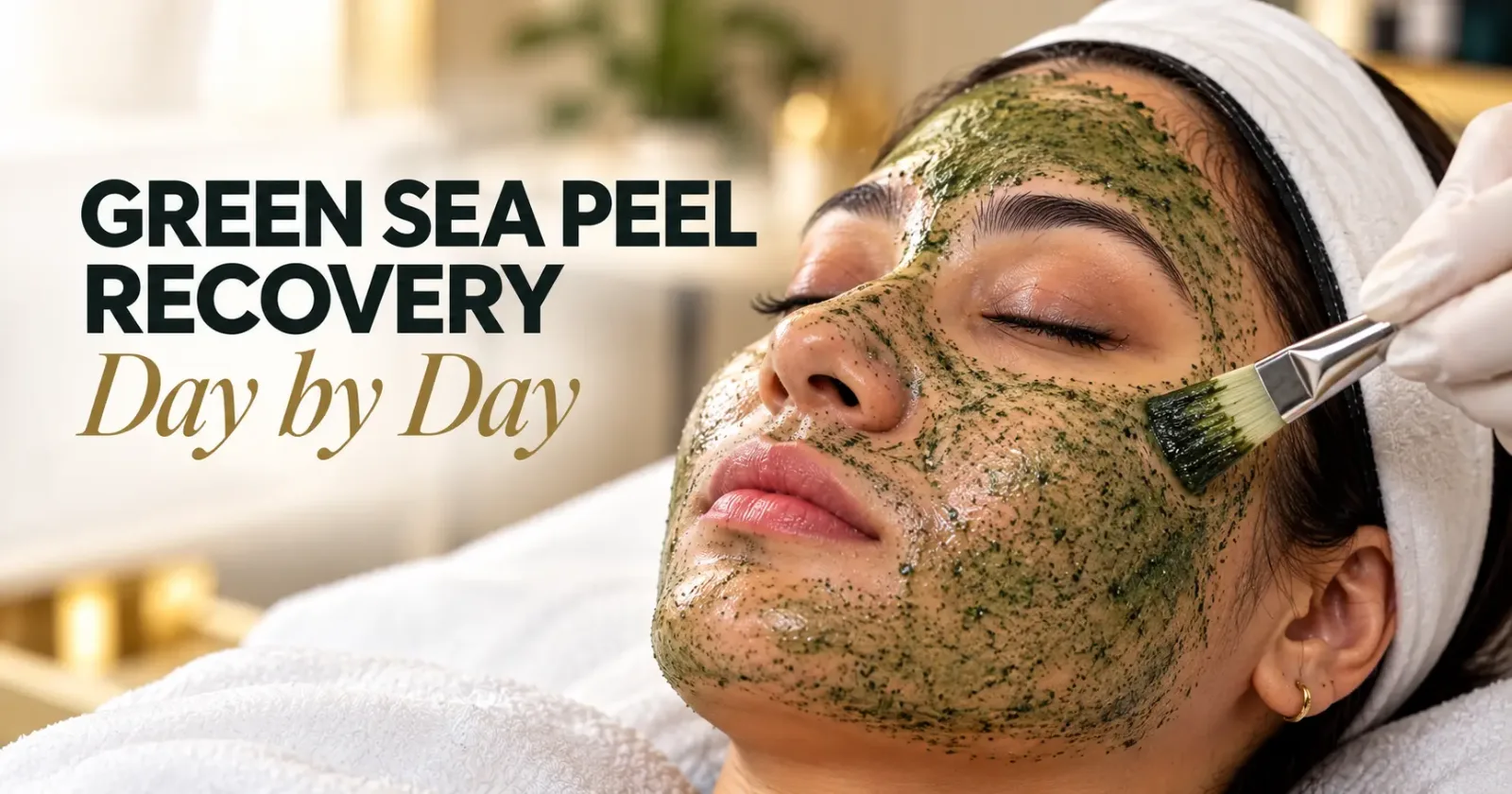
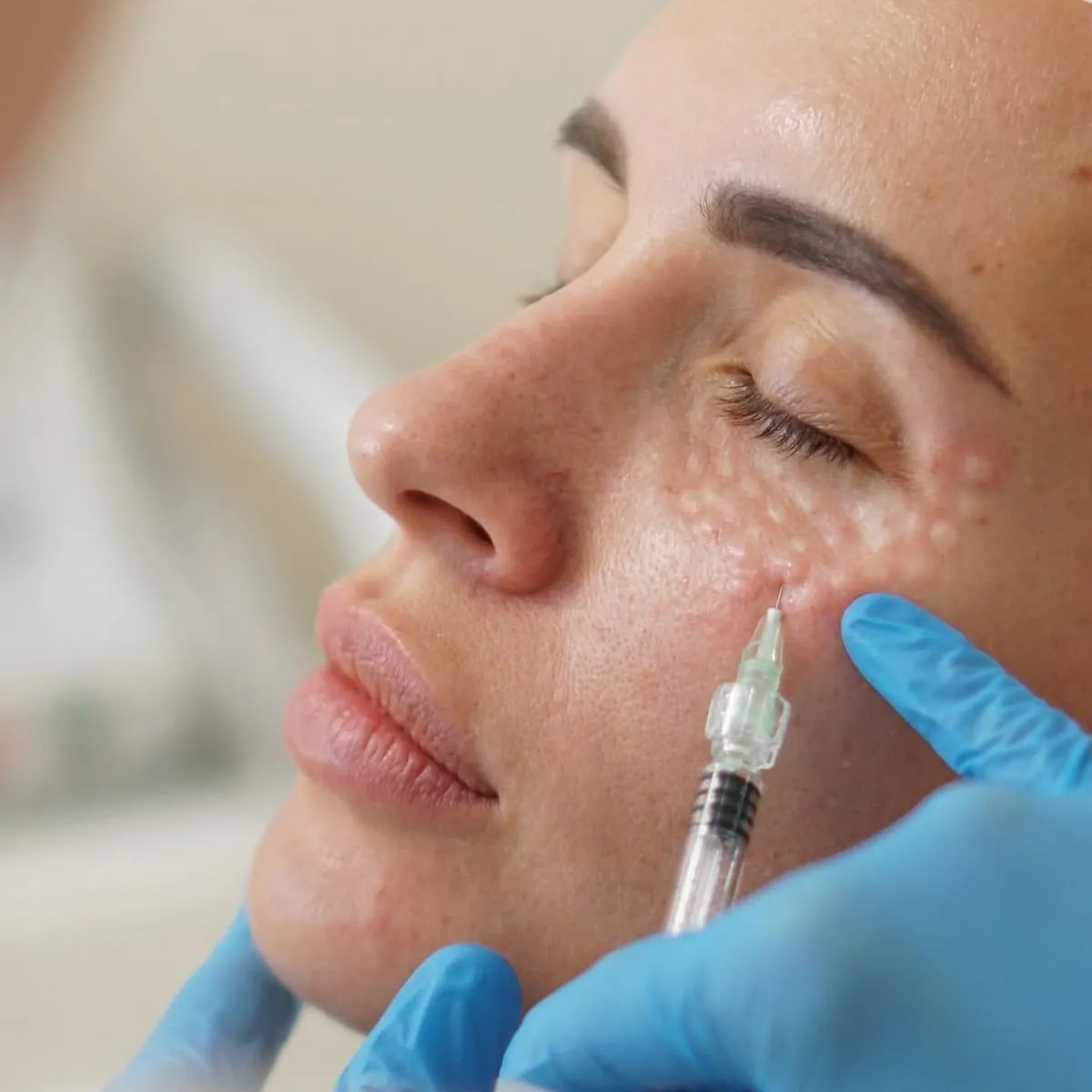
The Green Sea Peel contains no acid. Instead, it uses spicules: microscopic, needle-shaped structures from natural sea sponge, mixed with algae. When massaged into the skin, they settle into the top layer and create thousands of tiny channels. This triggers natural renewal and helps the activator serum's hyaluronic acid and peptides reach the skin. We explain spicules in detail in What Are Spicules? Liquid Microneedling Explained.
Side by side
| Green Sea Peel | Superficial chemical peel | |
|---|---|---|
| Active | Marine sponge spicules + algae | Acid (glycolic, salicylic, lactic, mandelic) |
| Feeling | Prickling, tingling for 1–2 days | Stinging during application |
| Visible peeling | Light flaking, around day 2–5 | None to light, depends on strength |
| Return to work | Usually next day | Usually same day |
| Typical course | 2–3 sessions | 4–6 sessions |
| Good for | Texture, marks, pores, dullness | Tan, pigmentation, active acne, oil |
Which is better for Indian skin?
Indian skin tones (Fitzpatrick types III–V) tan easily and can develop dark patches after irritation, called post-inflammatory hyperpigmentation. That is why the doctor, not the peel, matters most.
The good news is that both options can be safe when done properly. A study in the Journal of the American Academy of Dermatology followed 473 superficial chemical peels in skin types III–VI and found complications in only 3.8%, all of which resolved. Proper priming, the right strength and strict sun protection made the difference.
Choose a chemical peel if you want a quick lunchtime treatment for tan, oiliness or active acne, with little or no visible peeling.
Choose a Green Sea Peel if you want more visible change in texture and marks from fewer sessions, react badly to acids, or prefer a non-acid option, and can plan around 2–5 days of flaking.
Combine them when your doctor advises. Many clients start with a series of chemical peels and move to Green Sea Peel for texture once the skin is calmer.
When neither is the right choice
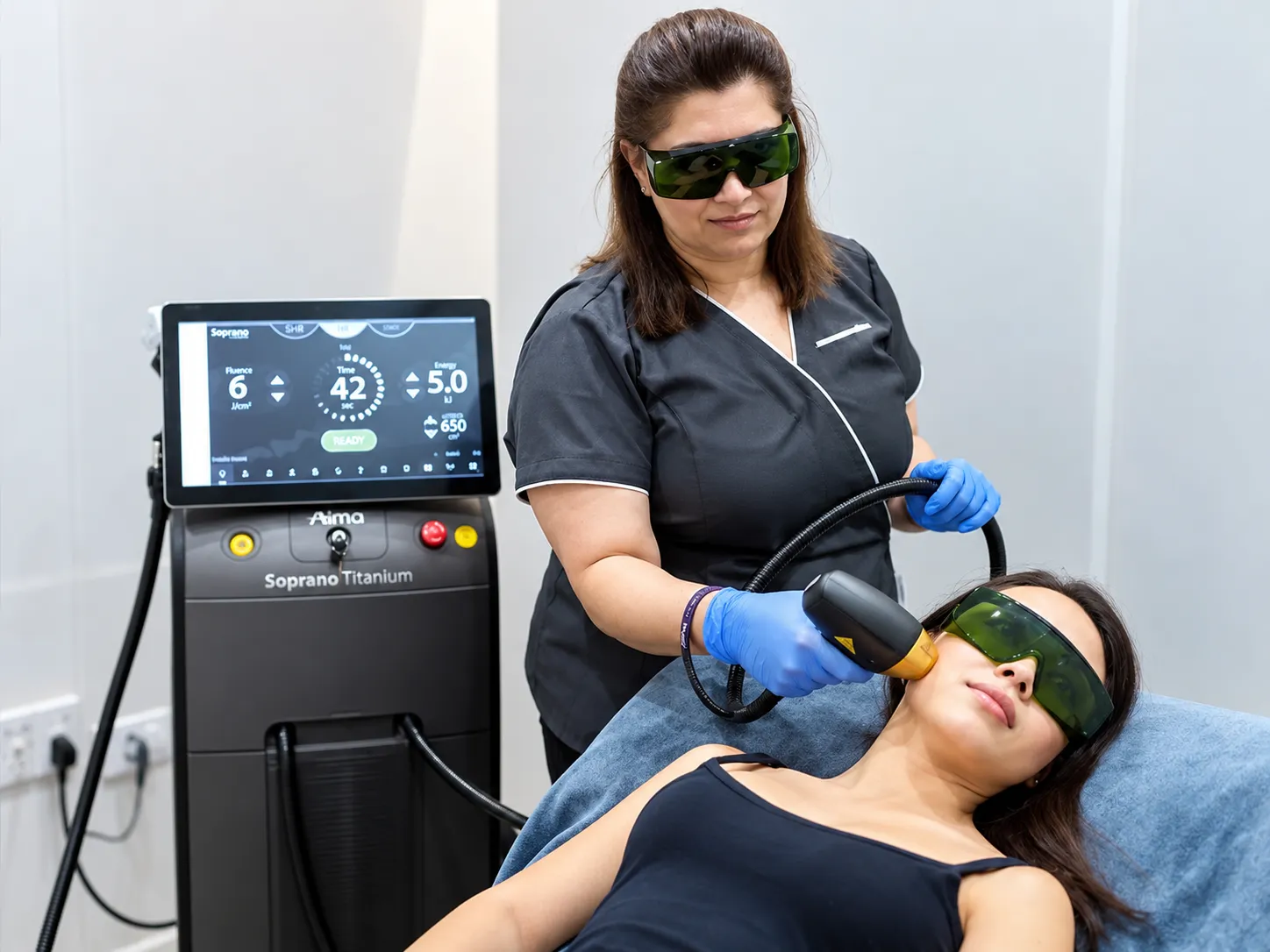
Peels are surface treatments. Deep, pitted acne scars usually need laser or RF microneedling, and active cystic acne needs medical treatment first. Our doctors will tell you honestly if a peel isn't the right starting point.
The bottom line
There is no single "best" peel. The best one is the one chosen after a doctor has looked at your skin type, concern and lifestyle. Curious what Green Sea Peel recovery actually looks like? Read our day-by-day recovery guide.
Book a free skin consultation at Paradise Wellness in Vasant Vihar, Gurgaon, Pitampura or Civil Lines, and our doctor will recommend the right peel for you. Explore the Green Sea Peel treatment →
Quick FAQs
Is Green Sea Peel stronger than a chemical peel?
It gives more visible renewal per session than a light chemical peel, with more prickling and peeling, but it is not a deep peel.
Can I get both on the same day?
No. Your doctor will space them out.
Which is cheaper?
Chemical peels usually cost less per session; the Green Sea Peel often needs fewer sessions. See current prices on each treatment page.